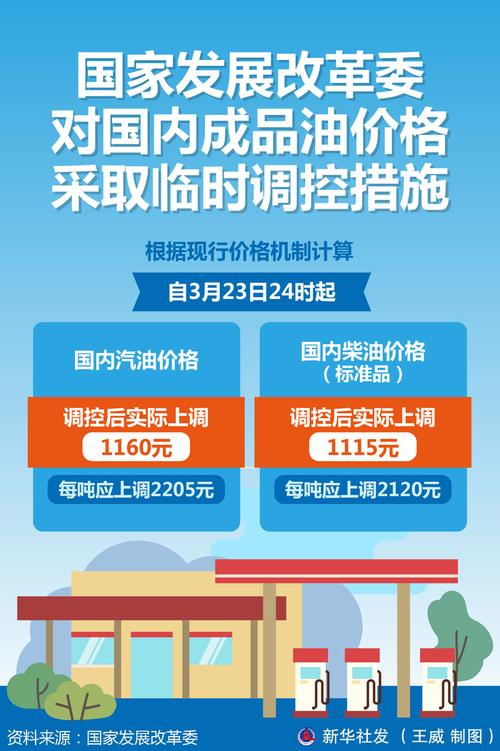
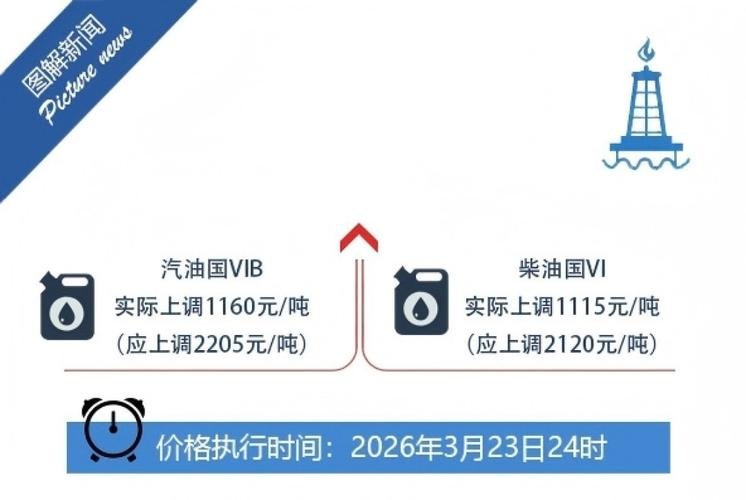
Journalists were informed by the national commission for development and reform that, as of 2400 hours on 23 march, the price adjustment for domestic gas and diesel fuel had been made. The price of domestic gas and diesel fuel was increased by $1160 and $1115 per ton, respectively。
It was explained that, according to the current price mechanism, the price of domestic gas and diesel fuel should be increased by $2205 and $2120 per ton, respectively. In order to mitigate the impact of the abnormal increase in international oil prices, reduce the burden on downstream users and guarantee a smooth economy and social livelihoods, the national commission for development reform has taken temporary measures to regulate the price of domestically produced oil, based on the maintenance of the existing framework of price mechanisms. The regulation resulted in a decrease of $1045 and $1005 per ton, respectively, equivalent to a reduction of about $0. 85 per litre per litre for the national average。
Why take temporary measures to regulate the price of finished oil
According to the deputy director of the economic centre of the china institute for macroeconomics, tanaka, recently affected by the intensification of the american-israeli conflict, the prices of crude oil on the international market have risen significantly, with prices generally rising by more than 40 per cent in all regions, especially in the middle east, rising sharply to more than $150 per barrel, a record high of more than 130 per cent above the pre-conflict level. The increase in the international price of crude oil directly raises the cost of oil imports and uses in the country。
The deputy director of the price cost and certification centre of the national development and reform commission, lu, explained that, in order to mitigate these negative effects and reduce the burden on downstream users, the state had taken temporary measures to regulate the price of finished oil, which fully highlighted the advantages of china's sui generis socialist system, was a timely and robust response to the volatility of international markets, played an important role in safeguarding the smooth functioning of the domestic economy and demonstrated the interest of the central party in the people。
How does the domestic oil price mechanism work
In his presentation, tanaka said that there were three key points in the domestic oil price mechanism:
Package. Domestic and diesel prices are tied to the average price of a basket of international crude oil, and price adjustments are influenced by a variety of, not one, international crude oil prices。

Average price. The magnitude of the adjustment is not simply determined by changes in international crude oil prices at individual points or in a few days, but by a comparison between the average international crude oil basket of 10 working days before the adjustment and the average price of 10 working days before the last adjustment。
Intersectional regulation. When the price of the international crude oil basket is higher than $130 per barrel or less than $40 per barrel for the 10 working days prior to the adjustment, the state will adopt price regulation measures。
In recent years, domestic oil prices for finished products have been adjusted in an institutional manner, based on the movement of the average international crude oil basket for the 10 working days preceding the increase, with increases and decreases。
If international oil prices continue to rise sharply in the later period
What other regulatory measures would the state take
According to lu, the current domestic price regime for finished oils sets a maximum price regulation of $130 per barrel, and if the average price of the international crude oil basket continues to rise significantly, exceeding $130 per barrel, that is, the corresponding domestic finished oil price (average retail price of gasoline 92) is slightly above $10 per litre, it will trigger the price regulation cap, which, for those above the ceiling, will be subject to no or little increase in the maximum retail price of domestic gas and diesel fuel, while some fiscal support policies may be adopted to stabilize supply。
In the past, the russian-uu conflict in 2022 triggered a significant increase in international oil prices, when it was made clear that the price of domestic finished oil would not rise in the short term (no more than two months) after international oil prices had exceeded the regulatory ceiling of $130 per barrel, and that there would be phased subsidies for oil refineries。