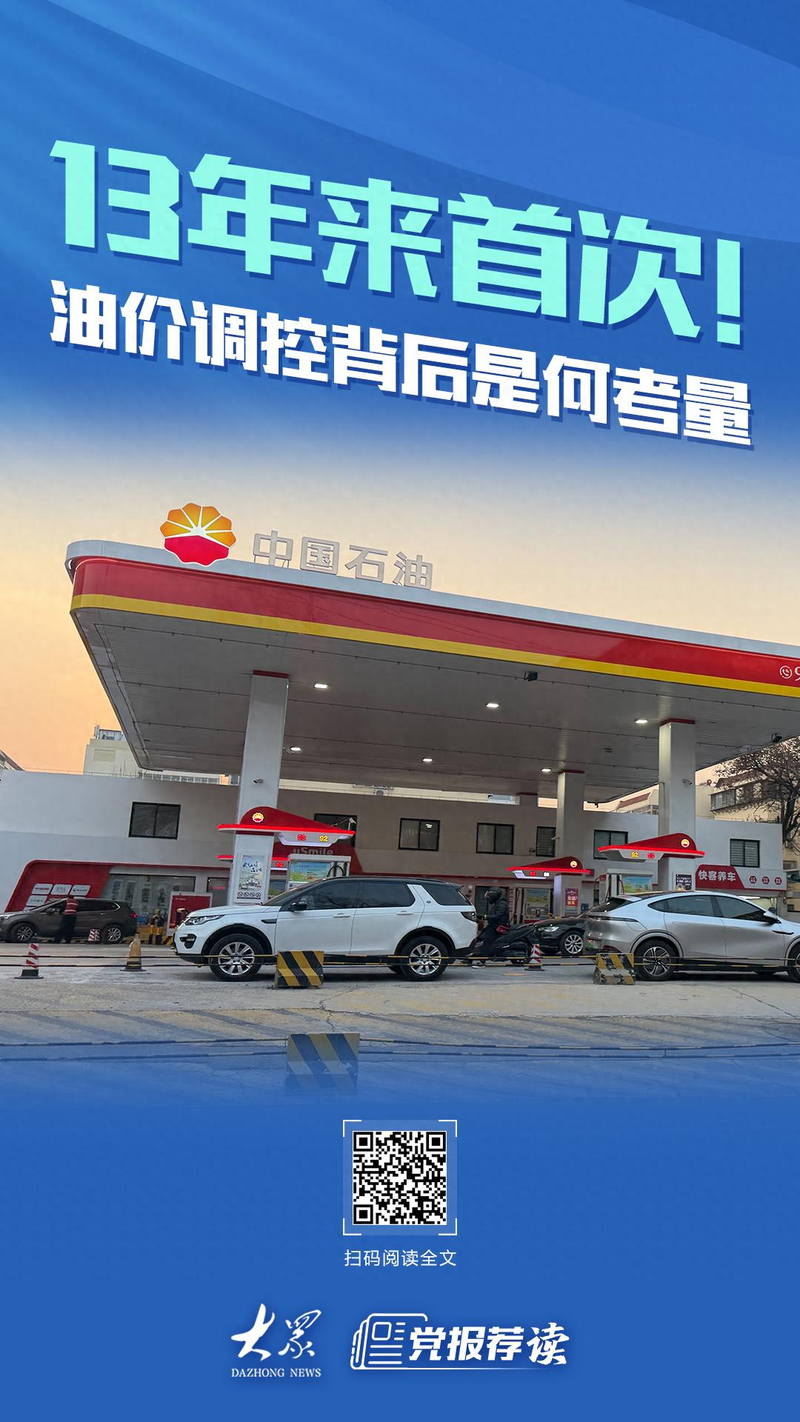
On 23 march, at 2400 hours, the domestic price adjustment window for finished products was officially opened. Unlike in the past, the national development reform commission has implemented temporary regulations on the price of finished oil, while maintaining the current framework of price mechanisms. This was the first regulatory exercise in 13 years since the existing oil price mechanism for finished products was implemented in 2013。
On the eve of the price adjustment, there was a queuing of gas stations in shandong, but the overall order was stable. The experts stated that the interim regulation was intended to mitigate the impact of the abnormal rise in international oil prices, reduce the burden on downstream users, and safeguard the smooth functioning of the economy and social livelihoods。
With a tank full of oil, it costs $70 more
On 23 march, at 1700 hours, journalists saw the fuel truck lined to the side of the road at the sk petrol station at the south industrial road and the corner of century avenue in jenan city. Staff are busy refuelling vehicles, directing traffic and maintaining order, and are busy and orderly。
“the cost of petrol 92 will be increased by $0. 93 per litre and that of petrol 95 by $1 per litre.” the head of the gas station said that the increase in the price of oil had been anticipated because of the impact of international oil prices, and that early reminders had been issued, including through advertising in the station。
At 1800 hours, the same long line of vehicles arriving to refuel the gas station on the south road of the pass-through petrochemical industry in chinan. Journalists observed that petrol no. 92 at the current station was $7. 1 per litre and petrol no. 95 was $7. 65 per litre. "accordingly, the unit price increases by about $1." from the day before, the number of customers arriving for refuelling increased。
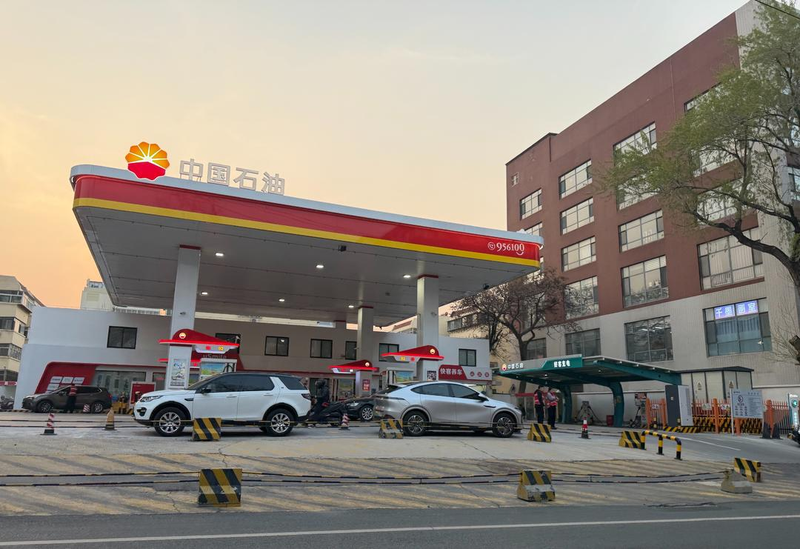
Mr. Wang, who is standing in line, frankly said that he was “prepared for” an increase in oil prices. “on the news, the american-israeli conflict affected international oil prices.” mr. Wang has been following recent oil price changes and has filled both vehicles before the current rotation price。
“according to the increase in the price of oil before regulation, my 70-litre tank was filled with gas no. 95 at an additional cost of $128; after the state regulation, a tank of oil was about $70 more than it had previously been, far from expected.” at a gas station in the city, the smokers left a bill from mr. Shang。
Reducing the burden on downstream users, ensuring a smooth economy and social livelihoods
According to the original pricing mechanism, the current fuel and diesel standard products should be increased by $2205 and $2120 per ton, respectively. Following temporary state regulation, the actual increase was only $1160 and $1115, with a decrease of $1,045 and $1005 per ton, equivalent to a national average of about $0. 85 per litre of gas and diesel fuel。
This regulatory initiative reduces the burden on downstream users in areas such as logistics transport, agricultural production, and residential travel。
“this regulation is a phased emergency arrangement in the face of extreme market shocks, while maintaining the current framework of price mechanisms.” wang yong-hwan, deputy researcher at the institute of markets and prices of the provincial macroeconomic institute, believes that this regulatory initiative is both a timely response to the volatility of international oil prices and a key deployment to secure livelihoods, safeguard industries and promote development。
In the international context, as a result of the continuing intensification of the united states-iraq conflict, the prices of crude oil on international markets have increased significantly, with regional prices generally rising by more than 40 per cent, especially in the middle east, rising rapidly to more than $150 per barrel, a record high of more than 130 per cent before the conflict. As the world's largest importer of crude oil, our share of crude oil extraction exceeds 70 per cent. The sharp increase in international crude oil prices directly raised the cost of domestic imports and oil use. Without regulation, an increase of more than $2,200 per ton would result in the largest single price adjustment since market pricing of finished oils。
In domestic considerations, the price volatility of finished oil as “industrial blood” is directly related to the well-being of people, the functioning of industries and the smooth functioning of macroeconomics. The central importance of this regulation lies in “buffering shocks and keeping the bottom line”: on the one hand, minimizing the burden on downstream users and, on the other hand, effectively disrupting the transmission of abnormal fluctuations in international oil prices to domestic inflation, stabilizing the logistics supply chain, protecting the viability of small and medium-sized operators, and establishing a “firewall” for the smooth operation of the domestic economy。
From a policy point of view, the regulation has always been “balanced and bottom-line thinking”, focusing on three main objectives: first, balancing the interests of oil refineries with those of downstream users, both to safeguard the legitimate profitability of oil refineries, to avoid price reversals leading to reduced insurance risks, and to keep downstream industries and residents under excessive cost pressure; secondly, to safeguard the stability of energy supplies, while explicitly requiring the production and distribution of finished oils to devote themselves to productive organization and management; and thirdly, to maintain market order, in cooperation with the authorities concerned, to intensify market supervision and inspection, and to rigorously investigate violations such as non-implementation of national price policies。
As shandong faced the "scissors" test, high oil prices accelerated the transition
As the province with the largest concentration of local refineries throughout the country, the shandong petroleum refinery industry has been affected by the american-israeli conflict, and the profit performance of different segments of the industrial chain has been clearly divided。
At the end of the production cycle, the single-ton profit from the shandong refining complex was substantially repaired, reaching 308 yuan from 1 to 10 march 2026, compared with 40 yuan/tonne before the conflict. On the contrary, from the retail end of the spectrum, the profits from petrol stations have declined significantly, with retail profits from gasoline falling by 50 per cent in the aftermath of the conflict, close to cutting back and retail profits from diesel by 60 per cent。
The middle east region is an important source of crude oil imports for shandong refinery, which is at risk of a significant reduction in the supply of raw materials as a result of the conflict that has hampered shipping in the strait of hormuz. In the context of the rise in international oil prices, the cost of procurement by refineries inevitably increases。
“this state regulation has reduced the increase in the price of finished products and has effectively limited the space available for downstream transfer costs for local refiners.” wang wing was particularly reminded that, if international oil prices continue to be high and domestic retail prices are regulated, local refiners may face high-cost and low-sale “scissors” pressure。
Since the current oil price-fixing mechanism for finished products has set a regulatory ceiling of $130 per barrel, once the average price of the international crude oil basket exceeds this level, price-fixing caps will be triggered and domestic oil prices will not be mentioned or mentioned。
“if the price of subsequent finished oil continues to be high, it may discourage the demand for final consumption and affect the marketing and profitability of the refined firm.” according to a study by fan yubo, a researcher and deputy director of the institute of economics of the shandong academy of social sciences, the conflict has presented shandong refinery enterprises with multiple challenges, such as the supply of raw materials, costs, operations, markets, etc., which will facilitate the enterprise's move towards diversified raw materials, the transition to high value added and the development of new energy configurations, and even the re-emergence of the industry。
Wang yong-hwan stated that the regulation was a successful exercise in the face of extreme market shocks, building up experience in dealing with similar situations in the future. “in the long run, every surge in oil prices is a stress test of energy security. The event will accelerate the transformation of the energy structure and the improvement of the strategic reserve system. High oil prices have objectively created market space for the promotion of new energy vehicles, and the long-term turning point in the demand for traditional finished oils may come early。
(crowd reporter, liu qiu, shutao)