In hainan, people are following the seasonal shifts and chasing the melon。
In november of each year, he leaves the south-west coast of the sea, travels through foro in december, and arrives in sanya in january and returns. This period has also seen the growth of the meadow. Between november and the third quarter of may of the following year, summer expeditions continued to take place in large huts for cooperative farmers。
This race with time is just for the sweet。
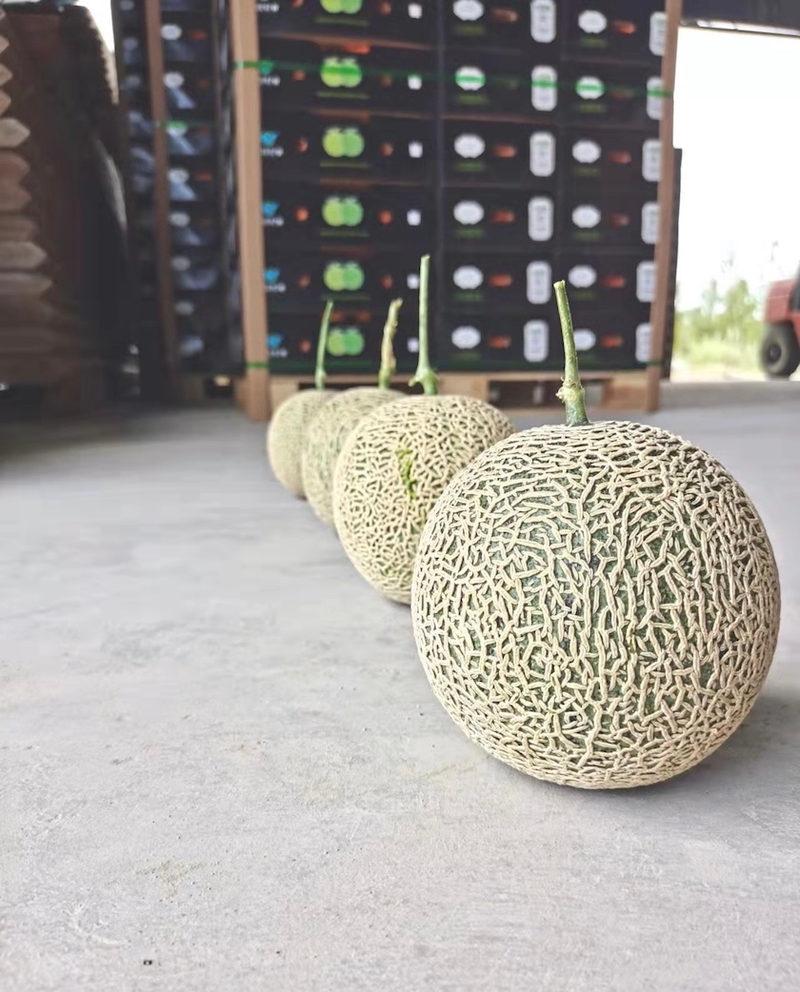
A variety of domestically produced melons, with different brands, have emerged over major supermarkets or electric power platforms. In fact, they can all be called netted melons, which have dense and deep weblines, green-to-green skins, yellow or orange red fruit, the value of which lies in the sweetness of the juicy water and the taste of ice cream that can be extracted directly from the spoon. It was also packed with a fine package in japanese annotated, which was even more impressive。
In the little red book, people say that netting melons are “be like japanese melons” and that, unlike the high price of melons, which is 500 dollars, the national netting is only 30-40 dollars。
The japanese melon has been a star of luxury fruit due to its high price of $200 each (about rmb 1275). On 24 may 2019, a japanese melon at the central wholesale market in sapporo produced a price increase of 5 million yen (approximately 318,000 yuan yuan); in china's chinese high-end daily stores, the melon was sold on a piece, starting at about 60 yuan per piece; and on the treasure hunt, the price of the melon was higher than 300-500 yen per district。
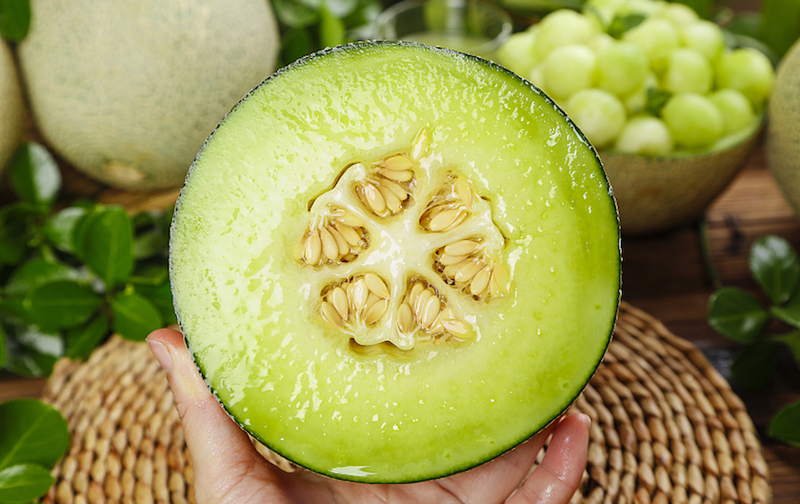
Sea nam net melons (photo source: cfp)
According to information from the ministry of agriculture, forestry and fisheries of japan (maff), the difference between the melon of shizuoka is its “precious and fine sweetness, saliva, fragrance and fragrance similar to musk”, as well as its limited production due to harsh cultivation methods such as “one tree, one fruit”, and strict export requirements such as appearance, sugar, transport, etc。
With nearly 100 years of planting, the time for the rapid development of the japanese economy in shizuoka melon has been rapidly extended to the japanese royal family, the princess of thailand, the queen of england, and so on, as well as to the great japanese melon companies, as a reminder of its noble marketing。
The high commercial value of japanese melons is also an opportunity for chinese businessmen。
The garden told the interface that the netting of melons had begun to grow from 2020 to 2021 because of the small number of homochemical products on the market and the good appearance and taste of melons, which had begun to be welcomed by consumers。
In fact, there had been netted melon sales before, but since the melon had previously been more popular on the market, the percentage was not very high. Until 2018, when the melons became very homogenous in the fruit market, they began to search for different products. They were concerned about the type of meringue and were looking for more reliable suppliers。
Everyone looks at hainan. As early as the 1980s, sea nam started growing melons, but it was only in the last 10 years that a species comparable to that of japan was cultivated, while the expansion of production under intergenerational cultivation successfully reduced the unit price of the sea melons to less than $50 that was widely accepted in the mass market。
Behind the rapid growth of the net is intergenerational farming by the various players in the industrial chain。
Hainan used to grow no melons。
As recorded in china's academic journal, “the state of technological development of melon cultivation and the application of new technologies in the hainan facility”, published in 2017, the sea melon began in the 1980s, until 1995, when the wu mingju aristocrats used the eco-crop-free form of the large shed to make the cultivation of melons in xinjiangan a success in sanya (eds.: the melon is one of the melons) and the sea melons began to grow from the ground to the facility, opening an era of high-yield efficient cultivation。
The transfer of the northern melons to the south of the sea was a subversive tradition and a microcosm of china's “southern bong” cause。
In the south of hainan island, a typical tropical climate resource that includes the cities of sanya, mau shui and parts of leung county, activities for crop selection, seed identification and production promotion began in the late 1950s, flourishing in the 1970s and 1980s, and marketization began after 2000 from november to may of each year. In the south of the sea, with melons, there are also important crops such as rice and maize。
These have laid the foundation for japan's meadow-striking crop cultivation in hainan。
However, since seeds also have patent protection, the seeds of the japanese melon cannot be grown directly in china. The chinese have started studying similar seeds. The summer expedition informed the interface that, since the establishment of a pilot seed breeding base in hainan by the xinjiang agricultural institute over 20 years ago, melon seeds have matured and stabilized after the hybrid breeding of japanese melons and chinese melons。
Professional seed companies have also developed a growing number of varieties in the process, ranging from a preference for size, a preference for sugar, a preference for taste, and a gradual expansion through market trials. At the planting end, a group of studies at the guinon institute of agriculture from xinjiang took root in the south of the sea and led to the beginning of widespread cultivation in the native guinnon。
The year-long hot climate, long-term agricultural experiments, seed companies, distributor resources, etc. Have made hainan the country's longest-growing and most productive melon plant。
"the only advantage of hainan is that it takes longer. Hainan's production cycle can take place throughout the winter, from november of each year to may of the coming year, and continues to elapse, when the north cannot produce.” the summer expedition said
In 2008, the area under cultivation was 3,734 hectares, and by 2016, the area under cultivation in the south of the sea was 4734 hectares in four areas, namely ledong, mahal, sanya and east. According to a 2021 report from the southern rural newspaper, hainan is the largest and most concentrated melon-producing area in the world, with an area of approximately 430,000 acres grown throughout the year。
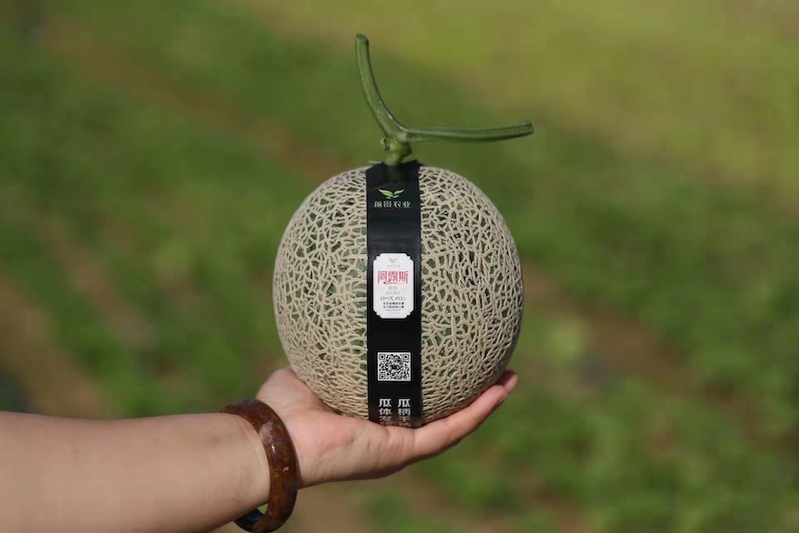
Sea nam net melon (photo source: interviewee)
For the time being, the price of domestic production was reduced to $50, or even lower, as a result of a 500-dollar netting。
“it was about 30 years ago, and this year it was also affected by the climate in the south of the sea. Production was much lower, and many of the melons were destroyed, so prices were a little higher.” summer expeditions told the interface news. This year, the average selling price of a melon is $40。
In hainan, the number of netted melons planted on an acre is about 1,800, and, like the japanese melon of jungaoka, the fruit of a tree or an acre produces 1,800 fruit。
But it's three pounds or so, and it's only 100 or so of the best fruit, weblines and melons. The precisions are carefully placed in a wooden box with a velvet on it, a ribbon for a marked t-style melon handle, labeled in english and in japanese, and made to be sold before and after the festival. When the best domestic netted melons are made into high-end boxes, they can also sell 500 at a price that is driven by their scarcity and market packaging。