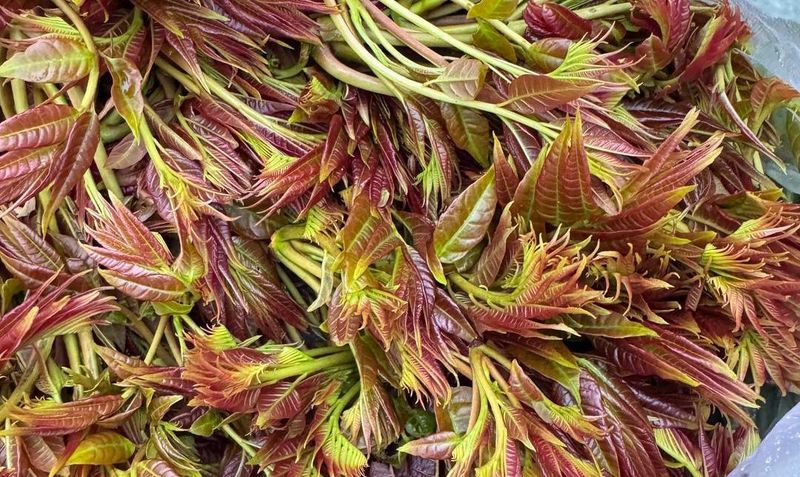
In march, the veggies broke out。
On the morning of 28 march, a large number of young people gathered near the yellow nest reservoir in the southern jinan hill town of willow harbor. They were so excited to carry little shovels and a basket of bamboo that they dug only for the “first drop”。
This spring, the ancient scene of “porning” in the episode was recast as an extra-hot social event. Orchids such as veggies and cherries faded away from the old impression of “memorning food” and became a new label for nature。
The consumption associated with wild vegetables has risen with heat: double-digit sales of wild-breeds (with shovels and gloves) have increased on the electrician platform; in fresh app, over 100 sprouts have been assembled and the price of the sorghum has risen by a hundred dollars; and wild-breeding groups have surfaced and the single-day bill is running at hundreds。
It's worth asking, why is it so sudden? With its resource advantage and its traditional consumption, can you catch up with this boom and turn the momentous gathering of wild vegetables into a real business
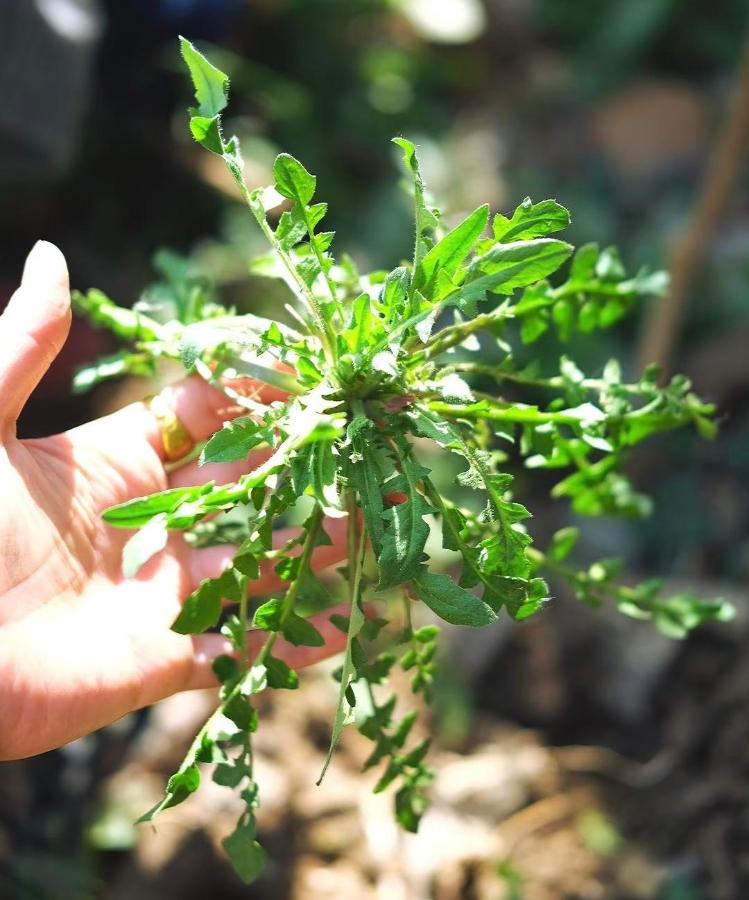
The veal
01
The young people are raising the heat of the wild
On the grasslands by the yellow nest reservoir, journalists encountered ms. Zinan after 00. Since the beginning of spring this year, she has laughed that she “discovers a place to dig for vegetables as soon as possible”。
“it is more productive to dig wild vegetables than to walk outdoors, not only to feel nature, but also to bring food home.” on the other hand, she showed the journalists her new local “drying for wild vegetables”, where people came together and travelled, and where they self-assembled the “drying map”, which indicated the distribution of common wild vegetables in shandong, even to specific plots。
And on social platforms, it's a wild-weed heat that's already raging. As of 28 march, the little red book platform#driven has received 260 million views and more than 1. 07 million discussions; the search for “diagnostics” is almost full-screened with recommendations for the location of the field and a guide to pits。
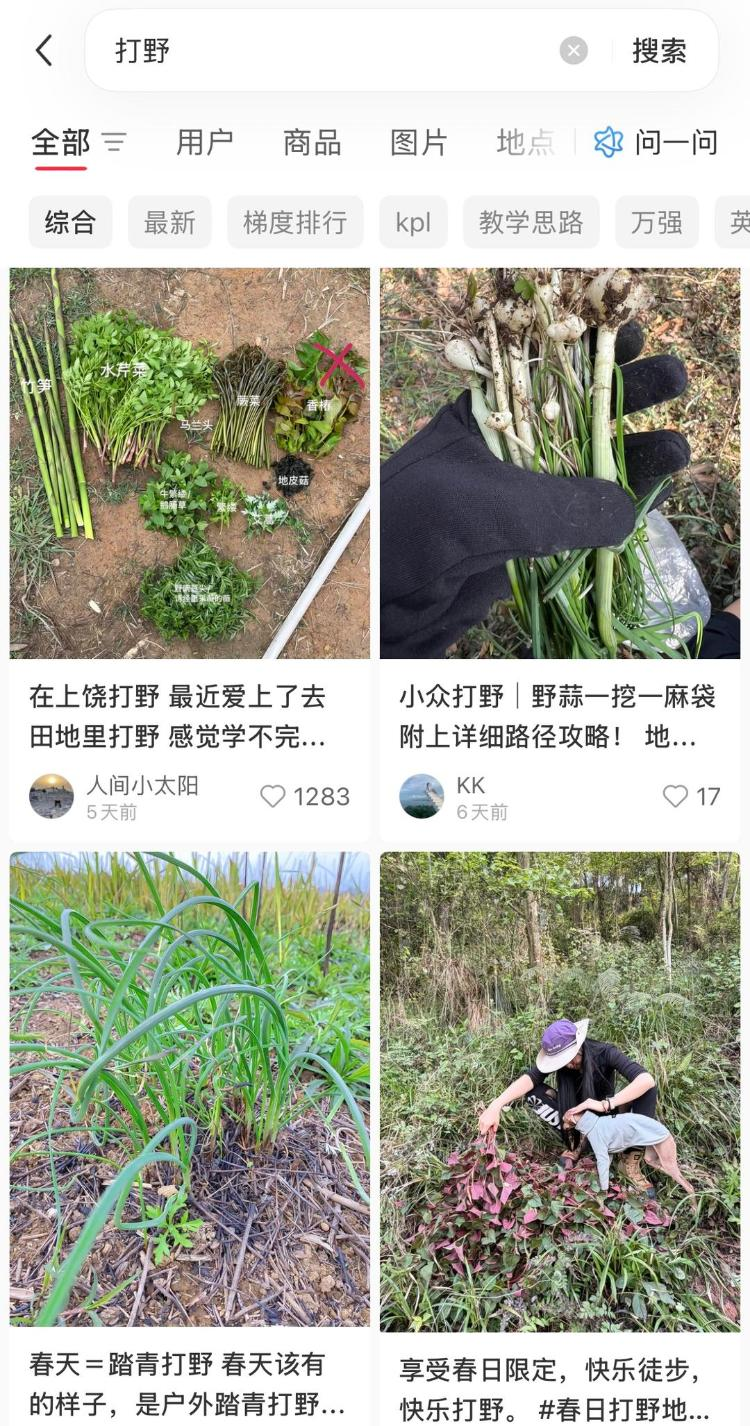
Why is simple manual work so attractive? Professor zirina of the school of information and communication, shandong university, believes that it provides young people with a “spiritual boom”。
"a shovel goes down, spring goes out with a good mood." she stated that this physical activity, with a sense of participation, was easier to extract from the condensed concrete environment to satisfy with the touch of the soil and with the fresh smell of wild vegetables than with the passive consumption pattern. More importantly, the threshold for this experience is extremely low — without expensive equipment and without relying on professional skills, a small shovel opens a period of simple relaxation。
Compared to the natural smell of mountains, the market for vegetables also smells of spring. Recently, various types of wild vegetables have been on the market. Journalists visited farmers ' markets and vegetable shops in chinando and found that prices varied according to the product. The price of pasta is between $3 and $5 per pound, the price of pasta is about $2 per pound, the price of pickles and platinum is about $5。
"now it's time to eat the fragrance, and buy the fried eggs. On the morning of 27 march, ms. Wang selected a small fragrance at the chinan fort vii wholesale market, “the boss says it's from the south at $26 per pound. More than 50 more last week
According to a survey of journalists, many vendors claim that the vegetables sold, such as pickles, are purely natural, but there are also vendors who speak out, most of them from artificial cultivation. “roadsides, green belts, wild vegetables in the vicinity of factories cannot be picked lightly and are likely to contain heavy metals and pesticide residues, with a carcinogenic risk. "the local shopkeeper in chinan, zhang zhang, is speaking out。
02
The wild vegetable industry faces a real-life test
Vegetables, though on fire, are not easy to stabilize。
On 21 march, at 5 p. M., the director of the professional cooperative for the agricultural shares of weinon, in the old taka village of yuyaku town, texas, delivered the guests of the last wave of pick-up vegetables this spring。
The village is located in the south-west of texas, approximately 40 kilometres from the city. Gao shih found that in the spring of these years, a lot of people in the city have driven to the village to take a ride and dig a little bit of wild vegetables, “i think it's better to plant a special field of wild vegetables that can bring human life and income to the village”
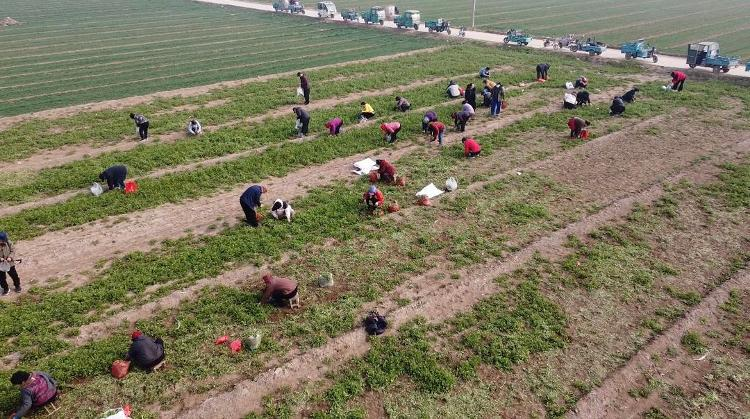
Weinon land holdings professional co-operative, yinon village, yuyaku township, texas
Thus, beginning at the end of 2024, the cooperative made a 10-acre attempt to grow large leaves, which were stable at 3,000 pounds, with the main supplier being a restaurant. “this year, we're starting to get people to pick it up, and we're going to weigh it at $2 a pound. Five days of activity attracted more than 1,400 people and sold nearly 10,000 pounds on the spot.” gao shih said。
But it's not an easy job. Quality may be affected by problems in any single step, from picking and sorting to pre-colding, packaging and transportation. In the absence of cold chains and stable marketing, once fresh vegetables cannot be shipped, they can easily be corrupted in the course of the journey, and all inputs in the preceding period will be drained。
Ko shih-hyun told reporters that she had been growing herbs in three or four townships around the village, but that she had barely done it. “some people wanted to play late so that she could come to the market early, so they went to the shed. But the temperature's not good, the food's getting old, the taste is bad, the price can't be sold."
Similar fluctuations are not uncommon in the market. For example, when the head is on the market, it sells up to $560 a pound, and when the tail is down, the price falls to a few dollars. Together with the high levels of production affected by the weather, it is almost normal to make “a year, a year, a year, a year's loss”。
Even so, gao shih sees room for development. On 26 march, he informed the press that chinan guests had come to negotiate and cooperate with a plan to use veggies for the processing of wild foods, such as noodles, fruit and vegetable juice, and that, next, the cooperative was planning to expand the area and variety of wild vegetables, “to pick them up and play new tricks”。
With the warming of the wild-weed economy, the industry is moving from sporadic temporal pick-ups to scale development. China's forestry yearbook data show that our production of wild vegetables increased from 215,000 tons in 2004 to 444,000 tons in 2023. Behind the doubling of growth is the continued rise in market demand and capacity for resource development。
Journalists have observed that shandong has used crop cultivation breaks or other cash crop pairs to promote the scaleing of wild vegetables and the practice of harvesting and farming. Overall, however, the range is still in the form of sporadic collection and small-scale cultivation, and resource advantages have not yet been translated into real-industry capacity。
03
Whose spring is the wild vegetable economy
“in the past few years, wild vegetables have become more popular in catering. It is light, nutritious and very young.” in the view of the director of the school for the development of vegetables of the shandong kari business group and the director of the changanyong boshan restaurant, the real value of wild vegetables, in addition to “fruit”, is “short” and “fruit”。
“like fragrances and veggies, it takes dozens of days a year to miss. We're going to turn this sense of time into a taste of groceries, a taste that eaters think about every year.” as a result of several rounds of improvement, sun-chai has launched this spring a fragrance of fragrances, with a spring-capture soup that can sell 500 or 600 copies a day。
In addition to coming to the hotel table in an innovative manner, the picnic is gradually being integrated into the rural tourism landscape. In the children's resorts of the pumong mon children's conservatory, many farmers have integrated wild vegetables into the casseroles, chickens, creative vegetables and so forth, creating a tasting label that is unique to the quino. “the fresh, safe and transparent kitchens are important reasons for attracting tourists. A presentation by the person in charge。
However, journalists have found that shandong's business is still fragmented compared to the products of the integrated “dig cane + people's home experience” in places such as zhejiang and guizhou, and that it is difficult to form a complete consumption closure, often at a simple and condensed stage of “dinning + wild vegetables”。
"if you want to catch this wild-weed heat, the key is integration." the chairman of the tean tourism industry and quality tourism promotion association, song chitao, suggested that deep experience projects could be developed by integrating the resources of the brigade at multiple dimensions. For example, the roll-out of a pick-up and accommodation package to allow tourists to experience pick-ups and good foods in mountain life, and the design of a land-sharing project, “travil recognition, sowing harvests”, in combination with non-remaining foods and local cultures, have made people more involved。
“in other words, the development of the wild vegetable economy requires not only the upgrading of planting technologies and market access, but also the deepening of the integration of the cultural brigades and the creation of ecological systems that cut across the entire industrial chain.” song chitao said。
Wang tsuru wing was involved in the writing