In a rapidly changing era of science and technology, ai has become an important force for social progress. In the many technical branches of ai, knowledge mapping, with its unique intellectual expression and reasoning capacity, is gradually showing great potential in the field of education. This paper will map the knowledge of artificial intelligence in your science and explore how it can contribute to the development of higher education。
Knowledge mapping (knowledge graph) is a structured form of knowledge expression in which entities, concepts and relationships are presented. In the area of artificial intelligence, knowledge mapping is widely used in a variety of aspects, including semantic search, smart questions and answers, and referral systems。
The core of the knowledge map lies in its strong intellectual expression and reasoning. By presenting knowledge in a structured way, knowledge mapping enables computers to better understand and process human languages, thus achieving more intelligent applications. At the same time, knowledge mapping supports complex knowledge reasoning and queries that can provide users with more accurate and personalized services。
Applications of knowledge maps in tertiary education
1. Knowledge mapping to help build digital knowledge systems in higher education
Through the knowledge mapping, higher education institutions can achieve uniform classification, labelling and retrieval of teaching resources in the form of knowledge mapping, such as teaching materials, curricula, cases, questions, etc. In the database, teachers can update their knowledge points for uploading, editing, deleting, etc. The system ai wisdom determines the type of knowledge points and summarizes them, thus continuously improving data accumulation。
Building a knowledge system for the disciplines: colleges of higher learning can organize and display, statistics and retrieval in the form of a knowledge map of the relevant knowledge points, concepts, theories and relationships, depending on the characteristics and needs of the disciplines。
Building a curriculum knowledge system: colleges of higher learning can present the content of the curriculum, teaching objectives, teaching methods, etc., in the form of knowledge maps, helping teachers to better understand the thinking of curriculum design and optimize teaching programmes. At the same time, students can learn better about the learning objectives and content structure of the curriculum through the curriculum knowledge system mapping and improve learning effectiveness。
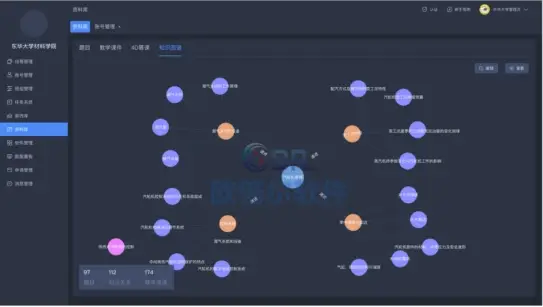
2. Artificial intelligence to support accurate diagnosis and personalized learning path design
Developing a multidimensional, dynamically updated personalized user digital image: based on large data analysis and artificial intelligence techniques, a comprehensive, real-time diagnosis of students ' learning from knowledge, skills, problems, etc., leading to the customization of individualized dynamic learning paths, the construction of a full student digital image to ensure maximum learning effectiveness. Intuitive and easy-to-use data presentation and analysis tools are provided to teachers and students to assist with precision and individualized learning。
Massive resource intelligence: knowledge mapping integrates and connects vast amounts of teaching resources organically, enabling learning to be refined through intelligent algorithms to extract and recommend individualized learning content based on students ' learning needs and progress. Through the ai+ knowledge mapping, teachers are able to plan their curricula in real time, with substantial resources, and students are able to access intelligent learning skills orientation advice, leading to the construction of an intelligent teaching landscape。
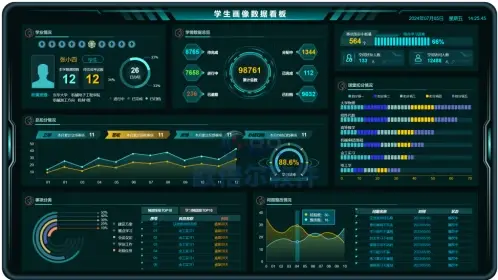
3. Aig to help build a system of intelligent teaching and answer counselling
Interactive learning in natural languages: knowledge mapping provides rich syntax and background knowledge for the interaction of natural languages. The ai dialogue system effectively imitates interactive learning processes between students and teachers, students and students, transforms people-to-people below-line communication into online people-to-species communication, allows users to efficiently access the overall resource base through dialogue, extracts integrated and effective information and improves learning efficiency。
Digital wisdom dialogue interface: using natural language processing and machine learning techniques, the creation of two types of intellectual support roles, ais assistant teachers and ai companions, and the creation of an ai answer system that accurately understands the different needs of students and provides effective answers. Through interaction with students, the system continuously optimizes the performance and accuracy of the ais response system, provides immediate and easy response services to students, reduces the burden of answering questions on teachers and improves the quality of their learning。
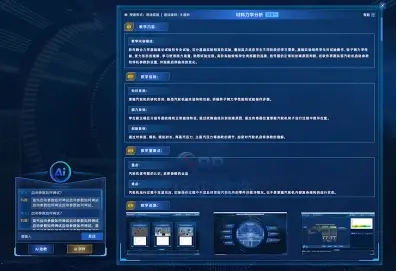
4. Integration of teaching and management scenarios for structured learning support
Supporting pedagogical decision-making and assessment: knowledge mapping provides data analysis and visualization functions that can provide strong support for pedagogical decision-making and assessment. By analysing students ' learning data, teachers are able to understand their learning needs and difficulties and adapt their teaching strategies and methods in a timely manner. At the same time, the knowledge map provides student progress and achievement statistics, provides teachers with comprehensive student learning assessment reports, helps teachers to better view their learning and guides their learning paths。
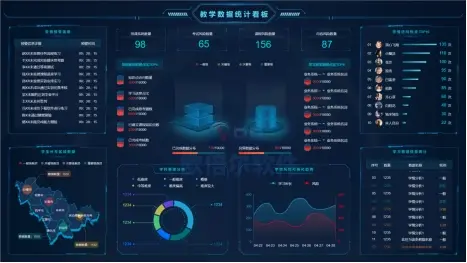
Precise teaching programme design: knowledge mapping can provide teachers with support tools for curriculum design and development, building on students ' learning and results, helping teachers to build a curriculum framework through linkages and analysis of knowledge points, generate test questions, automatically update teaching content, create intelligent classrooms, and safeguard the quality and effectiveness of teaching。
5. System-building for an intelligent educational management platform
Data deposition and self-renewal learning: based on smart technologies, the systematic integration of teaching activities with knowledge points and the construction of a core vehicle of teaching knowledge in schools. This mechanism has a strong self-renewal and iterative learning capacity to capture and record in real time the details of teaching activities, including teaching behaviour, learning progress and interactive feedback, and to conduct in-depth analyses and excavations to continuously optimize data structures and knowledge maps。
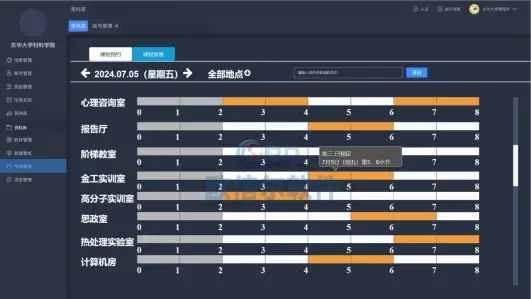
System of smart teaching and management platforms: the smart teaching and management platform brings together advanced technologies and educational ideas that can significantly improve the efficiency, individualization and intellectualization of teaching and learning management. Through the platform, university users achieve a range of efficient and easy-to-use functions, such as knowledge mapping and management, account number management, class management, establishment and issuance of system tasks, intelligent scheduling management, booking and retrieval of courses and real-time queries on teaching activities。
Knowledge mapping is also widely used in scientific research. By building knowledge maps in specialized fields, researchers can quickly find relevant literature and research results and provide strong support for scientific innovation. At the same time, knowledge mapping supports complex knowledge reasoning and data analysis that can help researchers to identify new scientific directions and hotspot issues。
As an emerging technology, artificially intelligent knowledge mapping is gradually changing the face of tertiary education. It not only provides students with a personalized learning experience, but also optimizes the hands-on teaching process and improves the quality and efficiency of education. In the future, the use of knowledge mapping in tertiary education will become wider and deeper as technology progresses and applications expand. Let us all look forward to a future full of infinite possibilities