Building attractive national knowledge resource data library
– experts who know how to get out of the knowledge-sharing dilemma
Scholars have won the china information network and have been pushing thousands of waves in academic circles。
This report reports continuously from the focus on the case itself to the exploration of the rights of authors, periodicals and database platforms. In today's increasingly sophisticated information explosion and technological means, knowledge-sharing is faced with a “distress”: high-level academic resources are overpaid and free resources are of too low quality. In response, several experts suggested that governments take the lead in building national knowledge resource databases to address barriers to knowledge sharing。
What are the issues to be addressed and what lessons can be learned from the development of a national knowledge resource database? How can open access knowledge-sharing models be made more attractive? It's becoming a hot topic in the academic world。
Journal papers are also a national resource
While there was acceptance of the practices of informatization, apology and partial price reductions, there was also the view among scholars that in the age of knowledge-sharing, academic literature was relegated to the top of the corporate platform, becoming a priceless commodity that was turned against the information age。
Liu bao, deputy director of the center for academic journals of the institute of geographic resources of the central institute of science and technology and director of the editorial department of global change data journal (in chinese and english), said: “the problems revealed by known remind us that it is time to resolve to build a national knowledge resource database and a shared platform with academic papers as an important element.”
Such dilemmas have arisen before。
“from the 1990s, our scientific and technological community focused on two strategic issues: first, is scientific data a national strategic resource that should be managed by the state; second, are we on a commercial or a public good path in scientific data management? And finally, we chose the public good sharing path for scientific data." liu ban, introduction。
In 2002, the ministry of science and technology and the ministry of finance, among others, took part in the preparation of a platform on basic scientific and technological conditions for the transfer of all data from scientific research projects by scientists and the orderly promotion of the open sharing of scientific data。
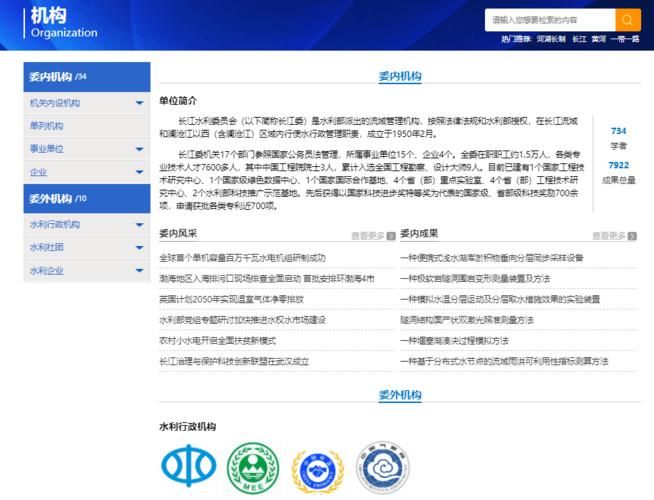
To date, we have built 20 national scientific data centres, such as the national centre for high energy physical science and the national centre for scientific data on earth systems。
“the results of scientific research include scientific data and research papers. If scientific data need to be collected and protected, periodical papers are both a subject of knowledge dissemination and a national resource.” liu bang said。
The associate professor of the northeast teacher training university, van yongqun, observed that primary and secondary school teachers wanted to do research but were embarrassed by the fact that they did not have the authority to download papers and that “most primary and secondary schools did not purchase a knowledge network service”
“like government roads, parks and libraries, everyone has access to non-competitive, non-exclusive, non-profit basic public services.” according to yongquan, “documentary services and management cannot be over-centralized, and the establishment of national knowledge resource databases can avoid the monolithic nature of some databases and promote resource diffusion and sharing”
Find a balance between public goods and business
Currently, the library website of the united states congress is available free of charge to all ages, and researchers can access and download information。
“a number of high schools or scientific institutions in the country receive funding from the government, but many scientific research papers lack formal channels for free download.”
“data construction requires sufficient patience, and even if the government takes the lead in building the database, it will be very difficult to establish all system-wide data content in a short time.” van yongkun participated in the construction of the database of the china professional degrees centre of the ministry of education. “behind a competitive database is the need for strong technology, management teams and financial inputs, which is the basic premise and the reason for the rapid growth of the network.” he said。
At present, many databases have their own features or advantages, with a digital platform for library collections, access to electronic versions of most of the library's books, and a new eastern multimedia learning library suitable for expatriates to learn english. How can national knowledge resource databases be located
“take care to distinguish between basic and special services.” in yongquan's view, basic services should be accessible to all users and address the public, basic and inclusive needs of users, such as access to literature and downloads, and should be free, accessible and equitable。
For the specific needs of some users, such as degree dissertation services, individualized literature analysis, etc., “may be subject to a prescribed fee for services”. “the national knowledge resource database must also have an open market sense, not be considered free of charge as `cause it chokes', nor can it be considered `for granted'.”
Reijian, a professor at the institute of information management at a “two-tier” university in the east, believes that the lack of commercial competition and market-driven factors make the supply of public knowledge products prone to “infrequent charge”, resulting in low-quality overcrowding, regulatory deficiencies and delays in services。
In the past, some of the public knowledge data platforms have been built up in a form of poor quality, poor service delivery and low utilization of “deficit”. “we need to take similar infrastructure pricing measures, develop a filing and price control programme, and find a balance between public goods and business”
Open access is the main reason for accepting the use of fees
Digital publishing began early in the west, with clear commercial paths and the emergence of foreign forces on internationally renowned digital publishing platforms such as esver. Liu ban, “japan faced a situation similar to ours in the face of the siege of the digital publishing giant.”
In 1998, the japan integrated science and technology information system (j-stage) was developed by the japan agency for scientific and technological renewal, incorporating the literature published by japan's scientific and technological societies in the fields of mathematics, communication and information science, synthesis, physics, automation, etc。
As of january 2022, j-stage had recorded about 5. 3 million periodicals, conference literature and studies in 25 areas, 86 per cent of which were academic journals and more than 95 per cent of which were open to full-text access。
In liu's view, the j-stage approach can be understood as the japanese government's funding of a national, public interest knowledge service platform focused on academic journals, dominated by open access, tolerant of user fees and open to the world. “japan's nobel prize laureates have come out of thin air and have nothing to do with their open access to the knowledge-sharing environment.” liu bang said。
In 2012, the chinese academy of social sciences established the national database on philosophy and social sciences, which promotes the use of academic resources for public benefit and is open to sharing. The public can download the results of the papers of the national social science fund project free of charge. The database was officially launched in 2013, but its impact remains comparable to that of the knowledge network。
According to the journal of users of the database of academic journals of the national centre for philosophy and social sciences (2019), the centre has almost 20 million online data, with a cumulative number of nearly 700 million hits and over 32 million downloads。
“the average number of downloads per paper is 1. 6, which is almost negligible.” according to xiaowei, the editor-in-chief of a news-communication journal, “within the industry, every 100 copies are `low downloads', and every quality journal is downloaded, typically from tens of thousands to tens of thousands”
The periodicals that worked at zeng xiaowei were of high quality and were included in the knowledge network and the national philosophy social science database. For the volume of downloads of a single paper, zeng xiaowei's psychological expectations were “over 1,000”。

“most of the content of this magazine is downloaded on the internet more than ten times as much as the national philosophical social science database.” in his presentation, wei wei said that, at present, the internet and the magazine follow a “two-free” model, which does not require payment for quality content from periodicals, nor does the journal have to pay for internet dissemination。
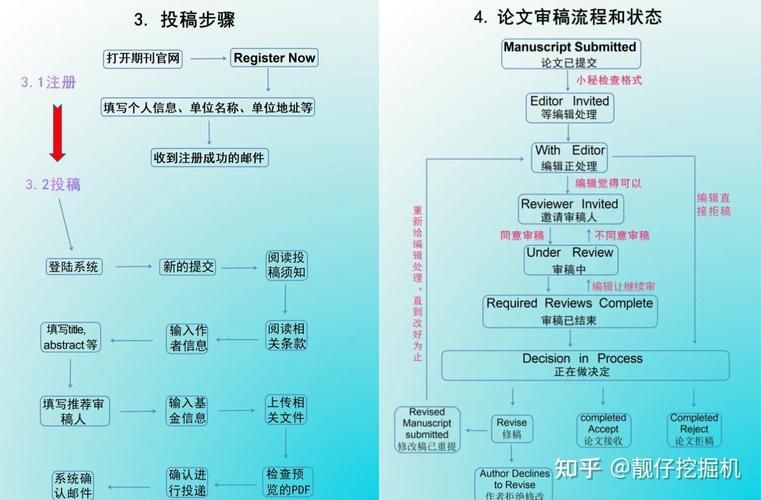
In the news of the cyberwaves, compared to one-sided public opinion, xiao wai had a different opinion: “the network has designed a dedicated submission platform, compared to the uploading of the journal's thesis, which can normally be completed on the internet in two days. However, the papers submitted to the national database of philosophy and social sciences can be submitted only by regular mail, which is transmitted by e-mail before a week's response. Sometimes it takes half a month to get the paper online."
“in addition, the network has a vast pool of anonymous peer-reviewed experts who play a significant role in helping periodicals, especially small and weak ones.” it has been argued that market services and competition awareness play an extremely important role in the science of the size of databases, the number of users, and whether interfaces are friendly。
Influence factor determines attraction
In june 2014, liu ban and his colleagues built the global change scientific research data publishing system, publishing more than 1,000 scientific data sets and 400 papers, bringing together nearly 400,000 papers, all of which are open and shared under intellectual property protection principles。
If the database is completed, how can it attract scholars to upload their work proactively and be considered as an academic sharing platform? This is a problem for all database operators。
“database construction cannot be built on a platform, not a platform. If a national knowledge resource database is prepared, the impact factor is clearly defined, leading authors and journals to proactively share knowledge on this platform.”
Academic exchanges include not only the dissemination of academic knowledge but also multiple mechanisms such as academic evaluation. According to ri jianjiang, “the reliance on knowledge networks is high because it has established an academic evaluation system in which many authors and periodicals measure academic impact by taking, quoting and downloading results”
Liu bao suggested: “in top-level design, journal papers should be encouraged to upload the national knowledge resource database and be integrated into national evaluation systems such as `excellent plans'.” the programme of excellence is a national programme in the field of chinese academic journals, implemented jointly by seven departments, namely, the chinese ministry of finance and the chinese ministry of science。
Quality platforms are evaluation-oriented and allow for easier pooling of quality resources, with impact factors undoubtedly driving. According to ri jianjiang: “in building a national knowledge base, a scientific evaluation system needs to be developed to make the platform more attractive and to ensure the emergence of high-quality knowledge papers.”
(part of the interviewer uses aliases)