On august 25th, china's new internet portal (journalist wang xiaobin) almost ended the year's national market season with the delivery of a brilliant “checklist” by the hainan branch industry. On 24 august, at a seminar on the breeding of the zenyu eye in 2025, held in hainan province, wang jiabao, vice-president of the department of agriculture and rural affairs, described the fact that, in 2024, under the adverse effects of the typhoon, the total production of the zengai branch in hainan was approximately 230,000 tons in 2025, an increase of nearly 30 per cent over the same period, with a total value of nearly 4 billion yuan, achieving a productive harvest after the disaster。
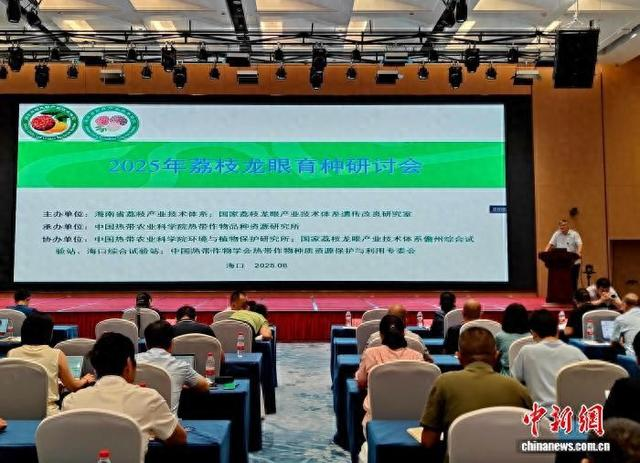
On 24 august, a seminar was held at the seagate in 2025 on the seeding of the cylindrical eye. Hostage
As the southernmost part of the country, hainan, thanks to its unique climatic conditions, was the country's first place on the market. The luminium branches and the dragon eye, one of the representative industries of efficient agriculture that characterizes the hainan tropics, have gained momentum in recent years and have become a golden fruit for the enrichment of the farmers of hainan, as well as a niche industry for the revitalization of rural areas and the construction of agricultural power provinces。
According to wang jiabao, in 2025, the hainan zeng branch industry was characterized by a positive trend of “sold and sold”. Over 80 per cent of the country's gardens are kept ahead of other production areas, and the orchards in waning, mau, leung and others are ordered to be empty just before the spring festival。
Statistics on the technology system for the gill branch industry in the province of hainan show that during the production season of 2024-2025, the amount of fresh fruit from the gill branch of the sea amounted to 2178 million tons, an increase of 28. 12 per cent over the same period; the production of gill branch production amounted to 3. 809 billion yuan, an increase of 36. 52 per cent over the same period。
In terms of prices, at the beginning of the listing period, the head price of quail was as high as $110 per kg, the head price of quizumi was 78 per kg, the head price of zhu xianyi and the head price of the zhuang branch was 80 per kg and 140 per kg respectively; the combined average head price of quizumi was 30. 78 per kg, all higher than the normal year。
Behind the burgeoning industry, hainan faces challenges such as relatively monolithic structure. According to wang jiabao, of the 380,000 acres of twigs in the province at present, the number of “honeys laughing” is over 300,000. Year-to-year production and marketing data show that when the “hospital laugh” in the north of the sea and the “hospital laugh” in the south-east overlap with the market period in the south-east, the gains of the hainan fruit farmers will be significantly reduced; the main species of the hainan eye are “sheltered” and “stored”, and the promotion of the new species of the dragon eye is just beginning, and the restructuring of the varieties is now urgent。
Faced with these challenges, wang jiabao indicated that henan province would focus on four areas: strengthening the selection and utilization of pre-maturity and pre-maturity high-quality gill varieties; promoting the cultivation of critical technologies and the construction of standardized production orchards; strengthening capacity-building in cold chain preservation and supporting equipment upgrading of cold chain facilities; improving marketing capacity, promoting the construction of public brands in the hainan gill eye provincial area, optimizing brand image design and further enhancing the visibility and influence of the hainan gill eye in national and international markets。
In 2025, a seminar on the breeding of typhoids was held under the auspices of the technical system of the typhoid industry, hainan province, and the genetical improvement research unit of the national technical system of the typhoid industry, hosted by the institute of tropical crops resources of the chinese academy of tropical agriculture. (concluded)