01 product innovation
Office furnitureThe design is moving from a traditional, unhumanized one-size-fits-all model to more healthy anthropotechnical designs, such as human engineering chairs and adjustable lift tables, to meet the needs of different scenarios, with higher premiums. Office furniture has moved away from traditional “one-size-fits-all” designs towards more humane health upgrading. Human engineering chairs have become a mandatory option, and mainstream products are not only equipped with adjustable air pressure poles, arc-shaped self-adaptation pillows and air-traffic net seating surfaces, but also have some high-end formulas integrated into sit-in monitoring functions, which, by connecting with the app with built-in sensors, alerts people in the workplace to the problem of prolonged labour. At the same time, the table has launched a “up and down revolution”, and the market penetration rate of the electric lift and down table has increased by 35 per cent in 2025 compared to the previous year. It can be freely regulated within 70 to 110 centimetres and easily adapted to the switchover demand between sitting and standing offices. Brands, such as music, have improved user experience by leveraging action control up and down through vibration sensor technology。
Exploitation of office furniture was also carried out in response to the health needs of different subdivisions. For example, in the field of education, collision-resistant, near-sighted anthropotechnical desks and chairs have been introduced, while specialized anti-bacterial office furniture is available in the medical system and requires authoritative anti-bacterial performance testing for procurement. This “situational health customization” model has resulted in an industrially certified product premium of 20 to 40 per cent。
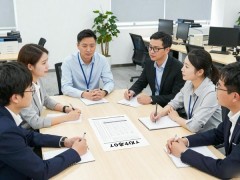
The shift in office furniture from single-use to modularized combinations to meet variable office needs and to accommodate residential and shared space has resulted in a 40 per cent increase in space utilization. As the demand for hybrid office and collaboration grows, furniture products are moving in the direction of “flexibility and variability”. The modularized combination table became a new attraction for start-up businesses and shared office space, with four single-person tables quickly collating into a conference table and then re-establishing independent workspaces with mobile cashiers, resulting in a 40 per cent increase in the utilization of 100 m2. In addition, home-based work has led to the rise of the “small multifunctional” category. For example, the folding of desks, which can be collected with a wall when they are not used, and the office couch with the storage function, which combines the file storage function with that of the waiter, increased their sales by up to 120 per cent in the first half of 2025。
Traditional office space is also gradually “de-stereotyped”. The removable whiteboard and roller cabinets have become the standard, and some enterprises have even adopted collable screens that can create independent office areas and quickly switch to open collaboration models. At the same time, visual light quantification has been followed by the application of light-coloured original wood quality, glass file cabinets and bottom frame empty structures, giving a sense of penetration to small spaces and achieving the dual advantage of functional utility and visual amplification。


02 value increase
Environmental protection is no longer just a compliance requirement but a core industry competitiveness and many brands promote office furniture through environmental certification and the use of recyclable materialsGreen transitionI don't know. With growing environmental awareness, greening has become central to the competitiveness of the office furniture industry. From the initial compliance requirements to the current proactive pursuit of environmental standards, enterprises have incorporated environmental concepts into product design, production and use. Many brands have introduced environmentally sound certification products, adopting recyclable materials, low-carbon processes and energy-saving abatement designs to enhance business image and meet consumer aspirations for green life. At the same time, new environmentally friendly technologies, such as the use of bio-based materials and the development of low-carbon manufacturing processes, are being explored by industry to promote the green transformation of the office furniture industry。
Smart technologies have shifted from stand-alone applications to system-connection, introducing wireless charger and temperature-moisture adjustments, and achieving office-system interfaces in high-end products. The in-depth application of the technology has led to the transformation of office furniture from a simple “insulated object” to an “intellectual ecological node”. Today, basic intelligence functions have become fully available, such as wirelessly charged desktops, smart storage cabinets that automatically regulate temperature and humidity. High-end products, on the other hand, have further achieved system connectivity — a smart seat that connects to the office system, allows for the recording of sit-in data and adjusts seat support; and a smart meeting table that combines a number of functions, such as videoconferencing, file transfer, etc., which greatly enhances collaboration efficiency。
03Market patternsChange
Government procurement has become an industry target and has contributed to the optimization of products by enterprises, thereby increasing the market share of the header. As government procurement became the industry's “windwards”, in october 2025, the total national purchase of furniture amounted to rmb 1,058 million, an increase of 36. 25 per cent over the same period, and was concentrated in government institutions, education and health care. Central state agencies procure through framework agreements, employing the twin model of “direct purchase + price”, which further promotes the optimization of products and services by enterprises. In this context, eined and xinol furniture, among others, have succeeded in taking up nearly 60 per cent of the share of government procurement through their compliance advantages and a landscape-wide solution。
Web purchases are mainstreamed, information transmission efficiency is enhanced, business build-up service models are shifted from sales to life cycle management, and client satisfaction is enhanced. Network marketing has become a mainstream channel, with a 45 per cent breakthrough in the share of online purchases in 2025, and its advantages of efficient messaging and fit-for-collective procurement have been fully demonstrated. In order to adapt to this change, businesses have developed digital service systems, such as the provision of 3d spatial planning and ar landscape previews, as well as rapid response and delivery through beijing and shanghai double-barrel layouts。

Future outlook
The combination of high-end markets and light quantitative furniture models has led to advances in global markets, particularly in south-east asia and europe and the united states, contributing to globalization and localization. On the domestic market, high-end upgrades coexist with submergence infiltration. In front-line cities, high-end smart and environmentally friendly products have been followed, and the market for high-end office furniture in guangdong and shanghai has grown at a rate of 18 per cent. In the third and fourth-line cities, where the needs of small and medium-sized enterprises (smes) supported by a light quantitative association model were met, olympian furniture contributed 30 per cent of the revenues through more than 2000 association firms。
The globalization landscape has also become a new growth point for enterprises. Thanks to the rcep policy dividend, businesses moved into the south-east asian market to create production bases in viet nam and thailand to produce light quantitative furniture adapted to the damp environment in order to circumvent trade barriers. At the same time, enterprises target high-end markets in europe and the united states to break technical barriers through environmental certification and original design. A brand has been successfully introduced into the european market through desktop products containing 70 per cent of obsolete textiles and has achieved a “green out of the sea”。
Conclusion: search for certainty in value re-engineering。
In 2025, the office furniture industry was undergoing a profound transformation from simple functional satisfaction to a new phase of value creation. Healthyness has become the key to addressing the core pains of users, flexibility has adapted to the needs of landscape change, while greening and intellectualization have become inevitable trends in industry development. Together, these four trends constitute a definite direction for industrial development. For enterprises, the global market for office furniture of $85 billion in 2025 can only be neutral if technological innovation is continuously advanced, the product base is solidified, while the green compliance principle is followed, policy priorities are taken and competitive advantages are built through service upgrading。