On the morning of 4 october, a 100-acre rice paddy lumber and fragrance of rice was planted at the organic rice farm in gusheng village, bay bridge town, da lisi。
"the production data are 662 kg/acre, and the demonstration was very successful!" the institute of agricultural resources and environment of the sichuan academy of agricultural sciences, lu sehua, said to the first financial journalist that the “elemental high-productivity techniques for rice membrane conservation” had been demonstrated in the dalit experiment, not only to achieve high yields of organic rice cultivation, but also to solve the problem of pollution from agricultural sources that had plagued for many years。
Pollution from agricultural surface sources affecting the quality of water in the mother sea
The mother sea, which is located in the province of dalit-breath in yunnan, is the second-largest freshwater lake in yunnan province, and is an important part of the national nature reserve of the mount mae sea, as well as a centralized drinking water source in the city。
In previous years, there had been a serious lack of orderly development of the mother water basin, ecological destruction of the lake and a decline in water quality. The survey found that contamination of agricultural surface sources was a major cause, in addition to the disorderly development of tourism in the surrounding areas and ecological damage to non-coal mines. On the coast of mom, farmers mostly use fertilizer foods and vegetables, and heavy-water fertilization patterns produce large amounts of nitrogen- and phosphorous-rich farm tails. These tails follow the ditches and eventually flow into the mother sea, causing pollution。
As a result of a series of measures such as ecological relocation, mine remediation, management of agro-source pollution, and management of over-exploitation construction, pollution of the mother-water basin has been effectively controlled and the quality of the mother-water is on a positive trend. In 2020, 2021, the results of the evaluation of the quality of the mother sea were “excellent” for two consecutive years。
In the area of surface-source pollution management, in recent years dalit has introduced organic fertilizers as an alternative to fertilizers. One of the key measures to change local traditional cultivation patterns is the introduction of “a combination of high-productivity techniques for rice membranes and water-saving fertilizers”。
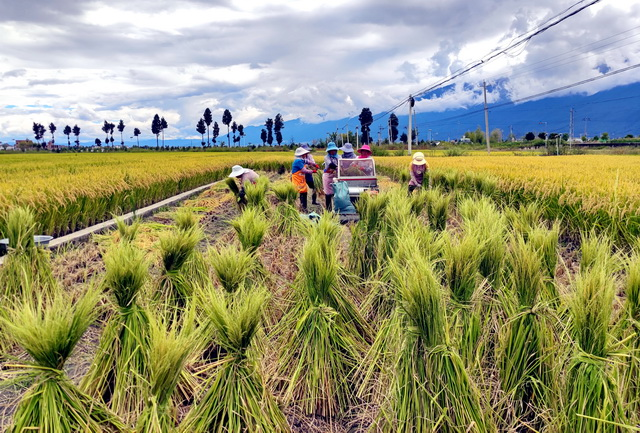
On 4 october, the site of the organic rice harvest in kosheng village, baybridge town, da lisi city. Source: institute for green development of agriculture in the mother sea basin
As early as 1998, the agricultural institute of sichuan province, in collaboration with the chinese university of agriculture, began a rice experiment in the yunjiang district of cheng city with membrane and straw cover of drought, proving that rice cover cultivation had a significant impact on water conservation against drought and increased fertility, leading to green production。
Over the years, technology has matured. “in 2006, this technology was demonstrated in the town of zhengyang, in the town of goejiang, when it coincided with a hundred-year-old drought in kawatsu, where many of the rice fields that were grown in traditional ways did not yield, while the rice fields that used our technology increased in reverse.” lu shihua said。
On 4 october, at a survey and inspection conference in gusheng village, the yunnan rural science and technology service centre, experts gave an opinion on the field acceptance of high-yielding organic rice production in the mother river basin, stating that a collection of 204. 00 square metres, a wet valley weighing 245. 10 kg, dry removal of impurity 2. 0 per cent, measured 27. 92 per cent of water and the equivalent of a standard acre production of 662. 27 kg were collected。
The expert group considered that the project group's demonstration of integrated, high-yield technical experiments in organic rice conservation, such as biodegradable membranes, carcasses, triangulation, etc., had effectively addressed low-temperature coercion, inefficient nutrient use and the problems faced by rice production in the mother-water basin, which were important for achieving high-quality synergies between environmental protection and rice production, conservation of the mother-sea ecology and increased crop yields for farmers, and recommended that they be promoted。
Rice-cover technology solves many problems
According to the first financial reporter, the “medical high-yielding techniques for rice membrane conservation” have also encountered a number of problems in their promotion。
Duplicate cultivation, because of its warming and wetting effects, is common in winter crops and vegetable production, but it is rare to use rice。
Rice, which is grown using a combination of “paddy-resilient and high-yielding techniques”, is used only as base fertilizer for farmers and is not applied later. In previous years, when the technology was being replicated in some places, such as takeshi county, sichuan province, many farmers were not convinced that it would lead to high rice production。
In 2021, the pilot field of organic rice in yongsheng town, takeshi county, was fruitful. The results show a minimum acre production of 401 kg and a maximum of 580 kg, while rice acres grown without membranes produce less than 200 kg. Look at the scales, the villagers got dressed。
“it is also believed that membrane cultivation can lead to white pollution.” lu shihua described the fact that, in promoting rice membrane technology, technical staff have placed special emphasis on environmentally friendly and non-polluting membranes. Since 2018, the technical team has also been successful in conducting research on the application of biodegradable membranes and membrane interpolation techniques in collaboration with basif (china) ltd. And yunnan palamic plastics group ltd. (hereinafter referred to as the “curvature group”)。
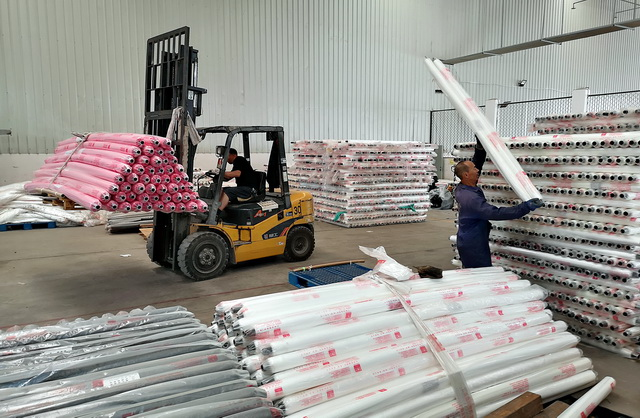
Rax group agricultural film production plant. Photography/plain
According to lubin, the general manager of the curvature group, the main components of the whole biodegradable membrane are polymers and polyulsic acids, degraded to water and carbon dioxide and small biomass by bacteria and fungal microorganisms in the soil at the end of crop growth, which take only two to three months to naturally degrade the membrane and do not pollute the environment。
Another question was the cost, and whether the rice cover would increase the cost of planting and lower income. According to lu, the results show that while the cost of the membranes per acre of rice fields has increased by more than 200, savings on pesticides and fertilizers amount to nearly $150, as well as several hundred dollars on weeding, while production has increased by a factor of one to two, and rice prices have increased several times。
“in the demonstration fields of the village of gusheng, organic fertilization was reduced this year by 60 per cent compared to the use of traditional local organic cultivation.” according to lu, this is both reducing production costs and being environmentally friendly。
“you've probably seen my friends in circles. When da lisi's rice matures, many people want to buy it because it's of good quality and safety." lu shihua told his friends, "consumes the rice, too, are protecting momma!"
Mom's integrated management model is recognized
In a recent interview in yunnan province, the first financial journalist learned that the green transformation of agriculture in the mother sea basin is not only achieving high quality production of rice, but that its combined effects are also emerging。
“this integrated technology system has achieved multi-purpose synergies in terms of high crop yields, resource efficiency, disaster mitigation, eco-environmental protection, and has inspired new agricultural subjects, farmers' cooperatives, businesses, etc.” zhang fu lock, a member of the chinese engineering academy, a professor at the chinese university of agriculture and director of the institute of green agricultural development in the mahai basin。
The experience with precision management and green development of watersheds has been recognized by the relevant sectors. The second series of positive cases, recently published by the central ecological environmental protection inspectorate, provides an overview of the integrated management of the water environment, water resources and ecology, integrating the concept of “eco-plus” into industrial development, taking into account the land flow in the mother basin, the restructuring of cultivation, the fine management of water fertilisation, and the exploitation of animal and poultry septic resources。
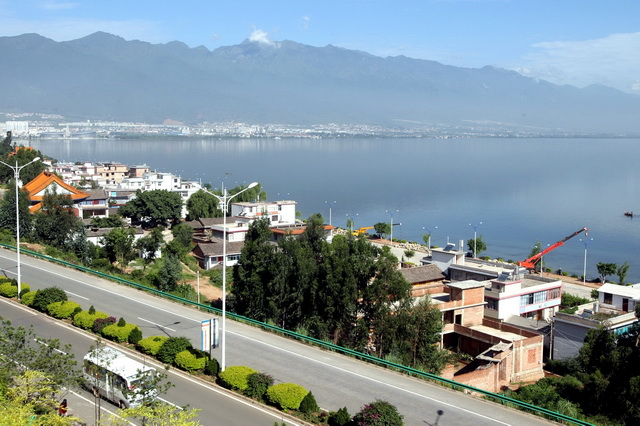
Mom sea basin view. Photography/plain
The "agricultural surface pollution management `consolidation of cultivation brigades' subdistrict control model" in dalit has also been selected by the ministry of agriculture and rural affairs as one of the country's five major models for surface-source pollution management。
On 4 august this year, the department of agriculture and rural development of dalit city, in its response to the proposal of the members of the 10th meeting of the political consultative council, no. 2022286, described the strict implementation of the policy of eco-cultivation and green organic crop supplementation in the mother-basin basin, as well as the granting of prizes to the operators of eco-cultivated farming and to the bases and products for which organic and green agricultural products have been certified。
According to the three-year battle programme for the management of pollution from agricultural surfaces in the mother sea basin, published by the state on 22 august of this year, by 2024 the use of fertilizers and chemical pesticides in the mother sea basin was reduced by 1 per cent and 2 per cent respectively compared to 2021, the membrane recycling rate was over 85 per cent, the resource use rate of animal and poultry faeces was over 93 per cent, and the development of the green transition was significant。
It is also promoting the reduction of emissions from water conservation in agriculture by promoting technologies such as coverage of conservation. By 2024, more than 180,000 acres of high-efficiency water-saving irrigation in the mother-water basin had been reached. Strengthened tailings management and recycling of agricultural land to minimize pollution loads into lakes。