


Hi, i'm the high school language teacher wei ai
On campus, i've seen it more than once: in the classroom, a child suddenly hits a teacher; in the classroom, there's an argument between two classmates; on the results list, there's a student suddenly falling off a cliff。
The first discussion was often not “what difficulties he has encountered”, “how should we help him”, but rather a light assumption: “are the parents divorced?” “it is no wonder he is a single parent, i hear.”
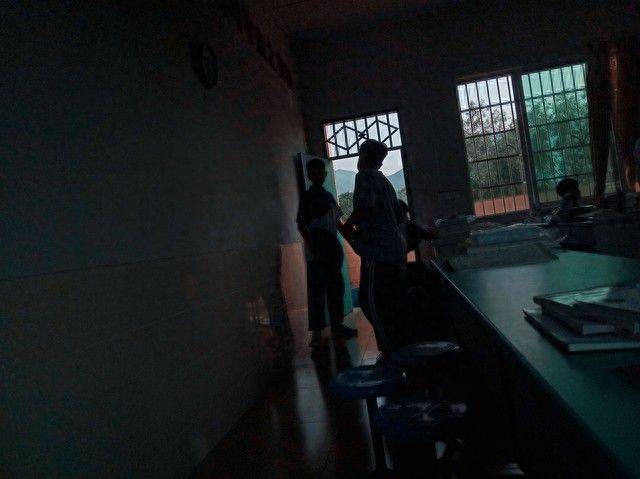
The “separate family” “single parent” “residence”, which is supposed to be softly cared for, has in some cases become the “original crime label” for “problem students”。
As a long-established educational practitioner, i have never been able to subscribe to this logic. Even more striking is the fact that this labeling is not an isolated phenomenon。
In a number of small and medium-sized cities and townships, it has become the “inert thinking” of some teachers — as if all his “unusualities” were justified by the labelling of the child as “special families”, which is ignored: every child is an independent individual and the family is only one of the conditions in which it grows up and is by no means a “fix”。
Today, we may wish to revisit the question with authoritative research, psychological evidence and scientific research: how bad is it to label a child as a family
Can the so-called “special family” really determine the future of the child
Authoritative data: “family structure”, never the only variable for child growth
Many have acquiesced that “the children of a divorced family must be in trouble” and that they are essentially in a “survivor's bias” — that it is easier for us to remember the problematic cases while ignoring the millions of children who grow up healthy in special families。
As early as 2021, the report on the development of the mental health of minors in china, published by the china centre for youth and youth studies, drew clear conclusions: the family structure is not the core factor affecting the mental health of minors, but the integrity of the family function is crucial。
A survey of over 30,000 primary and secondary school students in 14 provinces and cities throughout the country found that: (a) in families where parents are divorced but have good parent-child relations and a harmonious family environment, the child's mental health, academic performance and social skills are not significantly different from those of the whole family
On the other hand, the proportion of children suffering from anxiety, rebellion and aversion to school is 18. 3 per cent higher in the whole family of “parents who are not divorced but long-term cold war, quarrels”。
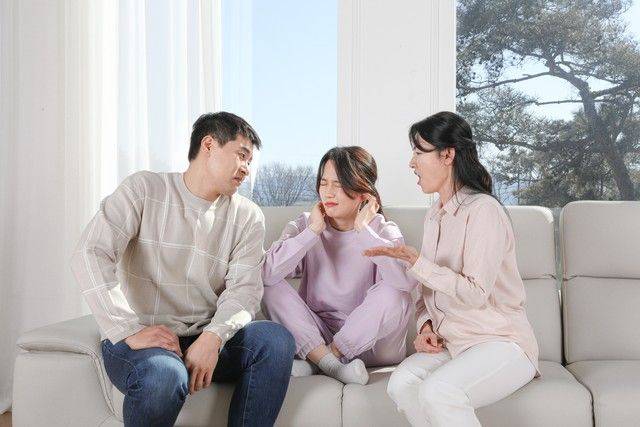
A 15-year follow-up study by the department of psychology at stanford university in the united states (family structure and child development, 2023) also confirms that it is not “parents or not together” that determine the quality of a child's development, but “the child's ability to secure stable love, clear rules and continuous companionship”。
The data do not lie: a child who is well cared for by a single mother, who is surrounded by love, and has a clear vision, is much more sunlight and tenacious than a child who grew up in a full-fledged, noisy, indifferent family。
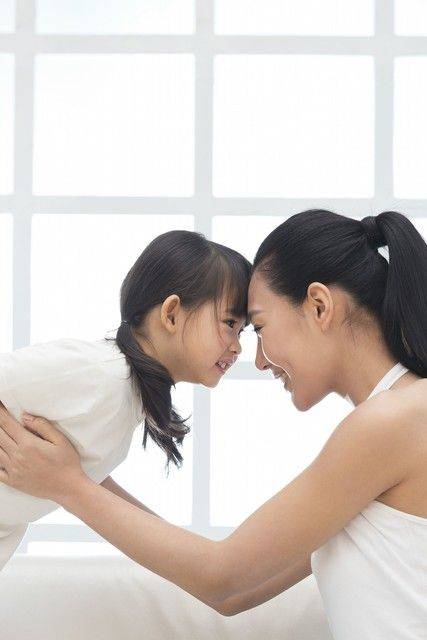
On campuses in small places, we tend to magnify the effects of the “family structure” and forget to ask: is there anyone at this child's home who listens to him? Does anyone encourage him when he's frustrated? Did anyone help him build the right values? - that's the key to child development。
Psychological perspectives: the power of labels to re-engineer children's life trajectory
From a psychological point of view, the “family labelling” of children by some teachers is exerting a terrible force in the invisible - the self-fulfillment prophecy (pigmarion effect)。
The classic experiment of american psychologist rosenthal has already proved: when teachers have some fixed expectation of students, they influence students in a tacit manner through language, behaviour, attitudes, etc., and ultimately allow them to move towards that expectation。
Specifically on campus, the effect is obvious: when a teacher takes a preconceived treatment of a child, "he's a divorcee, sure of being a rebel," he accidentally magnifies his little mistake. I don't know. His occasional deviance is interpreted as “discretionary”; his indifference to his classmates is characterized as “aggressive”; and his performance fluctuations are characterized as “involved learning caused by family instability”。
For a long time, the child will receive these negative signals and gradually accept that “i am a problem student” and that “i am not worthy of change because of the special family”. This labeling of identity would plunge children who are just occasionally lost into a real mirage of rebellion and inferiority。
It is even more distressing to note that the child development psychology believes that primary and secondary school students are at a critical stage in the establishment of “self-sameness” (erickson's theory of personality development)。
The children at this stage are extremely sensitive to the appreciation of others, and teachers' views are almost equivalent to “truths”。
When the teacher mentioned “his parents divorced” in public or in private, the label was branded on the child's heart。
A student's fingertips, self-doubts, will allow him to gradually close his heart and even disguise himself with “intentional rebellion” — like a stabbing hedgehog, not to hurt others, but to protect himself。
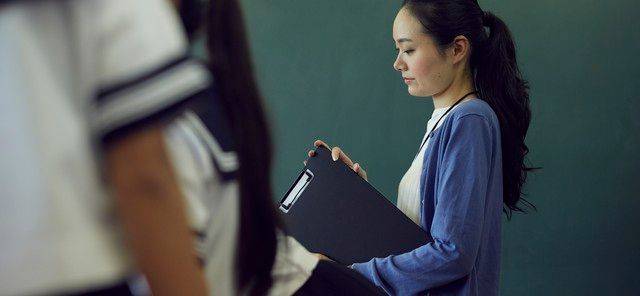
I met a second-year-old boy who lived with her after her parents divorced. Since a job was not completed, the teacher said that “the children of a single-parent family are indeed unattended”, and he refused to attend classes and even dropped out。
I later learned through long-term communication that he had stayed in the hospital overnight because of his grandmother's acute illness。
A labeled judgment almost destroys a child's path to school; an unbiased understanding can be his light out of the shadows. This is the weight of education。
Iii. The beginning of education: the best respect for children without labelling
In the educational environment of small places, some teachers are used to “family labels”, and there may be real impropriety — the number of students in classes, the heavy teaching tasks, and the need to find out quickly why children are “problems”。
But “fast” cannot be an excuse for “false”; “inertial” cannot justify “harm”。
The essence of education is that “one tree shakes another tree, one cloud drives another cloud, one soul awakens another soul”。
And labeled education cut off the possibility of awakening. It uses a fixed framework that frames the infinite possibilities of the child, and a subjective judgement that negates the child's potential for growth。
In fact, countless personalities have come from the so-called “special family” in history: susheng, a young mother who died of illness, and a father who spent years studying outside, raised by a nursing mother, became the first person in the millennium
Munfi, who lives with his mother after his parents have divorced, who was a middle-class student, but who, by his own efforts, has become a well-known facilitator
Sun zheng, who had been divorced from his young parents and lived a life of poverty with his mother, had grown up to be a good and resilient actor and had taken care of his family's happiness。
Their story proves precisely that the imperfections of the family are never the “end of life” and that the attitude of the educators can be the “closure” of the child's life。
As educators, what we really have to do is never ask what happened to his family, but focus on what happened to this child:
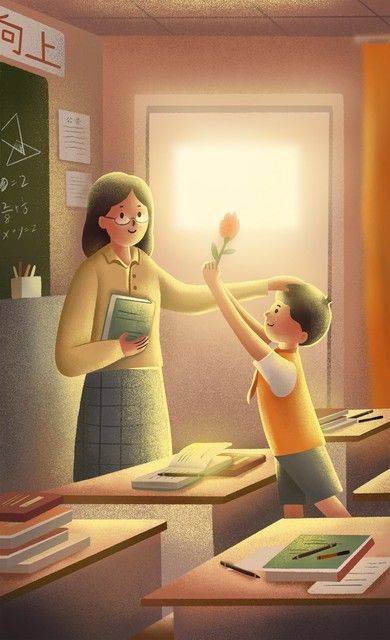
When he is silent, we can crouch down and ask, "is there something on your mind?"
When his grades are down, we can be patient in analysing him instead of taking a “family cause”
When he makes a mistake, we can clearly state the problem and tell him that “you are not doing it for a while, not you”。
We may not be able to change all the family environment, but we can change our own vision — not to wear “colored glasses” to look at children, not to label them with “family labels”。
Concluding remarks
No family is perfect, like no child is perfect. Some families, which appear to be complete, lack the temperature; others, which look special, are full of love。
As educators, we hold in our hands a living life and hope for a family。
Stop defining a child's future with the label “parent divorce” “one parent” “staying behind”; and stop making our inertia a stumbling block on the way to child development。
The tenderness of education lies in imperfect acceptance; the power of education lies in believing in possibilities。
May every teacher put down his labels and see his children; may every child not be defined and grow into the sun。



