The summary of the total development costs for the real estate project includes seven development costs and three costs. Most of the costs or costs have been solidified, and it is difficult to find room for land, construction, taxation, etc., and reducing the cost of financing and increasing the turnover rate are ways for a small number of housing enterprises to reduce costs and increase profitability ..
The compilation of the 2014 semi-annual reports of 202 listed housing enterprises found that the net interest rates of some semi-enterprises were below 10 per cent, and that the market downturn, which led to price wars among mainstream housing enterprises over the course of the year, meant that the closure of the project after one to two years would further strain the profitability of housing enterprises。
A recent report issued by the international rating agency standard & poor's indicates that the percentage of developers'sales and administrative expenses as a percentage of contract sales is likely to increase in the coming years and that declining profitability will test the sustainability of developers. How to maintain a stable profit margin in a “lower price” situation has become a common challenge for developers。
As the real estate industry matures, it is difficult to find room for costs such as land, construction, taxation, etc., in the view of the rand consulting managing director, song yanqing, to reduce financing costs and increase turnover rates as a means of reducing costs and increasing profitability for a small number of housing enterprises。
7 development costs 3 costs
Total development costs for real estate projects include development costs and “three costs”. Of these, development costs include seven items, namely, land costs, prior works, construction works, infrastructure costs, ancillary facilities, development overheads and capitalization financial costs (fund costs); and “three costs” are marketing costs, management costs and financial costs。
“the cost of land should be the largest, but since governments are the only suppliers of land markets, land-cost enterprises cannot control it, and the only thing that can be done is to make as much profit as possible before taking land,” zhang jian-hoon, vice-president of the group, told journalists that most enterprises now have a model for taking land, the key to which is that many companies are willing to take land because they forecast increases in house prices over the next three years in the area where the plot is located, precisely because of optimistic expectations of regional housing price increases, which, if not realized, are likely to run the risk of losing or even losing profits。
For its part, song yanqing argued that most of the above-mentioned costs and costs had been solidified, such as marketing costs, and that market downturns meant increased competition among enterprises, so that marketing costs for the whole industry were more likely to increase in the future. In addition, construction costs such as construction work are very transparent and there is little space to dig. Quality problems can easily arise when enterprises press prices and the project has difficulty securing engineering and departmental quality。
“of course, there is some room for optimization if an enterprise is able to conduct an upfront customer demand study.” the senior vice-president of new city holdings, ouyang jie, stated that, for example, if an enterprise is able to grasp the value sensitivity of its clients in advance and minimize the value-added costs that the customer does not need in terms of product design, for example, it can have a positive impact on cost optimization。
Reducing financing costs
Land prices and financing costs are the most important costs for housing enterprises, but, in song yingqing's view, there is a growing consensus to optimize debt structures and reduce financing costs, as the former do not have space to write。
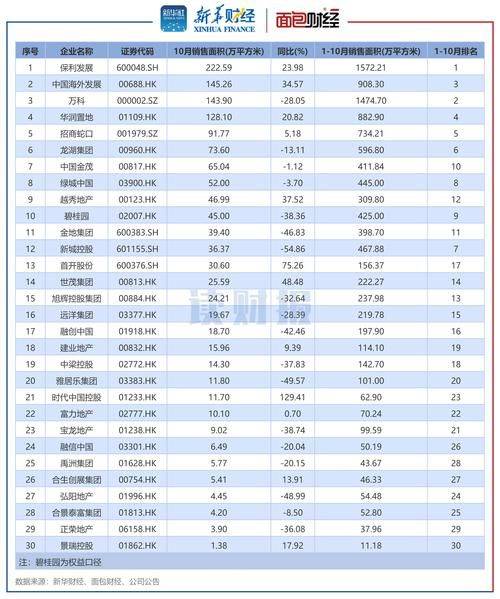
“in recent years, many domestic housing companies have preferred `breeding on the market' to squeeze into the hong kong stock market, looking at the low cost of overseas financing.” zhang jian-hoon told journalists that the current cost of insider housing in hong kong to access development finance through syndicate loans, bonds, etc., is generally within 10 per cent, while the cost of liquidity in the interior market, including through trusts, is as high as 20 per cent, so that access to offshore financing can make a huge difference to lower financing costs for businesses。
In the case of haiti, which is home to the most profitable housing enterprises in the country, in 2013 the company's māori rate was over 35 per cent, 11 percentage points higher than the māori rate of 23. 69 per cent in vanco, while the interest rate on long-term capital lending in haiti was only about 4 per cent, the lowest level in the interior, and low financing costs provided strong guarantees for the company to maintain a high māori。
“the cost of overseas financing is much lower than the interest rate on domestic banks' loans in the case of “high-rated domestic housing companies,” eu angé states that, for example, the difference between the cost of applying for a bank loan for more than five years at the domestic level, at least at the benchmark rate of 6. 55 per cent, and the firm's first issuance of $800 million of five-year fixed-rate bonds in march last year, at an annual rate of 2. 75 per cent, at a cost even lower than the interest on a one-year term deposit in the interior, is sufficient to make a significant profit。
Even with a lower rating, song yeonqing believes that the cost of issuing medium-term notes is about 13 per cent, which is significantly lower than the financing cost of up to 18-20 per cent of domestic trusts。
Optimization of the debt structure can also reduce the cost of enterprise financing for some of the built-in units that are already on the market. In the case of new city holdings, for example, ouyangzhe indicated that a 2 per cent reduction in the cost of capital would have led to a 1 per cent increase in the māori rate two years ago when companies replaced their pre-high-interest trust fund by issuing united states dollar bonds, and when listed housing companies managed the window period for overseas financing to be “new and old”。
High turnover increases returns
In addition to reducing the cost of financing, the technique of dealing with low profits is to increase the rate of turnover。
Song yanqing has analysed the return on capital investment in real estate development as a result of a “three-rate” multiplier of profitability, turnover and leverage (equity multiplier). However, in the current market situation, the downward trend in industry average profit margins is difficult to reverse, and the “high rise” in land and financial costs leads to lower leverage rates. Therefore, the most direct and effective focus for housing enterprises to increase their rates of return is to increase their turnover。
“in order to improve turnover rates, on the one hand, the standardization of products, the standardization of management and the strategicization of supply-side resources, and on the other hand, the positioning of products to suit the mainstream market,” e. A. A. A. A. G. A. A. A. A. G. G., in the past, suggested that large household-type products tend to provide higher rates of m. M. A., but limited purchasing policies have led to slow de-diposition of such products, which in turn slows returns. Small households with low gross prices, on the other hand, are able to increase their rates of return through capital roll-back development, although their rates of maori are low due to the high de-degradation rate of lower thresholds。
But ouyang jian cautioned that increasing the turnover rate was not simply a price-for-money sacrifice. In one region, for example, firms should identify, through prior customer research, which drives the turnover and which drives the profits, and maintain the overall profitability at a stable level through the dynamic combination of these two products, while managing the pace of the drive。
In addition, song yonqing indicated that similar projects such as equity cooperation and small equity engagements could also help housing firms achieve higher net asset returns by reducing capital investment and increasing financial leverage。