


Analysis of the current situation and trends in the growing machinery industry (2026)
Agriculture, as the basic industry for human social development, has always played an irreplaceable role in ensuring food security and promoting economic development. At a time when the process of modernization of agriculture is accelerating, growing machinery, as an important tool in agricultural production, has a direct impact on its efficiency and quality. Plantation machinery, which replaces traditional manual labour, and the scaling, standardization and precision of the cropping chain, is important for enhancing integrated agricultural productive capacity and promoting sustainable agricultural development。
Status of the plant machinery industry
The emergence of technological innovation
In recent years, considerable progress has been made in technological innovation in the growing machinery industry. In the field of precision planting techniques, precision positioning of seeds is achieved through integrated global positioning systems (gps), geographic information systems (gis) and sensor technology. For example, advanced sowing machines are able to automatically adjust the depth, spacing and sowing levels of seeding, depending on soil fertility, humidity, etc., to ensure that each seed can grow in an appropriate environment, significantly increasing seed yields and crop yields。
Smart control techniques are also widely used in planting machines. Some of the new planting machines are equipped with intelligent control systems, which allow operators to remotely monitor and operate equipment using mobile phones or tablet computers to obtain real-time information on the working status of the equipment, its progress, etc. At the same time, smart systems automate the operational status of machines based on predefined parameters, such as the automatic regulation of fertilization, irrigation, etc., and automate and intelligent management of planting operations。
Increased variety of products
With the diversification of farming structures, the variety of products that grow machinery is becoming more abundant. In addition to traditional food crops, such as wheat and maize, growing machinery for specialty crops, such as cash crops, vegetables and fruits, is emerging. For example, shifting machines for vegetable cultivation can achieve precision planting of vegetable seedlings and increase the efficiency and survival of the plant; and the standardization of fruit cultivation is strongly supported by ditchers, fertilizers, etc。
In addition, multi-purpose farming machines are increasingly being mainstreamed into the market. These machines combine a variety of functions, such as seeding, fertilization and land cover, and one operation completes multiple planting links, greatly improving operational efficiency, reducing the number of farm machinery visits and reducing pressure and damage to the soil。
Sustained growth in market demand
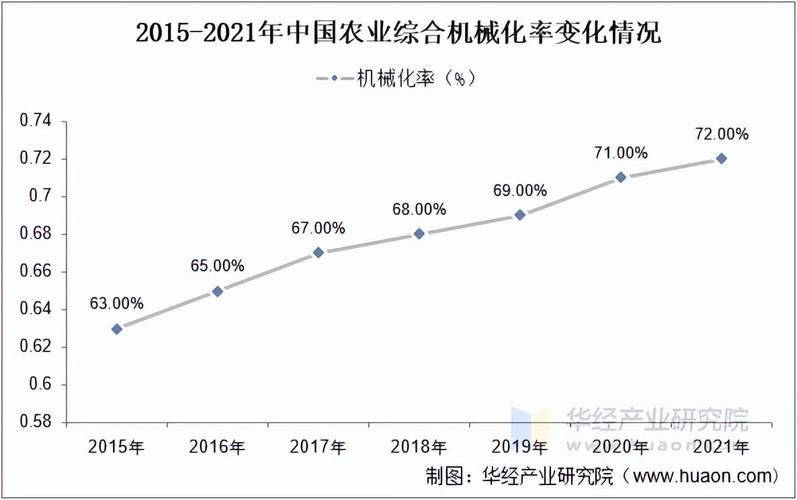
On the one hand, as rural labour shifts and ageing increases, the cost of agricultural labour increases, and farmers ' demand for planting machinery becomes increasingly urgent. The use of planting machinery can effectively replace manual labour, reduce the labour intensity of farmers, increase productivity and reduce production costs. On the other hand, there is a growing trend towards the scaling up of farming operations, with the emergence of new types of agricultural operators, such as large growers, family farms and agricultural cooperatives, which are in large demand for plant machinery and are more focused on its performance and quality. Together, these factors have contributed to the continued growth of demand in the market for plant machinery。
Increased policy support
To promote the development of agricultural mechanization, a range of support policies have been introduced at all levels of government. In the area of financial subsidies, a certain percentage of subsidies are granted to farmers and agricultural operators who purchase farm machinery, reducing their purchase costs and increasing their motivation. At the same time, the government has increased its support for research and development and innovation in plant-growing machinery, encouraging enterprises to undertake technological research and development and product innovation and improving the technical level and performance quality of plant-growing machinery. In addition, with regard to infrastructure development, the government has increased its investment in infrastructure such as rural air-farming and field irrigation, creating good conditions for the use and promotion of plant machinery。
Evolving patterns of competition in industry
The growing machinery industry has now developed a more competitive pattern. In the country, there are a number of large and powerful producers of growing machinery, which have a certain advantage in technology research and development, manufacturing, marketing and so forth, and which have a large market share. At the same time, a number of internationally recognized agricultural machinery enterprises have entered the chinese market and, with their advanced technology, high-quality products and sophisticated after-sales services, have engaged in intense competition with domestic enterprises. In the course of the competition process, firms in the industry are increasing their technological innovation and product upgrading efforts, contributing to the development and progress of the whole industry。
Challenges to the development of the plant machinery industry
The level of technology needs to be further improved
Although some progress has been made in recent years in technological innovation in the plant machinery industry, there is still a large gap in the technological level of plant machinery in our country compared to that of developed countries. In terms of precision planting techniques, the country's planting machinery has yet to be improved in terms of sowing precision and fertilization parity; in terms of smart control techniques, the intellectual systems that are part of the growing machinery are not sufficiently stable, operate quickly and need further optimization and refinement. In addition, the reliability and durability of our planting machinery has yet to be improved, and some of the machines are prone to malfunctions in their use, affecting operational efficiency and life expectancy。
Product quality is uneven
Owing to the relatively low threshold of the growing machinery industry and the existence of small-scale, low-level enterprises in the market, which seek to maximize their profits, tend to work less on the quality of their products, resulting in uneven quality in the cultivation of machinery products in the market. In addition to being unable to meet the demand for agricultural production, a number of plant-growing machines of high quality are prone to damage to crops and economic losses for farmers. At the same time, product quality issues have affected the reputation and development of the entire industry。
The system of after-sale services is inadequate
The conditions of use and operation of plant-growing machinery are complex, and problems and problems are inevitable in their use. Thus, a well-developed system of after-sale services is essential to guarantee the normal use of plant machinery. However, the system of after-sales services in our growing machinery industry is currently inadequate, the networks of after-sales services in some enterprises are not adequately covered, and the skills and awareness of post-sales service providers need to be improved. When planting machines fail, farmers often have difficulty obtaining timely and effective maintenance and services, affecting normal use of the machinery and the pace of agricultural production。
Farmers ' limited awareness and acceptance
Some farmers have limited knowledge and acceptance of planting machinery and are still accustomed to traditional agricultural methods. Some farmers consider planting machines to be complex and costly to maintain and are reluctant to purchase and use them. In addition, some farmers fear that the new machinery purchased will soon be phased out, owing to the faster replacement of planting machinery, thus showing a wait-and-see attitude towards the purchase of planting machinery. These factors limit to some extent the promotion and application of plant machinery。
Trends in the growing machinery industry
The intelligence level is rising
The 2026-2030 edition of the pricewaterhousecoopers industrial research institute's in-depth study on market situation analysis and related technologies predicts that, in the future, growing machinery will be more intelligent. As technologies such as artificial intelligence, big data, and the networking of goods continue to develop and apply, growing machines will have greater sensory, analytical and decision-making capabilities. For example, by installing more sensors on planting machines, it is possible to obtain in real time information on a wide range of soil, weather, crop growth, etc., and to transmit that information to intelligent control systems for analysis and processing. The smart control system automatically adjusts the operational parameters of the machinery based on the results of the analysis to achieve precision and intelligence of the planting operations. In addition, unmanned growing machinery will be gradually promoted and applied to further reduce manual operations and improve operational efficiency and safety。
Green environment as an important development course
As awareness of environmental protection continues to grow, greening will be an important direction for the development of the growing machinery industry. Future planting machines will focus more on energy-saving emission reductions and resource recycling. With regard to power systems, new energy applications, such as electric and solar plants, will be increased to reduce dependence on traditional fuels and to reduce tail gas emissions. In the course of operations, growing machines will use more environmentally friendly methods of operation, such as precision fertilization, precision irrigation, etc., to reduce the use of fertilizers and pesticides and pollution of soil and water sources. At the same time, the design and manufacture of planting machines will also place greater emphasis on the recyclability of materials and the disassemblyability of products and increase the efficiency of resource use。
Mega- and mini-development
In order to meet the demand for agricultural production of different sizes, growing machinery will tend to grow in parallel with miniaturization. For new agricultural operators, such as large farmers and family farms, they prefer to use large-scale planting machines to increase operational efficiency and reduce production costs. Large-scale planting machines have broad-banded, dynamic and fully functional characteristics that allow for the rapid completion of large-scale planting operations. Small-scale planting machinery is more advantageous for some mountainous, hilly and small-scale farmers. Small-scale planting machines, with their small size, light weight and operational flexibility, are capable of operating under complex terrain conditions to meet the demand for small-scale cultivation。
Deep integration with agro-industry
In the future, growing machinery will be deeply integrated with the agro-industry, becoming an important link in the agro-industrial chain. Growing machinery enterprises will strengthen their cooperation with seed enterprises, agribusiness enterprises, agro-processing enterprises and others in undertaking technological research and development and product innovation to provide comprehensive solutions for agricultural production. For example, plant-planting enterprises are working with seed enterprises to develop specialized seeding machines based on the characteristics of different seeds, to improve the quality and productivity of seed plantings, and with agribusiness to achieve the precision application of fertilizers, pesticides and more efficient use of agricultural resources. At the same time, planting machines will be combined with new and emerging industries such as agricultural informatization, agricultural electricians and so forth, promoting the intellectualization, digitization and marketing of agricultural production。
Increased international cooperation and competition
International cooperation and competition in the growing machinery industry will increase as the economic globalization progresses. Domestic growers will strengthen their cooperation and exchanges with internationally recognized enterprises, introduce advanced technology and management experience, and upgrade their skills and international competitiveness. At the same time, domestic enterprises will also be active in opening up international markets to push the country's growing machinery to the world. However, in international market competition, domestic firms will also face intense competition from internationally recognized firms, requiring constant improvement in the quality of their products and services and a good brand image in order to take their place in international markets。
In the future, the growing machinery industry will move in the direction of intellectualization, greening, co-existence of mega- and mini-emergence, deeper integration with agro-industry and increased international cooperation and competition. They should take advantage of the opportunities and respond positively to the challenges, increase technological innovation and product upgrading, improve after-sales service systems, improve product quality and service levels, promote the sustainable and healthy development of the growing machinery industry and contribute more to the modernization of agriculture。
For more industry market data and professional analysis of reporting, the 2026-2030 edition of the in-depth research report on market situation analysis of plant cultivation and related technologies of the central research institute of pricewater industries can be viewed by clicking。



