In february 2026, the ministry of education issued guidelines for the comprehensive advancement of healthy schools (hereinafter referred to as " guidance " ), which highlight the strengthening of physical education in schools and the full implementation of student health programmes, drawing “hard bars” from school hours security, activity provision, upgrading of facilities, monitoring of interventions, school connections, etc. This is both a deep return to the concept of “health first” education and a major strategic approach to educating powerful countries and building healthy china. At present, while the achievements of primary, secondary and tertiary sports are significant, the only way to move forward with caution and innovation is to promote sport as a genuine “health code” for students throughout their lives。
In sport, not only strong body is stronger
The development of the guidance is not an isolated process, but is both a detailed implementation of the programme for building the strong education state (2024-2035) in the area of health, as well as in the context of initiatives such as the opinions on the comprehensive enhancement and improvement of school physical work in the new age, on the implementation of the student health programme, which have been launched in recent years. The core logic is to move away from a single perspective of “talking about sport” and to place students' physical and mental health at the same time as “five-child” with a highly integrated strategy of the lycans。
The guidance clearly highlights three main directions: first, to cover the whole cycle of primary, secondary and tertiary education, to connect the whole chain of teaching, training, competitions, venues, measurements and interventions, and to link the united states with a wide range of areas such as labour, mental health, food security and so forth, with the aim of building a comprehensive, stereo-based health promotion network. The second is “real”, with the requirement of “a sports skill” “no less than two hours a day” and “three intensive exercise sessions a week”, to strike the real pains of inadequate physical activity and weak skills of students, and to translate macro-conceptions into concrete action that is achievable and verifiable. Thirdly, “deep”, which always anchors children's physical and mental health and overall development, emphasizes the role of sport in regulating emotions, easing stress, and the integrity of the human personality, and provides a profound insight into the value and significance of sport as a human being。
Age-shaping to keep the sport up to speed
The blueprint has been drawn, and how truly to take root, from “one lesson” to “lifelong”, is the subject of an era that we must confront and break. At the national level, a number of replicable experiences have emerged: after-school service sports programmes in primary and secondary schools have expanded in quality, and school football coverage continues to expand; and higher education institutions have broken the “sport only one-two” limit by extending physical education courses and exercise to the entire school cycle. An increasing number of students are moving out of the classroom to the playground, and a new culture of sports and healthy schools is emerging。
But as we move from “documentary requirements” to “action self-awareness”, we still face three practical questions:
The first is when time comes. The phenomenon of “high-thinking, light sport” still exists in some schools and families, and how rigidly to ensure the length of physical exercise and exercise is a direct test of school governance and educational evaluation orientation。
Where are you interested? Some of the schools' physical education classes remain in the shallow cycle of “run circles, drills, calibrations”, which makes it difficult to motivate students internally; university students, especially graduate students, lack organizational guidance, and after-school exercise is largely “herding” and sports habits are difficult to develop。
Thirdly, where are the resources? With the growing demand for individualized sports among students, many schools, especially in the old urban areas and in the less developed regions, still have significant gaps in basic supplies such as physical education courses, professional teachers, site facilities, etc., and the development of specialty programmes and personalized precision guidance cannot be addressed。
Faced with the question of reality, and oriented towards different sections, we have to stick to the principles of discipline and precision, so that sportsmen fit the growth patterns of their students。
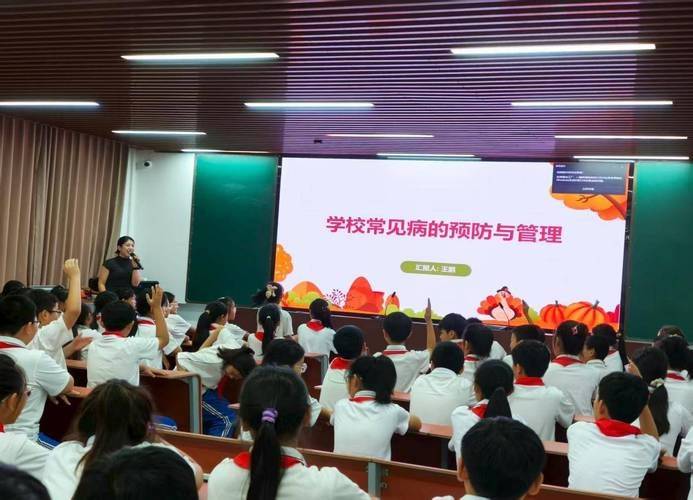
Primary and secondary schools are a critical stage in the physical foundation and development of habits. In addition to strictly guaranteeing the duration of sports, they should enrich their activities, increase their mobility equipment, strengthen project guidance and design more interesting and participatory collective projects, so that large- and after-school services become “gold hours” for children to enjoy sports. Primary schools, which are primarily interested in enlightenment and develop basic activity skills, and secondary schools, which are primarily focused on skills enhancement, are gradually guiding students to choose between one and two sports programmes for further study, so as to be truly “excellent”, and are determined to put an end to the awkward situation of “12 years of physical education, one of which is not mastered”。
Higher education is an important point for physical improvement and a central stage in the consolidation of sports habits. It is important to build an integrated family-care system that is inclusive of the whole-of-school, all-process management and all-round participation: extending compulsory physical education courses to higher grades and even graduate students, actively exploring new teaching models such as the club system, enriching the supply of specialized courses such as progression, physical improvement and health management, and guaranteeing sports time by increasing the ratio of credits to school hours; setting up school-specific sports time, fully setting up a platform for online and offline diversity of extracurricular exercise, improving process evaluation, introducing competitions, promoting “passive participation” to “active adherence”, directing students from “passive participation” to “active adherence”, drawing on good civic experience such as “sao super” “zheba” and developing a school culture of physical education, promoting the participation of all students in sports competitions and a sports team; carrying out physical dynamic monitoring based on large data, special promotion classes, training camps for physically weak students, and a closed circle mechanism for intervention and continuous upgrading。
It's a solid base, with a hard core
Promoting the effectiveness of the guidance also requires further conceptual change and practical initiatives to break down the barriers of sports。
First, it is necessary to correct the concept, to reject the erroneous perception that sport is not related to further education, to integrate physical and mental health into the comprehensive quality assessment and school quality assessment system and to make “no sport, no education” a social consensus. Second, mechanisms should be strengthened to ensure strict control of physical education and physical activity in primary and secondary schools and to ensure that policies are firmly established; and to implement a “one-school approach” in higher education institutions, tailor-made physical improvement programmes that include the opening of classes and extracurricular exercise in higher grades. Thirdly, it is necessary to boost the supply of resources in and out of schools, to promote the upgrading of sports facilities, to equip with strong sports teachers, to accelerate the empowerment of digital skills, to explore more intelligent sports scenes and to make exercise more scientific, interesting and personal. There is also a need to build a culture of children, to promote sports from school to the family and society, to build a healthy base for the development of young people and to build a solid foundation for national renewal。
(by wen yi, director, professor, department of public sports and arts, zhejiang university)