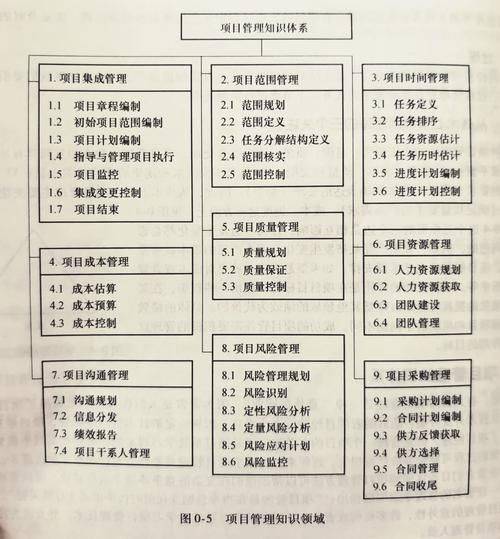
Project management and the knowledge economy, at the turn of the century, discussions and practices on the knowledge economy have become a hot spot for attention. At the same time, it was found that developed countries were investing their efforts in project management to promote economic growth. According to the american scholar david cleland, strategic management and project management will play a key role in dealing with the market changes of globalization. Fortune, a famous american magazine, predicts that project managers will be the preferred profession for young people in the 21st century. This movement reminds us that project management is becoming an important element of social and business management modernization. And you can even say that project management will be a companion of the knowledge economy. First, the knowledge economy is an economy dominated by innovative labour, which is the dominant mode of work in the industrial economy. Regular work refers to the work done by people using the knowledge, experience and skills they already have and to the work of producing products. It can be further divided into simple (blue-collar) and complex (white-collar) jobs. Unlike conventional work, innovative work creates new knowledge, creating new technologies, new methods, new designs, new products. There is also innovative work in the industrial economy, but only a small, minority labour; and its value is often difficult to measure, difficult to achieve and hard to earn. No wonder a businessman has learned from past experience that one of the key things for business is not to be the first person. However, as the age of the knowledge economy approaches today, innovation, leadership and competition have become one of the business priorities. With the rapid shift in the world economy from an industrial economy to a knowledge-based economy, the share of the knowledge-based economy in some developed countries has reached even more than 50 per cent of the national economy. At the same time, the contribution of innovative labour to economic development and social progress is increasing, the number of people engaged in creative work and the amount of working time are increasing, and the proportion of people engaged in conventional work and time is decreasing. Now there's a new term in society called "know-your-home," which refers to the generation of knowledge and wealth through creative work. Not to mention whether the new term is science, understanding that the knowledge economy is an economy dominated by innovative work, and studying the nature and characteristics of innovative work will be important in advancing the advent of a knowledge-based society and its effective management of knowledge. Ii. What are projects as a major operational tool for the knowledge economy? Social work can be divided into two broad categories: duplicate, continuous work, which can be called operations, such as the round-trip operation of trains, where there is a great deal of conventional labour; and unique, one-off work, which can be described as projects, such as the development and construction of high-speed railways, where each railway has its own unique geographical location and technology; innovation; and development and construction only once, with more innovative effort in the project. Due to its uniqueness and one-off characteristics, other features that extend to it, such as the certainty of the objectives, the progress of the process, the irreversibility of the results, the ad hoc nature of the organization and the openness. Typical project cycles may include multiple phases of project initiation, validation, start-up, planning, implementation, control, closure, etc. Projects can be described as an innovative undertaking; project management can be succinctly described as the management of achieving innovation, or the creation of management. The project management knowledge system consists of ten main components: integrated management, scope management, time management, cost management, quality management, human resources management, communication management, risk management, procurement management and handover management. Project management has evolved into an independent branch of management and an emerging industry. The knowledge economy can be understood as transforming knowledge into a cost-effective economy. The knowledge economy uses less natural and human resources and more intellectual resources. Knowledge creates new ideas, new results (new products, new services, even new industries), new wealth (efficiency, profit and quality of life). It can't be done by industry, agriculture, and by mass production. In other words, labour productivity alone can no longer satisfy the need to create more wealth. The key is knowledge productivity. The shift from knowledge to benefits depends largely on projects. It can be said that the project is a major operational tool in the knowledge economy. The relationship between the project and the knowledge economy is illustrated in the figure below. There are 156 priority construction projects in the country's first five-year plan period, involving investment in projects, the surge in project activities and the trend towards internationalization. Today, our country has invested hundreds of billions in various projects, covering almost all important areas such as the economy, culture, science and education, national defence, such as bank loans, infrastructure projects such as energy, transport and water, real estate projects, agricultural development projects, industrial enterprise technology adaptation projects, environmental protection projects, poverty alleviation projects, scientific research, educational projects, institutional reform projects, and sports and cultural activities. Many of these projects are worldwide intriguing, such as the yangjiang sankang project, the pudong new airport project, the state's 863 high-tech project, the university 211 project, the flood relief mission of the greater river, the beijing olympic project on urban atmospheric pollution management. Today, the number of projects in our country, their model, the level of investment, the sources of funding and the turn of the century, the discussion and practice of the knowledge economy have become a hot spot for attention. At the same time, it has been found that, in order to boost the economy, developed countries are investing in project management. American scholar david cleland said that strategic management and project management would play a key role in coping with the market changes of globalization. Fortune predicts that the project manager will be the preferred occupation for young people in the 21st century. This movement reminds us that project management is becoming an important element of social management and business governance modernization. It can even be said that project management will be a companion of the knowledge economy. First, the knowledge economy is an economy dominated by innovative labour, which is the dominant mode of work in the industrial economy. Regular work refers to the work done by people using the knowledge, experience and skills they already have and to the work of producing products. It can be further divided into simple (blue-collar) and complex (white-collar) jobs. Unlike conventional work, innovative work creates new knowledge, creating new technologies, new methods, new designs, new products. There is also innovative work in the industrial economy, but only a small, minority labour; and its value is often difficult to measure, difficult to achieve and hard to earn. No wonder a businessman has learned from past experience that one of the key things for business is not to be the first person. However, as the age of the knowledge economy approaches today, innovation, leadership and competition have become one of the business priorities. With the rapid shift in the world economy from an industrial economy to a knowledge-based economy, the share of the knowledge-based economy in some developed countries has reached even more than 50 per cent of the national economy. At the same time, the contribution of innovative labour to economic development and social progress is increasing, the number of people engaged in creative work and the amount of working time are increasing, and the proportion of people engaged in conventional work and time is decreasing. Now there's a new term in society called "know-your-home," which refers to the generation of knowledge and wealth through creative work. Not to mention whether the new term is science, understanding that the knowledge economy is an economy dominated by innovative work, and studying the nature and characteristics of innovative work will be important in advancing the advent of a knowledge-based society and its effective management of knowledge. Ii. What are projects as a major operational tool for the knowledge economy? Social work can be divided into two broad categories: duplicate, continuous work, which can be called operations, such as the round-trip operation of trains, where there is a great deal of conventional labour; and unique, one-off work, which can be described as projects, such as the development and construction of high-speed railways, where each railway has its own unique geographical location and technology; innovation; and development and construction only once, with more innovative effort in the project. Due to its uniqueness and one-off characteristics, other features that extend to it, such as the certainty of the objectives, the progress of the process, the irreversibility of the results, the ad hoc nature of the organization and the openness. Typical project cycles may include multiple phases of project initiation, validation, start-up, planning, implementation, control, closure, etc. Projects can be described as an innovative undertaking; project management can be succinctly described as the management of achieving innovation, or the creation of management. The project management knowledge system consists of ten main components: integrated management, scope management, time management, cost management, quality management, human resources management, communication management, risk management, procurement management and handover management. Project management has evolved into an independent branch of management and an emerging industry. The knowledge economy can be understood as transforming knowledge into a cost-effective economy。the knowledge economy uses less natural and human resources and more intellectual resources. Knowledge creates new ideas, new results (new products, new services, even new industries), new wealth (efficiency, profit and quality of life). It can't be done by industry, agriculture, and by mass production. In other words, labour productivity alone can no longer satisfy the need to create more wealth. The key is knowledge productivity. The shift from knowledge to benefits depends largely on projects. It can be said that the project is a major operational tool in the knowledge economy. The relationship between the project and the knowledge economy is illustrated in the figure below. Project investments, items