Mobile power, also known as chargers, travel chargers, etc., is a portable charger that collects power and chargers and can charge digital devices such as mobile phones, tablet computers and so on at any time. Common mobile power sources consist of batteries (blocks), protected circuit boards, shell envelopes, heat-sensitive components, ptc (thermal-sensitive electrical resistance)。
Quality analysis
Based on the results of spot checks conducted in recent years, the non-conformity of mobile power supply products has focused mainly on three indicators: marking, effective output capacity at constant temperatures, conversion efficiency, etc。
1. Identification
The project primarily examines whether the mobile power matrix identifies the name, model, rated input voltage and current, rated output voltage and current, rated capacity, battery or battery type and rated energy in accordance with standard requirements; the product of the multi-output port also needs to identify the total current value of the output voltage and to mark the rated output voltage and current of the port in the vicinity of each output port. The total current value of the same output voltage is not specified, and consumers are unable to confirm whether mobile power sources and electronic products match, triggers the corresponding charge protection to break charges and even causes risks such as battery fire。
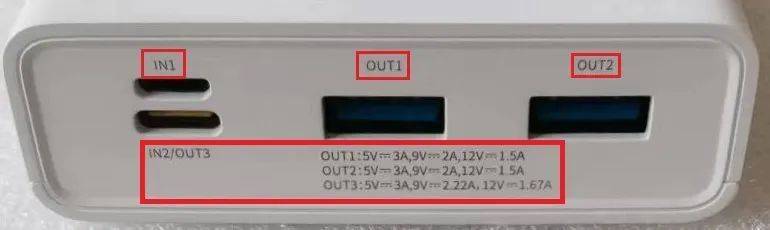
Legends for eligible products
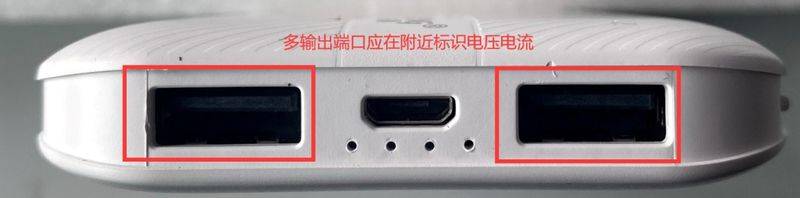
Legend for unqualified products
2. Effective output capacity at constant temperature
The project primarily examines whether the actual effective output capacity of mobile power sources under room temperature conditions meets standard requirements, and products with a false rated and effective output capacity can mislead consumers, have an impact on their actual use and even pose safety risks。
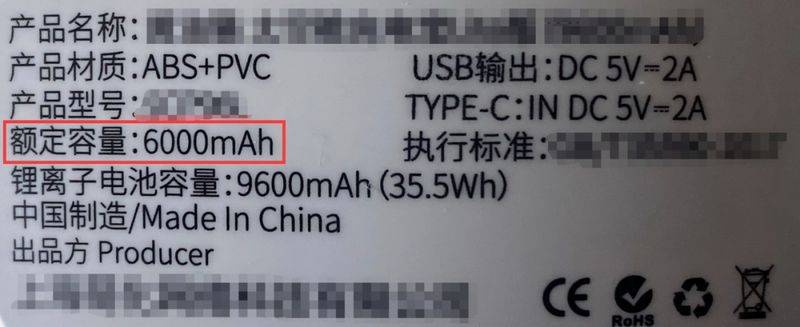
Unqualified product rated capacity mark
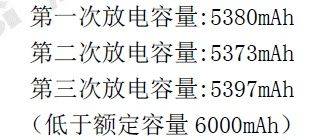
Results data
3. Conversion efficiency
Mobile power conversion efficiency should be consistent with the specified value of the manufacturer's description of mobile power use, and not less than 80 per cent if not specified. Conversion efficiency is not achieved, electricity is over-exploited, consumers feel under-capacity when actually used, and use is reduced。
Recommendation for selection
Check product appearance and marking
The product identification and information should be carefully checked for completeness, cleanness, crack-freeness, non-corrosion etc. The product should have a product name, model, rated capacity (grade energy), battery energy (cell capacity), plant name or trademark; the port name and rated voltage, current value at the input-output port; the packaging should be marked with a security warning, production date or batch number, the plant site; and the packaging must be consistent with the duplicates identified on the mobile power source matrix. The purchase of mobile power without warning signs, brand models, input output parameters, performance standards and instructions should be avoided。
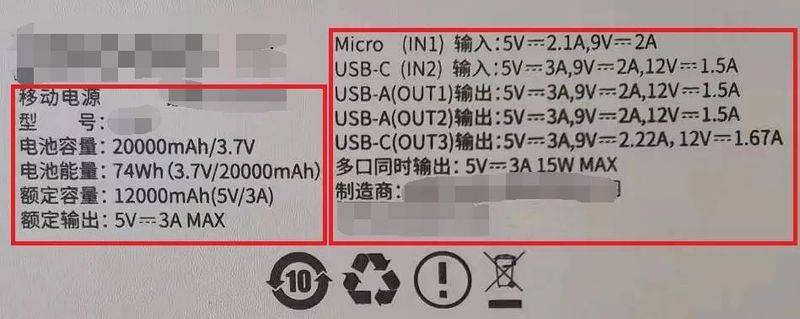
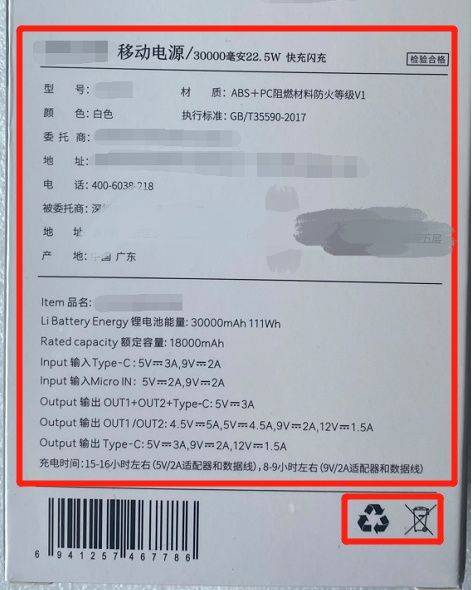
Identification of eligible products
Select the product for the appropriate specification
The size of the capacity determines how much electricity is stored, directly affecting the time of use, and is an important reference for selecting mobile power sources. The larger the capacity, the larger the body, and the higher the price, the choice of purchase should be based on a combination of value for money and portability, as required for use. In addition, in the case of aircraft carrying mobile power products, the relevant provisions shall be followed: “the rated capacity of the chargeable power shall not exceed 100 wh, without the approval of the airline, and the rated energy shall not exceed 100 wh, but not more than 160 wh, which may be carried only with the approval of the airline”. Of these, 100 wh equals 27000 mah and 160 wh equals 43,000 mah。
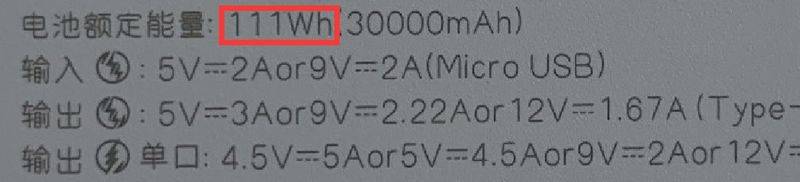
The rated energy exceeds the 100 wh mark
Focus on production dates and chargers
The closer the production date, the less the battery capacity of the product declines; the more rationally the charger is chosen, the better it is to choose the charger that matches the product or the charger。
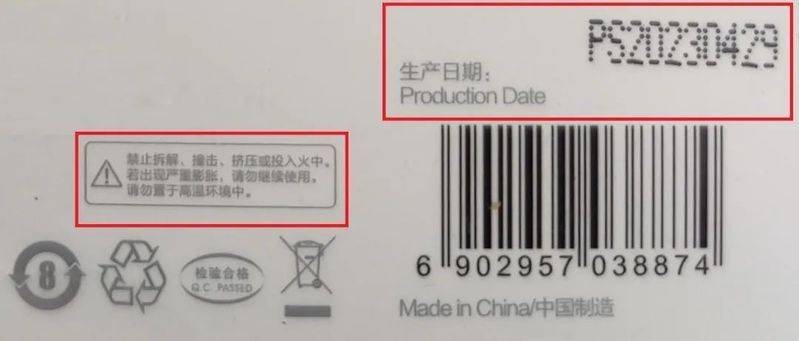
Watch the date of production and select the products to be produced
View the ccc authentication logo
As of 1 august 2023, the state has implemented ccc certification management of mobile power sources. From 1 august 2024 onwards, no manufacturer, sales, import or use in other operations shall be permitted without a cc certificate and a label for certification, and consumers shall pay attention to the “ccc” certification of the product when purchasing it。

Representation
One, charge voltage, current
Mobile power is generally protected by overcharging, overlaying, etc., and is used in a way that does not charge the core to the same amount and reduces the useful life of the core; product use instructions are read in detail, charging is done according to the nominal parameters, avoiding the use of more than input voltage to charge the mobile power source, and preventing damage to inner metre units and the core from affecting the useful life of the power。
Note the temperature
Excessive ambient temperatures not only lead to electrolytic evaporation within the battery, causing serious damage to the battery, but also make it difficult to disperse the mobile power source, which can easily cause fires and explosions. In the course of their use or holds, do not leave them in the sun, let alone place mobile power in closed summer vehicles, and should immediately stop using mobile power products that are abnormally hot under normal working or storage conditions。
3. Be careful not to cut short
Products should be used in a routine manner to avoid exposure to water, beverages, metal components or similar conductive media to prevent short circuits; to avoid exposure to heavy matter or sharp metal components, to prevent internal cores from being pressured by heavy matter or punctured by sharp metal, and to be vulnerable to detonation。
4. Be careful with the usage
To avoid, to the extent possible, side-loading, which increases the heat, leads to excessive temperatures and damage to metallurgical devices; when charging, mobile power should be placed away from flammable and explosive articles, and if the chargetip light (device) shows that the product has been recharged, the recharge circuit should be cut off in a timely manner。
5. Daily maintenance
When mobile power is not used, it is periodically charged to mobile power, usually once or twice a month, to protect the activity of the battery。