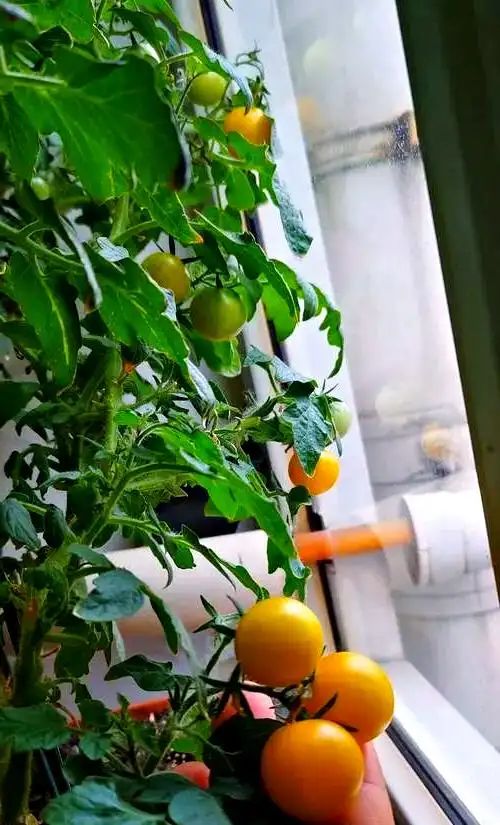
When you hold the pear in your hand, the twirl clicks, the fruit takes off. In the morning, tang sang was busy picking coronaries. "i have planted more than 200 coronal pears, and have sold a small fraction of them, and have sold more than 1,800. Shortly after, the village of yorin was sweaty。
It is not just pears, but with the experience of growing in foreign workers at a young age, tang sang-gang, age 62, planted more than 10 acres of fruit trees in the village, including saloons, blueberries, walnuts and plums, from april to august. “without the cost, all fruit trees have a net income of 50,000 a year.”
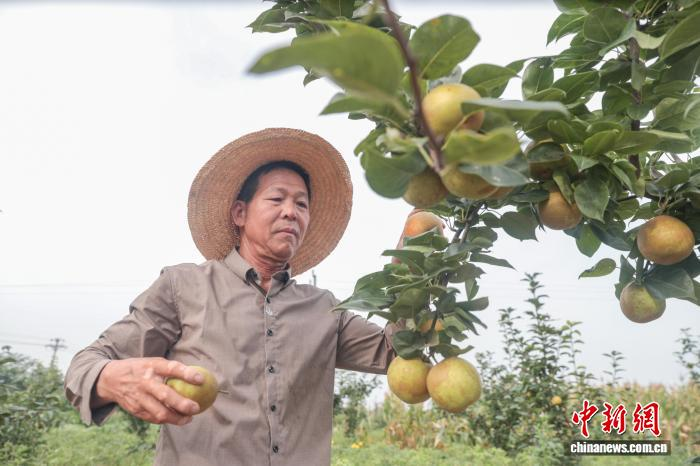
On 17 july, a villager, tang zhangqiang, picked a coronary pear in an orchard in the village of yolin, oshan town, haoshan, haute-hao district, jiangxi province. Liu liang
The yolin village of oshan town, haoshan county, haute-hao, jiangxi province, is a home-based minority village of foreign nationals and ethnic groups such as zhong, zhuang, tong, haung, kyo and hmong. Journalists have recently come to the village of yolimu and have seen a series of fruit-bearing trees crumbling on the branches of the sun。
The village is now growing over 80 acres of specialty fruit. For a long time, however, this village, which has about 520 acres of arable land, has grown only citrus。
The land is rich in opportunities for tourists. “in 2017, our village held a cultural festival for the return of ethnic minorities, when tourists asked if there was a pick-up experience project.” the yulin village branch secretary zhang sheng de recalled。
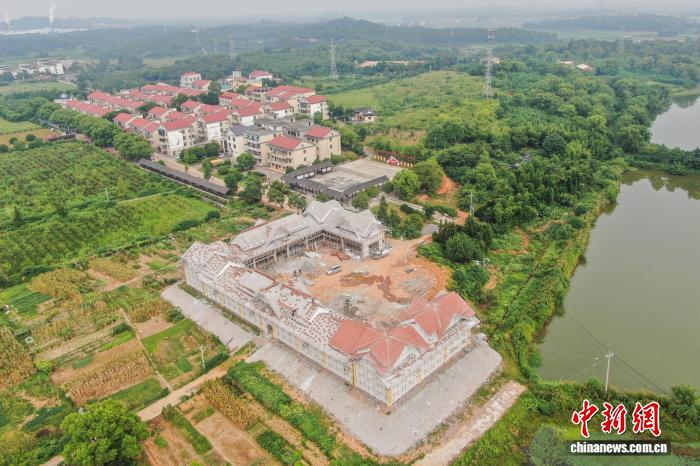
On 17 july, construction was under way at the yolin village of oshan town, haoshan town, haoshan city, ichun city, jiangxi province, of a water pavilion built around the culture of pouring water on the chinese people. Liu liang
Tourists ' words fell into the village like a seed and village leaders led the demonstration, leading the villagers to grow special fruits. “in combination with climate, soil, etc., we maximize the variety of cultivation and integrate specialty cultivation with the general state of rural tourism and research.” according to zhang sheng de, specialty cultivation is currently expected to yield an average annual increase of 3,000。
“tourists taste it and pick it, and our fruit goes up by a dollar.” tang is more willing to come and experience picking than to sell fruits to neighbouring factories。
Qin honghua, a tourist from nanchang, took a crown pear and cleaned it and put it in his mouth. He said, "the meat is soft, the juice is sweet!"。
The multi-ethnic culture has injected new dynamics into the integration of the brigade. Through the exploration of the culture of ethnic minority returns, the village of yolimu has organized a variety of folk culture events and has developed a number of tourism projects focusing on visitors, such as ethnic accommodation, national food and fruit harvesting。
"i'm a lao, my wife is a kyo, my mother is a strong man and my grandmother is a hmong." yin lin village manager ishi family is a multi-ethnic family. In his view, in this home ethnic minority village, the convergence of different ethnic cultures is like a moving picture of tourists. In the first half of this year, the village received more than 5,000 visitors。
Despite the old age, the corn is still being cut off. The yolimin village's “empatriate generation” raised dozens of pheasant chickens and planted maize mainly to feed them. "the chickens that eat corn grow up, the meat is strong and tastes good." she said that at the end of the year, many tourists would come to taste the pheasant chicken, “a chicken can sell nearly 200 miles”。
At the moment, yolimu village is accelerating the construction of tourist facilities, such as the water splash square, to enable tourists to “stay and play well”. Speciality growing for the agricultural brigade “ring out”, a popular tourist village in the western part of the country, writes new stories about the revival of the diaspora. (concluded)