Reporter zou haelin
In the eastern commune, one of the three special ethnic minorities in gansu province is a minority with the prefecture of xiahu as its main concentration。
The autonomous districts of the eastern townships of china are the only autonomous districts of ethnic minorities in the country, where the ethnic communities of the eastern townships are the majority。
As a result of the integration of ethnic groups, poor areas and high-altitude mountainous areas, the autonomous districts of the east are in a state of overall poverty。
Because of the high level of poverty, the high number of poor people and the high level of poverty, the autonomous districts of the eastern communes have been given priority in the development of poverty reduction nationwide, and the poverty reduction of the eastern communes has risen to the level of the national strategy and has been accorded high priority by the central party and the state council。
On 3 february 2013, the secretary-general of xi jinping visited the autonomous districts of the eastern communes, providing direction and impetus for a new round of poverty reduction and development for ethnic and national minorities。
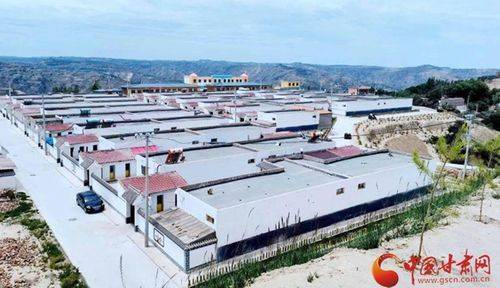
“bring the water, fix the roads, build the new countryside and make life as good as possible.” in accordance with the instructions given by the secretary-general, the autonomous eastern townships have promoted poverty alleviation in their villages and watersheds, thus opening up a new path to poverty alleviation and social development。
A cement road stretches from the top of the hill to the bottom of the gutter, entangled in a jade belt, and links the gutter to the outside。
“this is the ‘big way’ for pro-poor aid from chinese petrochemicals, which opens the ‘big way’ in the village of burchid, and the strangulation of the community alley.” mahgapang, the mayor of the high mountain countryside, described it。
Two years ago, the villagers of the rags went through the sheep's intestine trail, which was unfavourable and difficult to walk in the rain. Today, as soon as we got out of the door, we took the cement road, which was very different from it。
Into the village, the premises of the village council were renovated and school buildings were built at the village primary school. New rows of red bricks and bricks have been built throughout the mountains, and the crowd of 56 hard-earned houses has been pleased to move。
The farm family, the mamazi family, the yard is clean and clean, the center of the yard is a piped well with white tiles on the back of the wellhead, embedded in the two lines of "eat water without forgetting the general secretary, forever grateful to the communist party"。
“when you used to eat cellar water and run dozens of miles into the mountains during the dry season, you'd have running water to break the tap, and you'd never be sad to eat it again.” mackey said something。
Tanslin, secretary-general of the high mountain village party, told journalists that the water intake project in the village of bustuaks was an extension of water supply from the high mountain village, with a 15-km pipeline, 7 reservoirs, benefiting 68 farmers, and full village coverage。
Ma jian ying, a neighbour of mamachi, is a sheep breadwinner who has been able to build four warm sheep sheds in a single breath, raising 160 sheep and becoming a farmer on the basis of loans from village mutual aid organizations and loans from the union of african farmers。
“one sheep is fatter for three months, with a minimum of three times a year, and one earns $150 net.” mahjian ying counted 400 in 2014 and earned 60,000。
In a short period of two years, from the rugged mountain road to the village-to-village road, from extreme water scarcity to full running water coverage, from weather-dependent feeding to the cultivation of a rich income-generating industry, the infrastructure conditions and productive living conditions in the villages have been “three crosses”。
“at the end of last year, the per capita net income of the village farmers increased to rmb 34,19, twice as much as in 2012, with the share of state policy income falling from 79. 1 per cent to around 40 per cent.” according to the secretary of the village party, ma。
“the current situation of the entire autonomous eastern commune, which is characterized by a combination of severe natural conditions and poor living conditions, is not only associated with the harshness of the natural environment, but also with the backwardness of the economic and social development, and with a special confluence of geographical regions, which are typical of the province and the country as a whole.” the secretary of the eastern district commission, ma xian-bong, said。
Through anatomy of sparrows, the autonomous eastern townships will link 22 villages in 6 townships of south, ridge, wallen, trees, highlands, alpine and altaba, together with the whole series of pro-poor development and implementation plans of the guillotine basin, with a view to promoting the transition from pro-poor to pro-poor and blood-transmitting pro-poor development throughout the village。
Base first, strong core. Six 54 kilometres of rural roads have been hardened, leaving more than 10,000 people along the road. More than 30,000 acres of new high-standard terraces were replaced by “three running fields”. It was built in two homes, with running water flowing into agricultural homes. Construction and renovation of 226 housing units to ensure that people in the watershed are safe。
Specialty industries, “blood making” treatment. Support has been provided to farmers for the construction of warm sheds, and for the expansion of family farming on a large scale, with traditional sheep farming becoming the first industry of the rich. Agricultural techniques of drought are being promoted, with the detoxification of potatoes and the planting of maize in two ditches reaching the appropriate areas. The “two generations later”, skills training for migrant workers are advancing simultaneously, labour transfer efficiency is improving and workers earn more than $10,000 per person。
“regional development leads to pro-poor development, which promotes regional development.” following the experience and model of pro-poor development of the whole of the guacamous basin, the autonomous districts of the eastern township have adapted the six major regional development plans, such as the liu jia gorge along the ku district, the pilgrimage valley against poverty, the bashé river basin and the integrated economic development along the river basin, to promote pro-poor development as a whole and to strive for “no fewer and no fewer” in the process of escaping poverty from poverty and prosperity。