On 16 october, the honeyfruit plantation in the nam village of yongyang town, jiangxigian county, was covered in thick leaves full of yellow-sweet grapefruits and glamorous fruits. The laughs from the garden were interwoven with the sound of a collage of bamboo baskets, and played the hot and festivities of the golden autumn harvest。
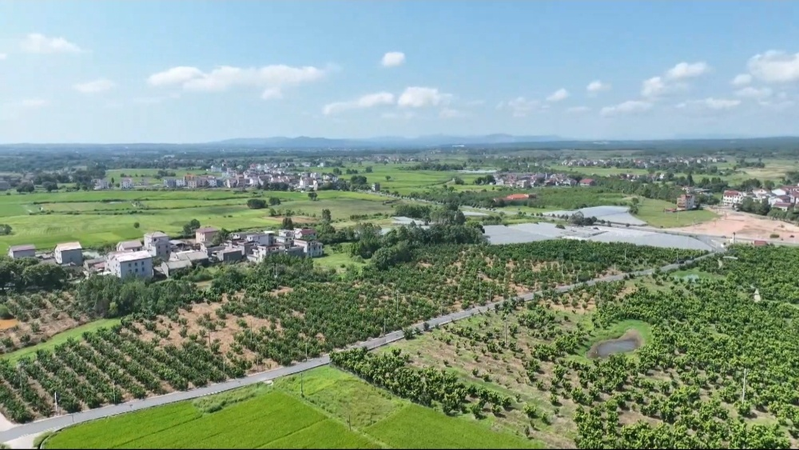
There's a harvest in gangnam village, gian county
At around 9 a. M., the secretary of the gangnam village party, wang tai peng, with scissors in his hand, cut the first full honeyfruit of the branch and declared the pick-up season officially open. Dozens of villagers who were already waiting in baskets of bamboo immediately entered the orchards and started their busy harvesting: there are some who are leaning up their toes, stretching their arms, and are careful to pick up the fruits of the high places; some who put honeyfruit gently into soft-clothed bamboo baskets, fearing that they will touch the bark of the fruit; and others who are a group of villagers who are moving towards the sorting point with baskets full of honeyfruit, each of them enjoying a good harvest。
"this year, the grapefruit looks so good, each weighs more than a half a pound. Look at the skin, how good it is. It'll sell for a good price." in the village, xiao ying xiaomei cut the fruit and smiled and showed her the grapefruit she had just taken off。
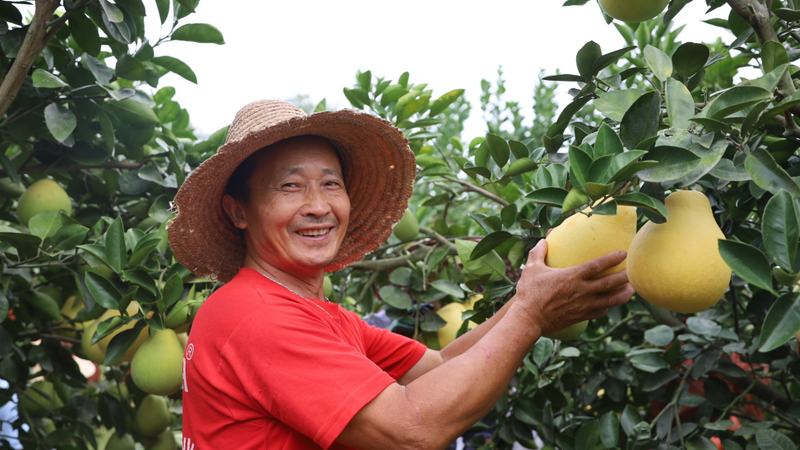
The villagers are too busy picking up the ripe, well-behaved grapefruit
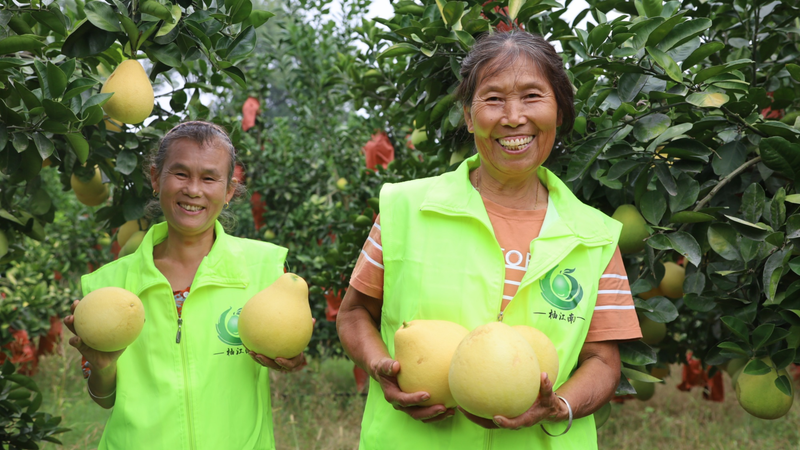
The villagers showed the fresh pick-up of the teafruits of igoka
Who would have thought that the village of gangnam, where the fruit is fragrance, was once known as a small and economically weak village. In the past, rice had been grown mainly in the village, but because of the chronic shortage of water in the cultivated land and the precarious food harvest, villagers had to work outside the village to supplement their families and live in tight conditions. The opportunity was turned over in 2012 to hudji yuan, then secretary of the village party, who led village “two commission” cadres across the surrounding municipalities and counties, and found that the arid soil in the village, although not suitable for rice, was compatible with the drought-resistant nature of honeyfruit and natural for honeyfruit cultivation. In the same year, jiangnan village established a professional cooperative to move over 1100 acres of wasteland, formally opening the way for exploration of the honeyfruit industry。
“it was so hard at first to touch the river with stones. We don't know anything about the amount of fertilizing, the timing of drugs, the cutting techniques. In spite of the fact that village officials have travelled to the village to study and learn their lessons, and have written their technical points back, the first few years of cropping up of grapefruit production have not been possible.” reminiscent of the initial difficulties of starting a business, the old books had to be suffocated, with words full of hard feelings about the past。
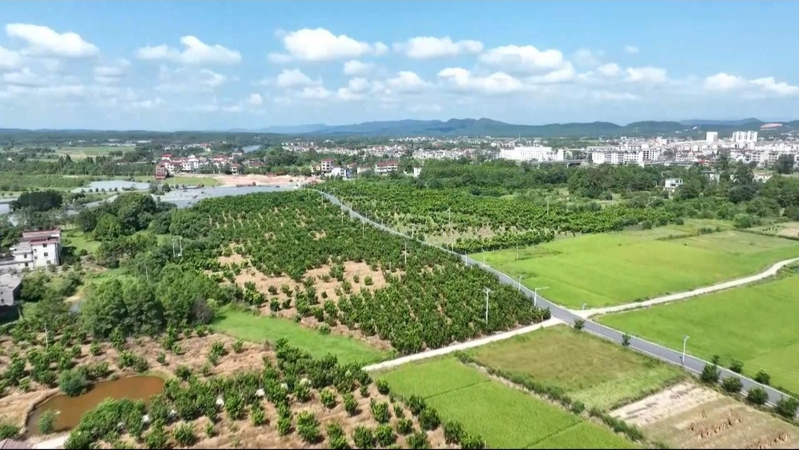
Beginning in 2012, the kangnam village was shifting to 1,100 acres of wasteland to grow honey from wells yum
The switch was made in 2023. Jiangnan village has changed its “one-size-fits-all” approach and has invited agricultural technical teams from shenzhen city to be stationed to provide technical guidance throughout the honeyfruit plantation。
From fruit cutting, management of water fertilizers to green control of pests and diseases, the production of honeyfruit has grown across the board with the power of full-process technology — “as soon as the cultivation technology is up, the production will go up!” last year we had 650,000 pounds of honeyfruit production, more than doubled this year and are expected to produce more than 1 million pounds." the village secretary, wang tai peng, was carrying a newly removed honeyfruit, full of pride and joy。
Moreover, under the guidance of the technical team, gangnam village has improved its planting techniques by replacing fertilizers with organic fertilizers and promoting ecological cultivation models. The honeyfruit is more sweet and, thanks to the advantages of green health, has become a “sorture” in the market, with orders coming before it opens. “the order arrived six months ago, and the buyers of zhejiang and guangdong reserved for most of them six months in advance.” the village official, xiao chinghui, was helping to load the grapefruit in the transhipment van while saying:。
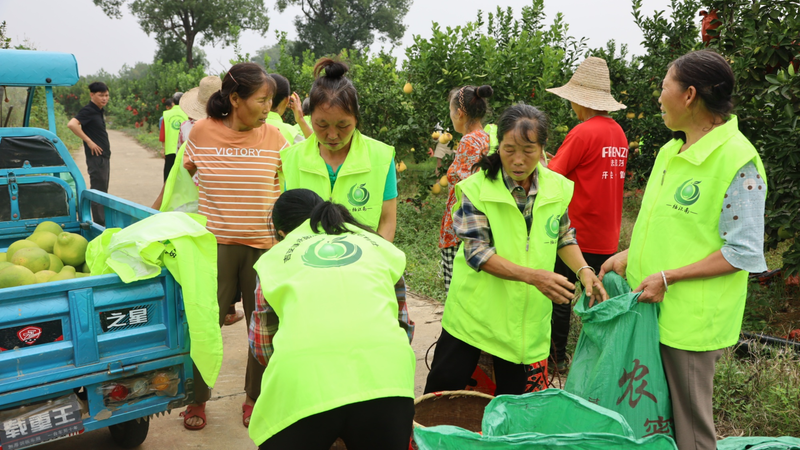
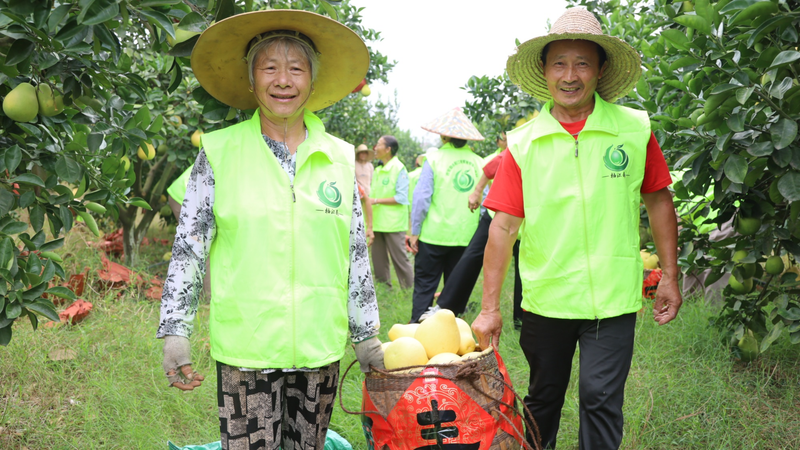
The villagers are transporting the teafruit from the orchard
At the sorting centre next to the plantation, several villagers are busy categorizing newly harvested honeyfruits by size and type and labeling them as “iioka honeyfruits”. “these graded grapefruits are sold throughout the country through electric power platforms and line wholesalers, with a fine fruit of $6 per pound and an ordinary fruit of $3!” the head of the cooperative, yoo linghua, said that 168 villagers were now joining the cooperative, that farmers were working at the cooperative during their leisure time to increase their income, and that there were points at the end of the year, and that the income of villagers could rise again this year as production rose。
The harvest of the honeyfruit industry has not only left the villagers with their backs, but has also led to improvements in the village infrastructure. In recent years, industrial revenues from the village have hardened industrial roads leading to plantations, and agricultural products have been sorted out. “our village roads were hard to walk and harvest crops were carried by manpower. The roads are now wide-ranging, and trucks can go directly to the garden, and pick and transport are much easier.” the 66-year-old yellow melon is happy to see the changes。
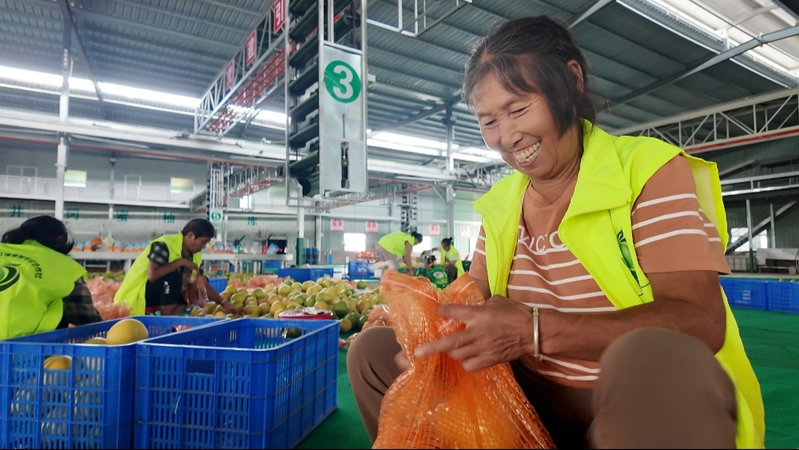
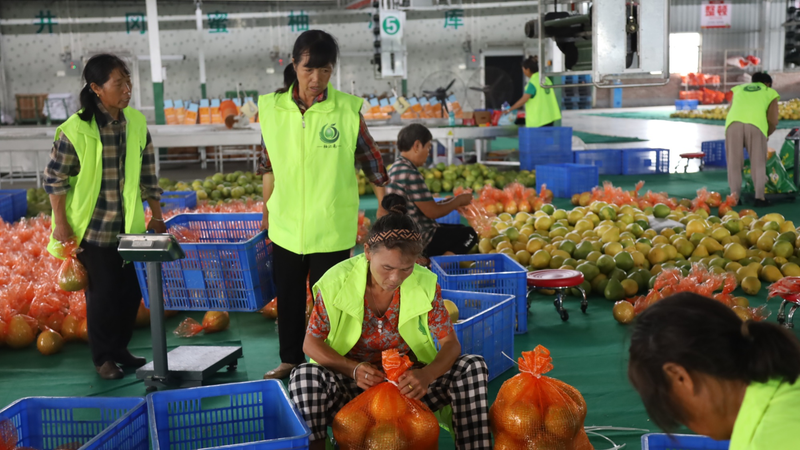
And the villagers sort and weigh the honeyfruit they pick
Today, in gangnam village, the honeyfruit garden became a “rich garden” and the collective economic weakness of the village became a well-known rich village. “the village just built up a juice production plant last month, and then the jam, grapefruit tea, and grapefruit skin deep-processed production line will be put into production, so that the honeyfruit will ‘dry clean up’ and make extra money.” the village book king tai peng pointed to the village's brand-new tea-processing factory and looked forward to it. He said that the village was also planning to develop village tourism in the form of a tow garden and that, when the grapefruit blossoms bloom next spring, tourists would come for the tea, pick grapefruit in the autumn, experience farming, and “coup” honeyfruit cultivation and rural tourism。
"the road ahead is a long way from here, but as long as we follow the industry and the technology, we'll be better off in the days ahead." wang tai peng is looking at the gardens full of tumbled grapefruit, with firm and full confidence。
The rich harvest of honeyfruit in gangnam village is a microcosm of the flourishing industry in higoka, gyan county. This year, around 41,000 acres, more than 20,000 tons of production and one branch-covered honeyfruit were being cultivated throughout gian county as a “gold fruit” for the local population to grow wealth and revitalize their villages. (source: gyan district commission advocacy department)