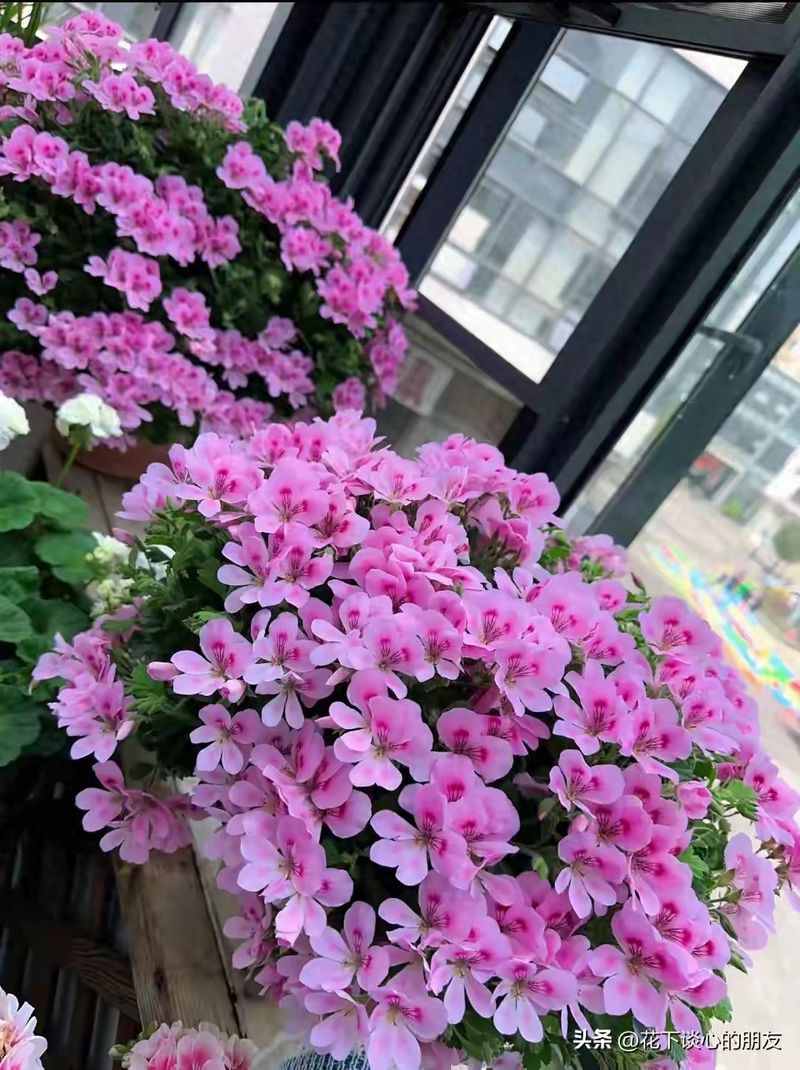
The four seasons of roses usually refer to the purple branch roses, which were successfully selected by researchers at the shandong ping rose institute after decades of subconscious research. Owing to its four-season value and its only flowering rose variety, it is favoured by the greening sector of the garden。

How do you grow the four seasons of roses? Let's find out。
1. Reproduction methods
It is usually divided into branches and plugs. Most of the units are divided in spring and autumn and are divided once every 3-5 years. It's okay to stick it in a hard branch. It is also possible to reproduce by graft and stripping, and to marry the aluminum as *grave, generally using sprouts, branches and roots。
2. Land selection
The four seasons of roses are highly adaptable, with such characteristics as sunlight, drought and cold resistance, and less demanding for soil, with organic sand-rich soils. In order to improve the production and quality of four seasons of roses, plantations should have good drainage and ventilation, and groundwater levels should be low, and fertile, neutral or micro-acid light soils could contribute to multiseason rose growth. The selection of the land should be followed by a levelling of the land and the application of 500 kg of spoiled farm fat for every 667 m2 land, followed by a deep run-off of the land and an effective improvement in its air accessibility。
Three
At the beginning of the month, four seasons of roses were grown, and before planting, the roots that had rotted or had been injured by the seedlings had to be cut off in order to ensure that they were grown to live and that there was no need for overcuting of well-developed roots, particularly the root roots. At the time of planting, seedlings need to be powdered to promote their growth, with 700 plants per 667 m2。

4. Fertilizer water management
Fertilisation:
Based on the growth characteristics of the four-season roses, at least three fertilisations in a year. The first sprout, the second fertilisation, can be applied to ammonium dihydrophosphate at 50 grams per m each, using a cave application. For the third time, fertiliser was applied in the autumn, before the leaves were frozen, and organic fertilized and used in the ditch。
Water:
After planting, the first water is to be poured in, then the water is to be controlled, the temperature is to be raised, and the new roots are to be effectively promoted until the new leaf is levelled, the water can be duly increased and the principle of “dry and wet” should be applied。
5. Orthopaedic cut
It is most appropriate to cut the dead branches, the weak branches, the sick branches, the overt branches and the older branches for more than three years after the fall of the purple roses. Too long and too long to retort. The flowers are then trimmed, dominated by wind and light, with the main branches wiped and dead。
6. Pest management
The four-season roses are highly resistant to pests and diseases, which usually do not occur, most often with dust and black spots. Plasmism can be combated by the production of long-term multibacterium and degenerative principals; black spots can be treated by 50 per cent debacterium or 50 per cent more than 500-600 times more。
In general, the four seasons of roses are fragrance and adaptable, most suitable for planting as a hedge, a flower field, an horticulture and a slope, and must first grow four seasons of roses with a mastery in their techniques。