Date: catalogue01 before planting the catalogue of plant techniques for doll foods: the economic benefits of field 003 management of pests and diseases 04 before harvesting and processing 05 and the suitability of soil preparation and improved soil type selection for planting in sandy or light clay, with soil ph values in the range 6. 0-7. 0, both acids and alkalis affect growth. Before deep-droping and fertilizing the soil, 25-30 cm is required to increase soil fertility by applying 2000-3000 kg per acre of decomposition organic fertilizers (e. G., chicken dung, cow dung) and adding 50 kg of compound fertilizer (15-15-15 kg n-p-k ratio). Soil disinfection treatment may be used for soil disinfection in order to prevent soil-borne diseases, using multibacterium or ff, or for the eradication of pathogens and eggs using high-temperature stupor (covered film exposure for 15-20 days). The drainage system optimizes the insatiable nature of the baby's vegetables and requires the digging of drains (30-40 cm depth) to ensure that the field is free of water during the rainy season and to avoid the decay of the roots. The climate environment requires that the temperature range of doll food bellies be controlled in a cold climate, with a temperature of 15-22°c and a short-term 3°c low temperature for seedlings, but with a long-term temperature of less than 5°c or more than 25°c, which can lead to strangulation or growth stagnation. The management of light intensity requires an average daily light of 6-8 hours, a lack of light that tends to cause leaves to grow and a loose ball, and a strong summer light that covers the sunnet (30-50 per cent). The relative humidity of the air of the wetness regulation measures is appropriate for 60-70 per cent, and the humidity can be regulated by drip irrigation in the plant to avoid diseases such as high levels of frosting. Seasonal planting arrangements are based mainly on spring and autumn field cultivation (spring seeding in march-april and autumn-august-september) and the use of sheds + membranes to cover thermopony during winter. Seed selection and treatment is immersed in 50°c warm water for 20 minutes, or 50% more than 500 times more, for one hour, to kill the seed surface pathogen, which needs to be washed with fresh water three times after treatment. Seed disinfection
0104
03
02
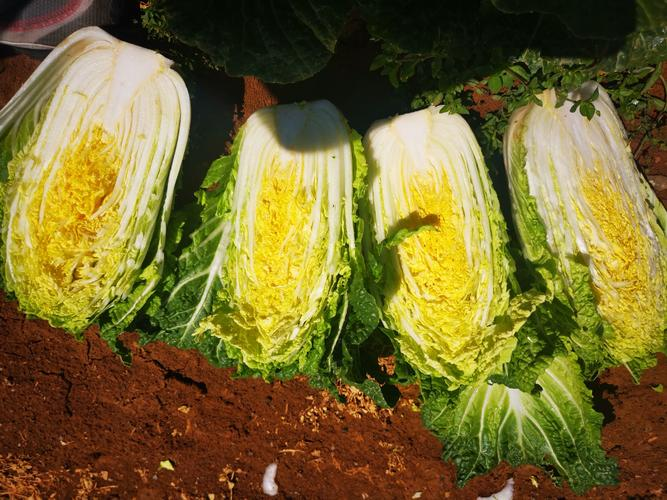
Clothes containing esters + aphids are used to prevent incubation and aphids, with 0. 3-0. 5% seed weight. Seed wrapping (optional) selects complex varieties that are resistant to disease (e. G. Soft, frost), tight-stretched varieties such as "kyo-chun, yellow" gold dolls, 98 per cent seed purity and 85 per cent gestation rate. Seeds are impregnated by the selection criteria for varieties for 4-6 hours in warm water at 25-30°c and then sprung at 20°c wet gauze, flipping twice a day, so that 50% of the seeds are seeded in white. The seeding time of the leaching seeding technique parrt02 determines that the spring seeding choice is stable at temperatures above 10°c for the period from march to april so as to avoid the impact of the fallout on the growth of the young child, while covering the membrane to maintain temperature and humidity. In the fall, planting was the best time between late august and early september, when high temperatures receded and the temperature differentials increased day and night, facilitating the tightness of the doll's dishes and the accumulation of sugar. Facilities may adjust greenhouses or sheds for planting before or after planting, provided that care is taken to regulate lighting and ventilation to prevent the occurrence of linguists or diseases. The seeding method and density live broadcasting with seedlings in the sandy soil should be broadcast live, with 2-3 seed seeds per den and 1 cm of dust; the clay soil is recommended for planting, which is set at 20-25 days. The range is set at 40 cm and 30 cm, and 500-5 500 cm per acre; the high plant can be sown appropriately to 6,000, subject to enhanced management of water fertilizers. Large-scale mechanized seeding can be carried out using precision seeding machines to ensure consistent depths of seeds and proper seed production, while saving labour costs. The seedbed management element maintains soil moisture of 60-70 per cent and temperature of 18-25°c during the gestation period, and gradually cools the seedlings to prevent high seedlings. Temperature humidity regulates seedlings for the first time at 1 am of 2 leaves, removing seedlings and disease seedlings; four-leave seedlings, with timely soil replanting at short-lived sites. Synthetic and replanting periods focus on the prevention of sudden fallout and leaching, and can spray oligostery or yellow sticky plates to avoid the use of highly toxic pesticides. Pest prevention 010203part03 field management fertilizer management strategy needs to keep the soil wet but unwatered during the growth of the doll's vegetables and to use drip irrigation or spraying techniques to avoid the root causes of oxygen deficiency or disease due to flooding. Smaller water is required for the seeding season and a significant increase in the volume of water required for the rounding season. Regular application of 0. 2 per cent boron and 0. 1 per cent ammonium molyte solution on the scientific side of the leaf irrigation can significantly increase the tightness and commercial ratio of doll-clubber balls, especially in sandy soils with high levels of deficiency. Microsubstances supplement the mechanical weeding of weeds and pine techniques with 25-30 centimetres of deep cultivation before weeding and overlaying the grass, with long-term black membrane cover to suppress weeds and 2-3 periods of shallow tillage (5-8 centimetres in depth) in conjunction with the medium tiller to avoid damage to shallow roots. Chemical herbicide techniques use 33 per cent of the decaper cream (150 ml/acre) for soil closure treatment three to five days before planting, with care to avoid application in rain. They are sensitive to herbicides and have been banned for a long time. Biograsming measures are used to crop herbicides, such as mustard and thorium, using their root secretions to curb the growth of weed seeds and to reduce herbicide dependence, especially for organic cultivation patterns. The temperature control of the growth control measures is to prevent high temperature-induced pumping and fibrosis by maintaining a suitable environment of average daily temperature of 15-22°c by setting up small arch sheds (early spring) or sunnets (summer) and by initiating spray cooling systems at temperatures above 28°c. Plant growth regulators are used to spray 0. 01 per cent of tha ester solution (50 ml/acre) at the beginning of the ball, which promotes cell fragmentation and increases the foliage by 15 to 20 per cent, subject to strict control of discontinuation 20 days before harvest. Parrt04 common disease identification and control of frozen froscilosis of molluscs is caused by bacterial infestation, in the form of plaque-based water stains accompanied by stench. Control requires the timely removal of strains and the use of 72 per cent of the agrococin humid powder 3,000 times the liquid spray, while avoiding water accumulation in the field. There are yellow and green spots on the leaves and white cortex on the back. Fifty-eight per cent of the mercuric manganese zinc humid powder may be used at an interval of 7 to 10 days, with 500 times the liquid ester suspension of 25 per cent. The leaves produce round brown spots with yellow dizziness on the edge. It is proposed to use 1500 times more liquids or 800 times more liquids of 50% hemogenic powders for decontaminous leaves to be removed. The common pest identification and control group gathers on the back of the leaves to suck on juice, leading to the distortion of the blades. A 10% amphibian filamentable powder or a 25% amphibian water dispersible particle agent may be used 3,000 times the spray spray, with a focus on leaf spraying back. Aphid moths and larvae gnaws to form transparent plasters, leaving only a leaf vein when severe. A 5% methachlor phenylacin micro-emulsifiable 4000 times the fluid or 20% chlorothiochlor suspension 3,000 times the fluid is recommended for treatment in larvae at an early age. Insects bite the leaves to form dense small holes and larvae to the root. Before seeding, 5% of the octhion granule agent was sprayed with 3 kg of soil per acre, and 2. 5% of high-efficiency chlorofluorocarbon-cypermethrin cream was sprayed in insects 1,500 times. The integrated control programme operates a rotational system (more than two years with non-crucial flower crops), which reduces winter insect eggs by deep-sliding soil, and uses disease-resistant varieties such as “spring and yellow” to increase ventilation by rationally implanting. Agriculture combats the leaching of yellow mucous boards for aphids and jump-to-bes, covering the silver gray membranes to avoid the infestation of aphids; and the installation of amphibians for an amphibians. Physical control releases bees (150,000 per hectare) to control aphid populations and sprays 100 billion spores/g short-stabilizers with 800 times more fluid to combat moths. Biocontrol strictly enforces a safe interval for pesticides (e. G. 7-day interval for chlorobenzo-methamphetamine), giving priority to bio-sourced pesticides and avoiding resistance. The scientific pharmacist part05 harvest and the timing of its processing determine that the optimal harvest period for the calibration indicator bellies is 80 per cent or more, and that the outer blades are less green and unaging, with a single ball weight of 300-500 grams. Early harvests affect yields, and lateness leads to cracks or fibrosis. The seasonally adapted spring seeding of dolls needs to be collected at an average temperature of less than 25°c (55-60 days after planting), and the autumn planting needs to be completed before frosting (50-55 days after planting) in order to avoid cold freezing. Market demand-led flexibility is tailored to the requirements of specifications in target markets, such as high-end firms that prefer small balls (8-10 cm in diameter), and wholesale markets can be eased to 12 cm as appropriate. After harvesting, 4°c cold water is required for cooling, reducing field heat, inhibiting breathing and extending the shelf life. After pre-cooling of the excepted leaves, the soil is classified as special (inexhaustible), first (in the case of minor defects, 3), second (in the case of 5 per cent mechanical injury allowed). Vacuum packaging (1-2 in each bag) is used for the debundling process specialty, primary packaging is covered with a pe film and secondary material is available in bulk, with date and level of collection indicated. The short-term storage of low-temperature cooling technologies (7 days) for packing instruction cleaning and graded standards requires the maintenance of an environment of 0-2°c and 90-95% humidity, which is compatible with ethylene absorbents (e. G. Potassium permanganate filters). The cold chain transport of transport control measures requires 4°c for the entire journey, using cold tanks or refrigerated vehicles to avoid temperature fluctuations leading to soft decomposition of condensed water. Long-term storage (15-30 days) uses a 5 per cent o2+3 per cent co2, which reduces the rate of decomposition to less than 5 per cent and maintains a soft sense of foliage. The economic benefits of part06 and the promotion of production cost-control options for high-quality, disease-resistant and high-yielding doll-breeding varieties, using intensive nursery techniques, reduce seed loss rates and reduce labour and energy costs by shortening the growth cycle through greenhouses or large sheds. Seeds and seed costs are optimized by promoting drip irrigation or micro-jet irrigation techniques, combining soil formulation with fertilisation, precision control of water and fertilizer usage, avoidance of waste of resources and reduction of production costs while increasing fertilizer utilization. Integrated management of hydro-fertilizers uses biological (e. G., natural insects) and physical (e. G., insecticide-treated nets) alternatives to some chemical pesticides, reducing pesticide expenditure and residual risks while protecting the ecological environment. Integrated pest management introduced small-scale sowing machines, harvesters, etc., and reduced manual inputs, especially at the ground level, seeding and harvesting, significantly reducing labour costs. The mechanization operation uses market sales strategy branding and differentiated marketing to create green, organic or non-publicly harmful brands of doll vegetables, enhance product value addition through certification labels, and develop differentiated pricing strategies for high-end supermarkets, electrical platforms, etc. The 01-order agriculture model promotes long-term supply agreements with catering chains and fresh electricists, stabilizes distribution channels and reduces market volatility risks, while adjusting planting plans to order demand. Seasonal price regulation analyses market demand cycles, longer supply periods through cold-storage conservation technologies in the off-seasons, early-season distribution campaigns, balancing supply and demand to maintain profit space. Underline 03 integrated sales expands the market by using new models of power suppliers, such as community group purchases, live delivery, etc., working with farmers ' markets and businesses to establish direct supply bases to enhance consumer confidence。04 the technology roll-out recommends the establishment of model bases for the standardized cultivation of doll vegetables in major production areas, the demonstration of key technologies such as water fertilizer management and pest control, and the attraction of farmers to study and replicate successful experiences。