


Following the fall of the news of march 25 (journalist zai xinxing), the largest tulip plantation in wuhan, located in the east and west lake region, has seen a period of tulips. And 50 kilometres away, at the flower base of the university of agriculture and parks college of china, the unflowered tulips were placed in white cow paper bags of card size. This is a collection of tulip seeds for new varieties。
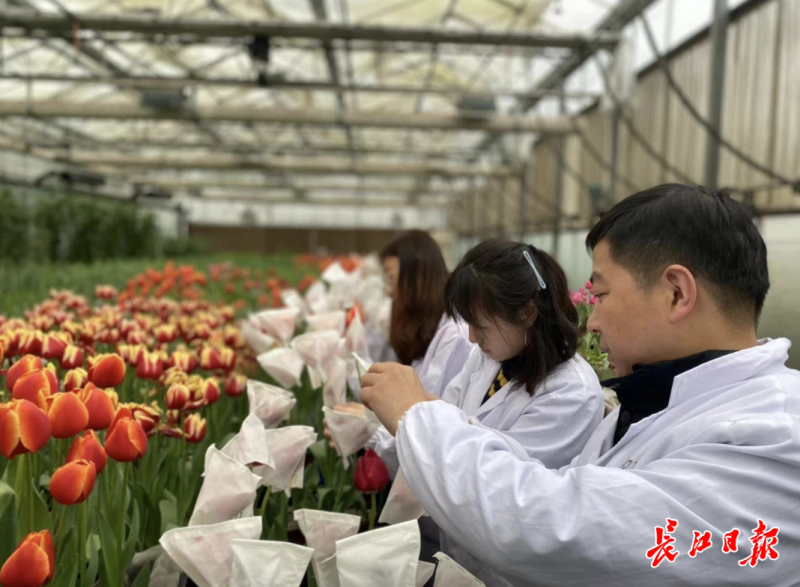
In the flower base of the university of agriculture, china, the team of professor tol long is collecting seeds after tulips. Cai xinxing, journalist for the yangtze daily newspaper
The china-china region is the best tulip watch date in march of each year. The tulips are popular with tourists because of their colour and variety. Little is known that our tulips are mainly imported. Data show that every year we import about 200 million tulip balls。
However, this situation is slowly being broken. The team of professor torolong of the ministry of horticulture and plant biology of china university of agriculture has achieved some breakthroughs in the field of national production of tulips, not only through successful domestic production of tulips, but also through post-harvest processing and anti-season planting, which led to the first flowering of tulips。
Four seasons of tulips using domestic seed balls
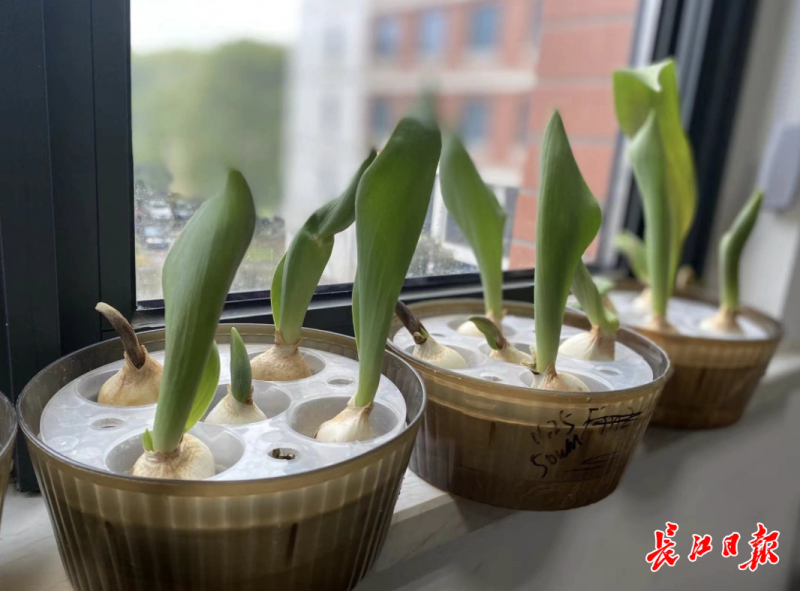
A tulip ball that looks like garlic. Cai xinxing, journalist for the yangtze daily newspaper
A line of white tulips attracts the attention of reporters in the yangtze daily newspaper by the window of the zuolong office. They look like garlic. They're balls that bloom and then use. Following special post-harvest storage techniques, these balls will be replanted, awaiting a second flowering. Professor jianlong told journalists that the seemingly ignominious tulip ball had been imported from the netherlands for 90 per cent of the previous decades, with a few coming from new zealand and south america。
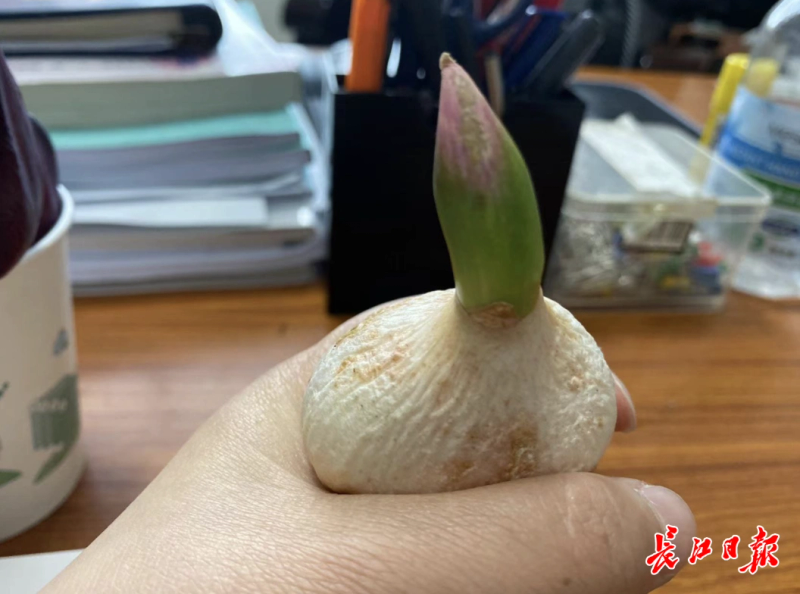
A tulip ball that looks like garlic. Cai xinxing, journalist for the yangtze daily newspaper
As the representative of the root flower, the tulip is called the queen of the flower, which is also the dutch national flower. But it has been documented that the tulips were actually first discovered in the xinjiang mountains and pamir plateau. It was only in the sixteenth century, through the ottoman empire, that it was gradually brought into the netherlands, and through the continuous cultivation and promotion of the dutch, that it became known to the world. There are now hundreds of wild tulips found throughout the world, and about 15 of our unique tulips, mostly in xinjiang。
In the 1980s, tulips were introduced back into china and successfully tested at the xian botanical garden. But the tulips are more environmentally demanding, with 10°c-20°c being a more appropriate growth environment, which, once above 25°c, is prone to ageing and death. After the introduction of seed into the country, because the climatic conditions in many areas are not suitable for the growth of the ball, and because of, inter alia, the infestation of the virus and the irregular management of cultivation, the degradation of the ball is reduced every season, with no or no flowering in the following year, resulting in imports from abroad every year。
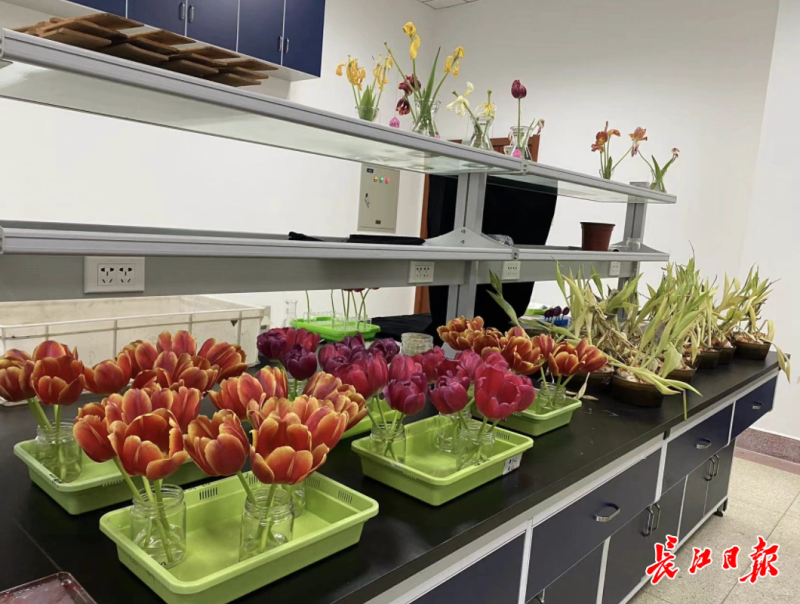
The tulip for experimental experiments is located in the priority laboratory of the ministry of horticulture and botanical biology of china agricultural university. Cai xinxing, journalist for the yangtze daily newspaper
“the key to the flowering of the tulips is the processing chain during the post-harvest storage period.” following admission to the chinese university of agriculture in 2016, a doctorate in botanical science began the industrialization of tulips. With his initial three or five-person research team, he was determined to tackle the challenges of tulip-ball production, post-mining storage and planting。
In collaboration with the east and west lake tulip park, the zhuang dragon will conduct a recycling study of the species that were once flowers. Finally, it was found that the treatment of the two stages of sprouts and hibernation was key to flowering. The buds of the balls are insufficiently divided, and the flowering is uneven or impossible and the landscape is less effective. Breaking the hibernation means that the storage cycle, which would have taken three to five months to bloom, is reduced by technical means to one or two months. “the control of temperature during storage is essential, and we have been searching for it for a long time. Only by controlling the temperature at this stage can the ball bloom in a coherent fashion at the same time.”
At the beginning of september 2018, the chinese university of agriculture (cua) campus launched a rich tulip, which was the first to be validated for the seeding techniques of the toyon team. The tulip, which was planted every winter and bloomed in march of the following year, could flourish in september or even in any season. This is also the first time that a national tulip ball has been used for four seasons。
You can grow potatoes where you can
$7,000 in acre
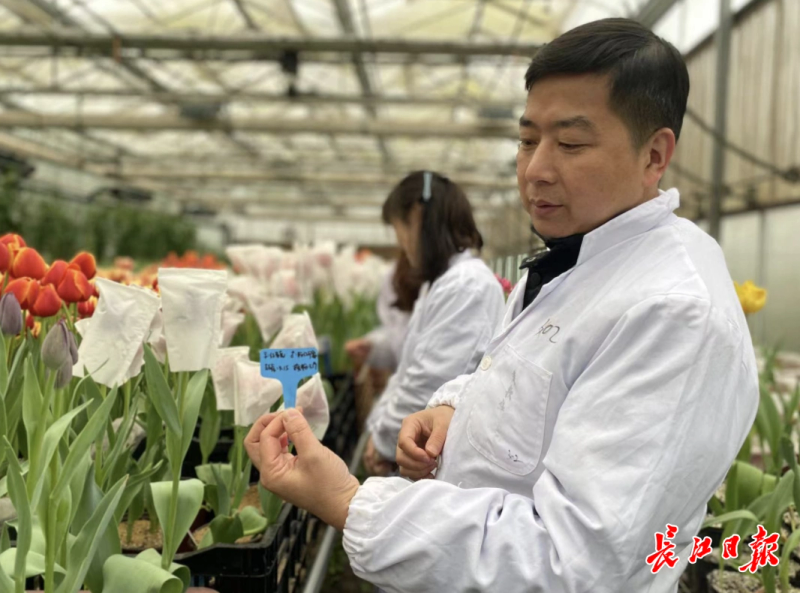
In the flower base of the university of agriculture, china, the team of professor tol long is collecting seeds after tulips. Cai xinxing, journalist for the yangtze daily newspaper
Because tulips are difficult to cultivate, tulips have become an investment species abroad. It is understood that tulips take about five to six years to grow from seeds into commercial seed balls, and that high time costs are one of the reasons why many landscapes or enterprises in the country prefer to buy processed balls directly from abroad. In order to produce and cultivate their own seed balls, starting in 2016, in strict compliance with the protection of the right to intellectual property in the form of flowers, the torolong team has selected more than 100 varieties, using tissue culture, hydroponics, foundational culture, etc., for the breeding and scaleing of tulips。
Because of the few precedents available at the national level, the organization of tulips of seeding techniques is based entirely on experience and continuous mapping and optimization. Among the horticulture team, there is a 2018-year horticulture student who has been experimenting since the undergraduate stage, and four years later only after graduate studies have produced the results, which are published in the prestigious international journal of horticulture and patented for state inventions. “the experimental process is more like a combination of different factors, and we are still afraid to say that we have the best results, except that they are now better.”
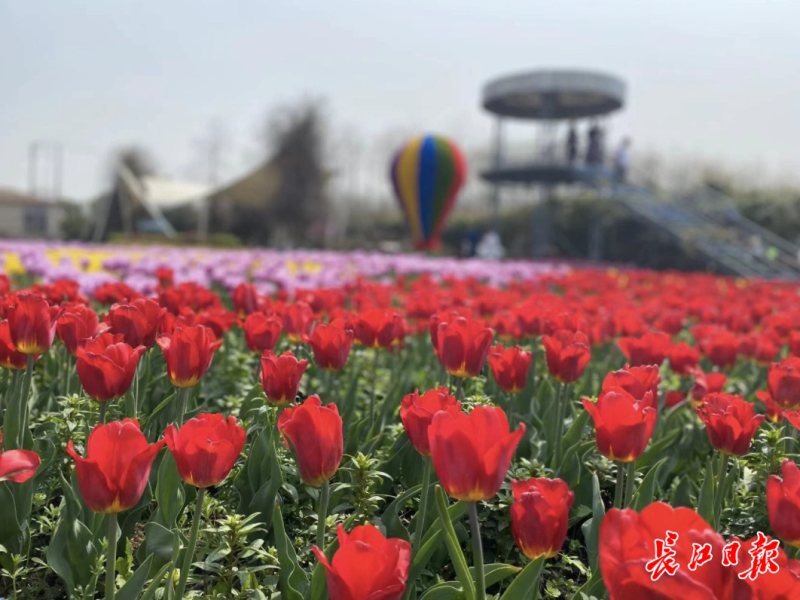
The lake tulip theme park enters the flower season. Cai xinxing, journalist for the yangtze daily newspaper
A tulip-based tissue training system has been established, making it possible to grow large-scale balls. After a field trip, the team found areas at 800 to 1,200 metres above sea level, such as hubei eunsch and the gospel, suitable for tulip cultivation. Tornado: in simple terms, where potatoes are grown, they grow tulips。
This has provided new options for cash crop cultivation in the high mountain areas of lake north. A single acre can produce 20,000 to 40,000 seed balls, remove labour costs and the cost of production resources, and earn 67,000 dollars per acre, providing new options for rural revitalization。
In their view, flower seed resources are the “chips” of the flower industry and are fundamental to its innovation. The team now has a number of patents for tulip ball cultivation and flower management. After breaking the technical barriers, the team is calling for the introduction of provincial local and industry standards to regulate the cultivation of tulip balls and provide a technical base for large-scale production of tulips。



