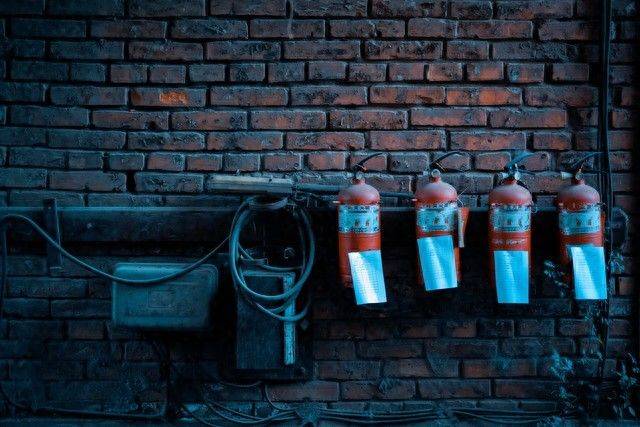
I. Fire extinguishers with handheld, pusher-type chemical foam extinguishers
The useful life is 8 years. Such fire extinguishers are applicable to fire extinguishers of general category b, such as oil products, grease, etc., and may also apply to fire fires of category a, but cannot be used to save water soluble, flammable liquid fires of category b fire, and fire fires of categories c and e. When the useful life has been reached, it should be disposed of in a timely manner. Hand-held, pusher-type acid fire extinguishers
The useful life is 8 years. It is used mainly to respond to general solid fire, such as wood and cotton molluscs, but is now used relatively little because of its limited effectiveness and corrosive equipment. End of life. Hand-held, pusher-type water extinguishers
The useful life is 6 years. Water extinguishers, which rely mainly on cooling and asphyxiation, are used to fight solid fire fires, such as timber, cotton molluscs, paper, etc. Due date needs replacement. Handheld, pusher-type carbon dioxide extinguishers
The useful life is 12 years. Carbon dioxide extinguishers are used to save valuable equipment, archival information, instrumentation, electrical equipment below 600 volts and initial fires of oil. There was no damage to the equipment because there were no traces of co2 fire. You have reached the age limit. Handheld, wheeled dry powder extinguisher
The useful life is 10 years. Dry powder extinguishers can extinguish general fires, as well as fires caused by burning, such as oil and gas. It is a common and widely used fire extinguisher. This will require timely replacement. Ii. Fire detectors for fire alarm systems
The life of different types of fire detectors varies. Generally speaking, the ion-sensitized smoke detectors have a useful life of about 10 years and the pv fire detectors and temperature fire detectors of about 12 years. Fire detectors are an important part of the fire alarm system and are used to detect signals of smoke, heat, etc. From the initial fire. When the useful life is reached, its sensitivity may decrease and it needs to be replaced in a timely manner to ensure that fires are detected in a timely manner. Manual fire alert button
The normal useful life is 10 - 12 years. The manual fire alarm button is a mechanism for personnel to trigger the alarm manually when a fire is discovered and it is connected directly to the fire alarm controller. Disorders, such as exposure, may occur after life, affecting alarm functions. Fire alarm controller
The life span is about 12 - 15 years. Fire alarm controllers, which are the core equipment of the fire alarm system, receive signals from fire detectors and manual alarm buttons and send sound alarm signals while controlling the associated fire alarm equipment. Upon reaching the end of their useful life, problems such as unstable performance may arise, requiring replacement or upgrading. Iii. Indoor deflammation of the defunct system
Under normal conditions, indoor embolism has a useful life of about 20 years. The indoor flammation is an important fire-fighting facility within the building and consists of ablution, water belts, water guns, etc. During their use, they are periodically checked for sealing and integrity. In cases of rust, leaks, etc., early repair or replacement may be required. Outdoor embolism
The normal useful life is 20-25 years. Outdoor embolisms are placed outside buildings to provide water for fire trucks. Damage is more likely to occur as a result of prolonged exposure to the outdoor environment, which is affected by wind, rain and sun. Maintenance is performed regularly to check whether the switch is flexible or leaky. Fire pumps
Fire pumps have been used for approximately 15 - 20 years. Fire pumps are the key equipment for providing fire-fighting water pressure, such as an ender system and an automatic spray system. It needs to be regularly inspected and maintained to ensure that fires are operational at the time they occur. Early replacement may be required in cases of reduced performance, frequent failure. Iv. Advice eduction system nozzles
The lifetime of the jet is usually 15 - 20 years. The nozzle is a key component of the self-spray system, and when a fire occurs, the nozzle automatically opens the nozzle when the temperature reaches a given value. In the course of their use, care should be taken to prevent the jamming of jets, through regular inspections and cleaning. Call the valves
The alarm valves have a useful life of approximately 15 - 20 years. The alarm valve group is an important control component of the automatic spraying system, which can be activated automatically in the event of a fire and controls the flow into the spraying system. Periodically check the sealing and reliability of the actions. Water flow indicator
The life of the current indicator is typically 10 - 15 years. The current indicator is used to monitor the flow of currents in the jetting system and to provide feedback to fire alarm controllers. There may be issues such as misreporting or non-reporting beyond the useful life period, which needs to be replaced in a timely manner。
It should be noted that the above-mentioned years are for information purposes only, and the lifetime of an active fire-fighting facility is affected by a variety of factors, such as the use of the environment and maintenance. Fire-fighting facilities should be regularly inspected, maintained and maintained in strict compliance with relevant standards and norms during their daily use to ensure that they remain in good working condition。