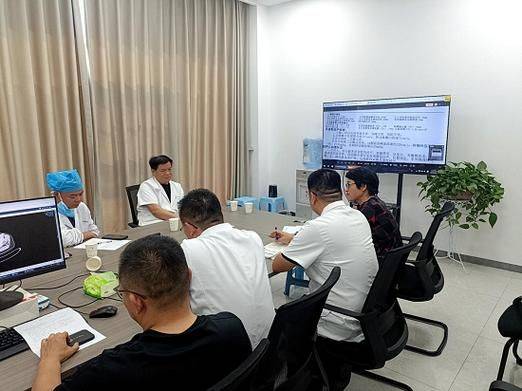
On the news of 8 july, a multidisciplinary team of specialists in general surgery, oncology, oncological surgery, discharge therapy and anesthesia, such as the linyi city medical hospital (884301), conducted a multidisciplinary consultation for a suspected oncological patient who was “highly low rectal cancer and strong will to protect his anal”, which was initiated by the hospital (884301), the director of the general surgery, chen fei, and the director of the clinic, lulyang, chaired the meeting。
On the same day, the multidisciplinary meeting opened under the auspices of chen fei. The discussion of the cases revolved around “utterly low rectal cancer, strong will to protect the anal”, with wang hanlin, the general surgeon, reporting cases: 46 years old, male, 18 days of rectal malignant neoplasm, pathological examination: lower rectal cancer. In recent days, director chen fei has been admitted to a number of san ace hospitals (884301), where he has asked for “highly low rectal cancer (about 3 cm from the anus) with a strong desire to protect his anal”, a complex situation involving the assessment of the feasibility of anal surgery, the timing of the release of chemotherapy and the choice of programmes and the management of the circumcise。
The director of ct-li of medical images has detailed the characteristics of the stove through high-resolution video material; the director of oncology surgery has provided a detailed analysis of the patient's current situation and has reached a consensus with the director of general surgery and auxiliary treatment, chen fei team and oncology; the director of the oncology department of the emancipation roads district, yao yong, has made a recommendation for the provision of assistance in the treatment with precision; and the director of anaesthetology, zhou zhoujiang, has assessed the risks of surgery in relation to the patients ' basic illnesses. Through interdisciplinary and in-depth collaboration, the team eventually identified the path to treatment for the patients, developed individualized, precisiond pre-operative new assistance and excursive management programmes for the patients, and laid a solid foundation for the patient's next routine treatment, which was well received by both the patients and their families。
Chen fei stated that the value of mdt became even more evident as the number of suspicious and complex cases increased: “it breaks down the barriers to discipline, allowing surgery, internal medicine, medical treatment, etc.” (b) a single model of treatment for `headache and foot pain' is avoided by the military class of `collaboration' in order to fundamentally improve the quality of care。
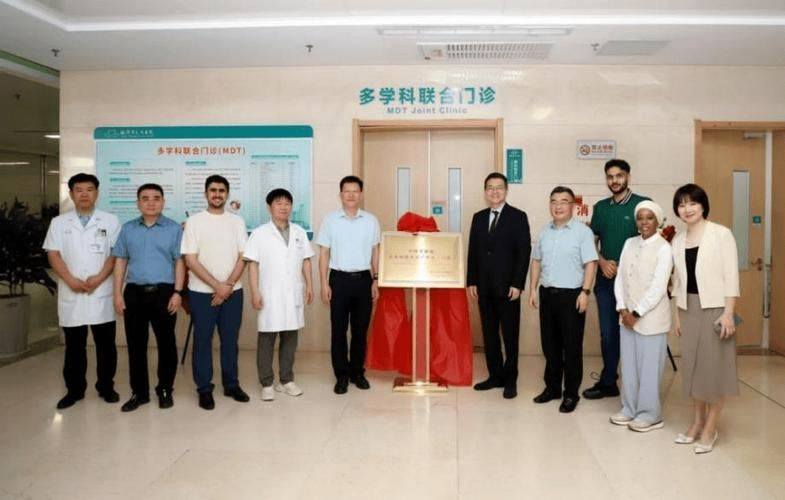
According to lu liang, “the mdt model has truly achieved `the patient stays in the hands of an expert', reducing the time taken to transfer the patient to different disciplines on the one hand and significantly improving the scientific and operational viability of the treatment programme on the other through collective decision-making by specialists on the other”. The future hospital (884301) has made mdt a key player in the treatment of difficult diseases, further improved the mechanism of outpatient mdt, expanded the coverage of diseases, promoted interdisciplinary integration and increased the number of patients benefiting from standardized and accurate diagnostic services。
The family members who took part in the consultation said, “we have more faith in the treatment than we need to run more than one unit, so we can get so many specialists together.”
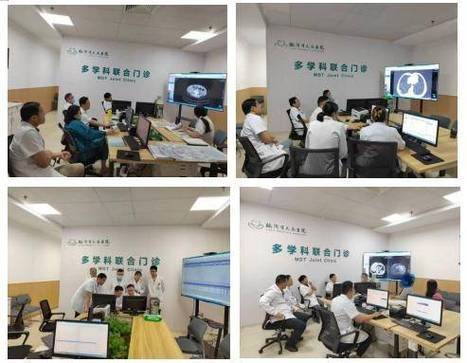
Mdt consultation model
The mdt treatment model concept consists of a patient-centred combination of surgical, oncological, therapeutic, video-diagnostic, pathological, intervention, therapeutic, etc., in which specialists discuss the diagnosis of diseases (including pathological, staged, etc.) and develop a model for individual chemotherapy programmes。
Mdt mode advantages
1. Precision treatment. The diagnosis of tumours is an extremely important step, especially the identification of benign tumours, as well as a crucial link for cancer. Images from the mdt team, surgeons, etc. Can give accurate information about the size, transfer, location, etc。
2. Development of individual chemotherapy programmes. Face-to-face discussions by multidisciplinary experts allow for a more comprehensive understanding of the situation, help to identify the best individualized treatments efficiently, improve the quality of medical care, avoid duplication of examinations and treatments, significantly reduce patient costs and improve patient access。
3. Improving efficacy. All relevant mdt units must be involved at the earliest opportunity, and if the patient is in a more serious situation, he or she will need to be involved throughout the follow-up process to significantly improve the effectiveness of clinical treatment. Full communication between mdts makes them clearer about the patient's condition and provides a more rational and viable programme of treatment, which undoubtedly results in better treatment for the patient。
Improving the quality of life. Constituent cancer itself occurs in the intestinal tract, with abdominal abdominal abdominal pain, constipated diarrhoea and digestive symptoms such as vomiting, in particular intestinal damage caused by surgery, fistula, intestinal infarction, etc., and the quality of life of patients is often inexhaustible. Mdt can minimize this situation, as an mdt-optimal treatment programme not only improves the efficacy of treatment but also significantly reduces the impairments of treatment relevance. For the treatment of low rectal cancer, mdt can increase the anal retention rate by 15-25 per cent. Zhou pingxie, correspondent