Types and characteristics of broad asset classes
Part-time asset allocation requires an understanding of the characteristics of the larger asset classes。
The distribution of assets is like the formation of a football team. Stock, bonds, bulk commodities, cash assets, these are your players. You need to know the talent and talents of each. Nor can the best teams be made up of attackers, and no one can win the game without being defensive. So it's all the more important to have both formations. When you encounter a weak unit, take an offensive formation, and when you encounter a strong unit, you switch to a defensive formation. The “enemy” we face in asset allocation is actually a different economic cycle. Each cycle tends to be characterized by a category of superior assets that perform relatively well, as well as a number of other assets that perform relatively poorly。
In everyday life, houses, cars, jewellery, watches, shares, deposits, property management, etc. May be considered assets. But if it is to be seen from an investment perspective, high-quality assets must be able to generate cash flow income for you on a continuous basis. It's like having a goose that can lay gold eggs, and it can produce gold eggs for you constantly, so that money flows into your pocket, not out of your pocket。
When measured by this standard, it is clear that cars are not high-quality assets, and not only do they depreciate quickly after they are bought, but you also have to put a lot of money in them, such as insurance, fuel, parking, maintenance, etc. In such a way, jewellery, jewellery and watches are equally bad assets, neither have the capacity to generate cash flows, nor are they sufficiently liquid to be sold. So, in terms of asset allocation, the assets that we can use are equities, bonds, bulk commodities, real estate and cash assets, which are more pragmatic and large。
Equities are the most common asset of all, with many people trading, but many people do not know what they are. The essence of the stock is, in short, the ownership, decision-making and profit rights of listed companies. For ordinary investors, we usually have only the right to gain. It's like we pay someone to work for us and then share the income they earn. If they do well, they go up in high prices and others are willing to hire them at higher prices, we can make the difference. Thus, the most fundamental reason for the rise in stock prices is the fact that the businesses of listed companies are earning money and that they are growing in capacity. That is to say, people who work for us are getting better and better than they are. So, as long as science and technology continue to improve, the economy rolls forward, the profits of listed companies grow, and central bank currency supplies continue to grow, stock prices must eventually rise in a spiral of economic growth。
In the long run, equities have one of the highest returns among all major asset classes. This may be quite different from what you feel. However, according to the statistics of professor siegel in the united states, the real annual compound average yield on equities, adjusted for inflation, is about 6. 6 per cent in a long-term cycle. If inflation is restored to the real rate of return, then the long-term nominal average yield on equities is roughly 10 per cent, much higher than the bond and commodity class assets。
The greatest feature of equities is that the longer the time, the more stable the return. We will depend on stocks for 80 per cent of our future earnings, which is the main object of our research. Of course, we're talking about stock indices here, and a stock would have to be different. But someone would say, "how can i hold shares for decades?" and that's the problem with the strategy behind us, which tells you when to buy stocks and bonds。
While the long-term return on equities was high, its greatest problem was high short-term volatility. Because there are so many factors affecting stock prices, there are macro-level, industry-level, corporate fundamentals, policy-related, and investors' emotional and psychological changes. If you always rely on forecasting short-term market movements to generate excess earnings through band operations, then you can end up becoming a “spread boy” in the market. That is why 70 per cent of investors in the stock market always lose money, 20 per cent lose money, and the 10 per cent that really earn money are extremely patient。
Equities can be broken down into many types, such as chinese equities, united states equities, developed country equities, emerging market equities, etc. The breakdown also includes large, small, growth, value, etc。
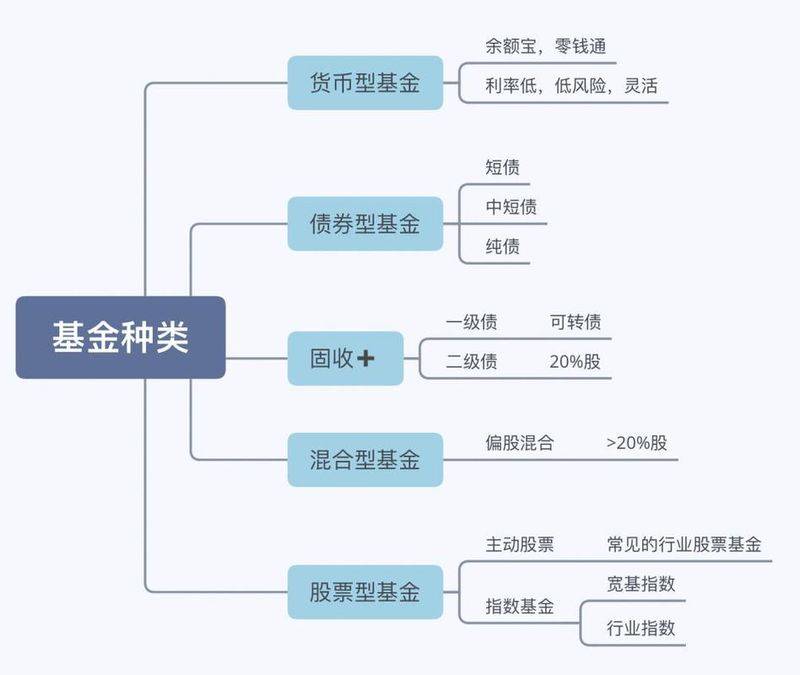
Bonds are more widely classified than equities, including national debt, central bank notes, financial debt, corporate debt, medium-term notes, reversible debt, etc. If broken down by holding period, it can also be classified as short (within three years), medium (3-5 years) and long (more than five years)。
The national debt is the most stable and safe of the bonds, but with relatively low returns. National debt can almost be regarded as a risk-free product, but there are, of course, individual “back-to-back” countries that have been in debt. In the event of a credit problem, the interest rate on the national debt would climb very high, as more interest would be needed to compensate for the risk。
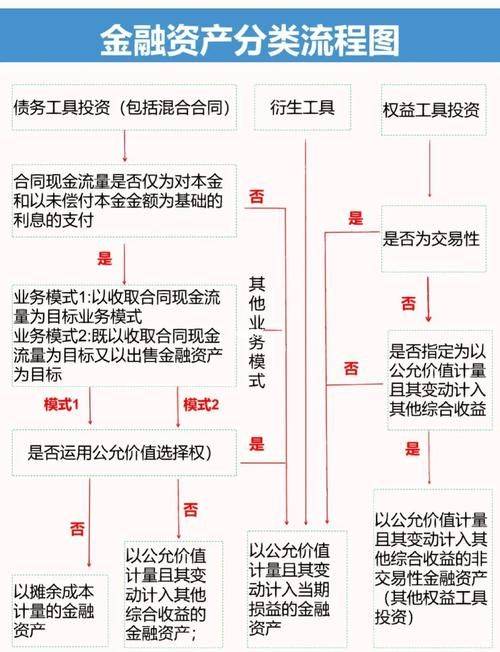
The slightly higher rate of return on the national debt was financial debt, i. E. Bonds issued by financial institutions. For example, public debt, agricultural debt, inflow and exit from policy banks, and bonds issued by commercial banks. These bonds are largely free of default risks and relatively safe, but with similar rates of return。
Bonds with higher returns than financial debt are corporate debt. But the high rate of return also comes at a cost: there is a risk of default on corporate debt. Generally, the more poorly qualified enterprises, the higher the bond returns. This additional rate of return is compensation for credit risk. But if corporate debt defaults, investors are likely to lose their lives. Thus, institutional investors usually resort to a decentralization strategy when investing in bonds, and even a single bond explosion does not affect the larger picture. In some cases, when bond portfolios form stable spreads, institutional investors also leverage the gains. It is therefore best for individual investors to use institutional power to configure bonds through bond funds in order to purchase them. This would spread risks on the one hand and leverage by institutions on the other。
There is also a special bond called reversible. Convertible debt is essentially a low-interest debt and, under certain conditions, can be converted into corporate shares. Therefore, reversible debt actually has the dual character of claims and equity and is seen as an “advanceable, defunct” investment instrument, similar to a stock with a guaranteed base. Of course, convertible debt is also more volatile than ordinary bonds。
In general, bonding is more of a ballast role in asset allocation, as a reserve, and is mainly used to calm stock fluctuations. Once the stock market has collapsed, bonds can largely hedge against a certain loss, while allowing you to have a back-up at any time。
Large commodities are divided into four main categories: industrial metals, precious metals, energy products and agricultural products. Industrial metals include copper, aluminium, zinc, tin, etc. Precious metals are mainly gold and silver. Energy products include, inter alia, crude oil, natural gas and coal. Agricultural products include maize, soybeans, wheat, sugar, cotton, pork, etc., most of which are used for futures trading, mainly to hedge real enterprises. For example, in the case of meat-processing businesses, fearing an increase in the price of pork, they can make futures of pork. If the price of pork rises in the future, the seller can earn money on futures, even though it loses business, which amounts to a hedge loss. The business would thus be much more stable and not always subject to volatility。
The movement of large commodities is closely linked to the global economic cycle. When the global economy begins to warm and inflation rises, large commodities usually perform well. However, economic cycles occasionally do not synchronize in different countries. In general, trends in industrial metals in commodities are more relevant to the global economic cycle, while trends in energy products, such as oil, are closely related to the united states economic cycle。
The greatest characteristic of commodities is their apparent cyclical volatility. As a result, long-term investments in bulk commodities are inefficient and may be an endless “overlander”. Because commodities and equities are less relevant, or even negative, to bonds, the role of commodities in asset allocation is more risk-dispersing, especially when equity bonds are killed, helping to calm portfolio volatility, which we do not expect to generate。
Cash assets, which typically include call deposits, term deposits, large certificates of deposit, imf, short-term debt funds, etc., do not mean cash alone. While cash assets are characterized by low risk, high liquidity and easy access, they have the lowest return on all assets. Therefore, as far as possible, cash assets should not be overpossessed and should be available on a contingency basis. In the long run, the rate of return on cash assets is usually not going to win inflation, and it is only briefly that we hold cash after stock-bond losses and large commodity peaks。
Real estate is the most familiar type of asset in china, and 70 per cent of chinese wealth may be in real estate. Although we have not always looked well at real estate, it is undeniable that real estate is also an important transferable asset, or rather, domestic real estate at this stage. Although housing prices are currently falling significantly in many regions, they are still low. If the house price falls to 3 per cent higher than the rental price (annual rent/price), it may be more appropriate to buy the house than to rent it。
There are many configurations of real estate, broadly divided into three categories: residential, commercial and real estate trusts (reits). Housing is mainly used for appreciation and rental. Commercial property is used more for rental purposes to obtain cash flows. Reits, on the other hand, is a more advanced investment tool, with more flexible transactions, lower thresholds and easier liquidity, which is equivalent to people collecting money to buy a house and then rent a rental income. The rate of return for reits is floating in comparison to bonds, that is, it is resistant to inflation and the absolute rate of return is not low. However, owing to the fact that the country's real estate stock is currently overvalued and rent returns are generally below 2 per cent, it is difficult to develop domestic reits. The development of reits in the country is still in a pilot phase, focusing mainly on infrastructure。
In addition, there are alternative assets such as private equity, venture capital, foreign exchange, art, etc. These are not mainstream assets and are generally less accessible. Private equity, like private equity, and venture capital investment are difficult to standardize and can generate or be costly. Foreign exchange, despite its volume of transactions, does not have the attributes of appreciation and risks are not low. As far as art is concerned, it is a hobby and an investment. Because when you sell it, you don't have to find a buyer, even if you have a piece of the seal, and if no one cares, it's just a piece of brick。
In practice, for the vast majority of friends, it is actually enough to focus on stocks, bonds, bulk commodities and cash assets. As for real estate, it is not a good time for domestic configuration. Moreover, the asset attributes of real estate, which mainly result in cash flows from rent collection, are not known to be the result of rising housing prices。