


Pyramid family cultivation requires an unshielded southward balcony, closed balcony at a minimum temperature of 10°c or more during winter nights, with four seasons of cultivation, and spring and summer festivals more suitable for pelvis. Paprika requires medium-strength light, intolerant of strong light and more resistant to weak light. When placed indoors, proper light is required。
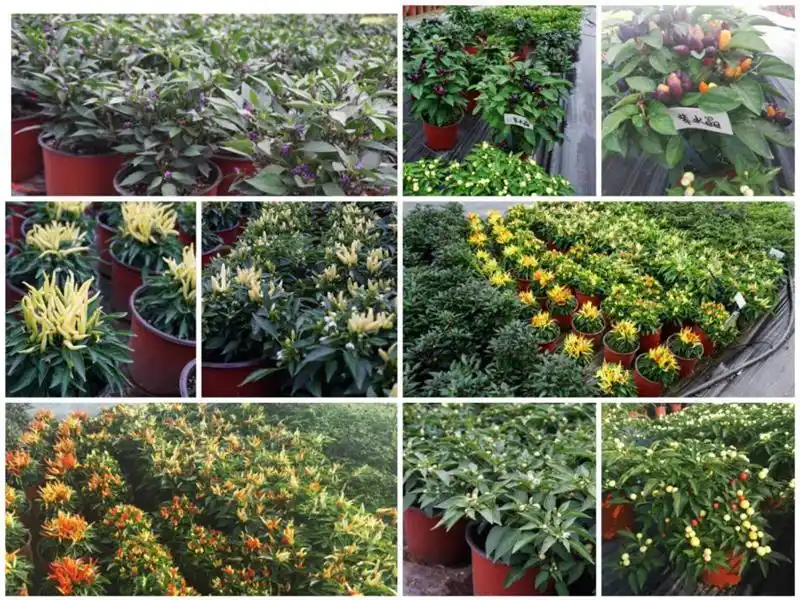
Planting seedlings
Premium pepper is 30 to 50 days long and the balcony is cumbersome and can be bought directly from flower markets, horticultural stores or treasure shop shops. It is also possible to purchase seedlings on its own。
Leaching seedlings: application of hot soup leaching. The seed is placed in a clean glass, slowly immersed in 50-55 °c warm water for 15 minutes, cooled and continued to soak for 8-12 hours, dried water, wrapped in wet gauze or towels, placed on a thermostat or heating tablet at 25-30 °c, once a day with warm water, and then seeded once a day after 70 % of the seed is white for about five days。
Base mass configuration and seeding: a seedling can be grown with grassgrass: cylindrium = 3:1 recombinant, with organic fertilizers of appropriate fine shredd and sufficiently decomposed to sift, sufficiently mixed, or with a product of choice to produce a seedling matrix。
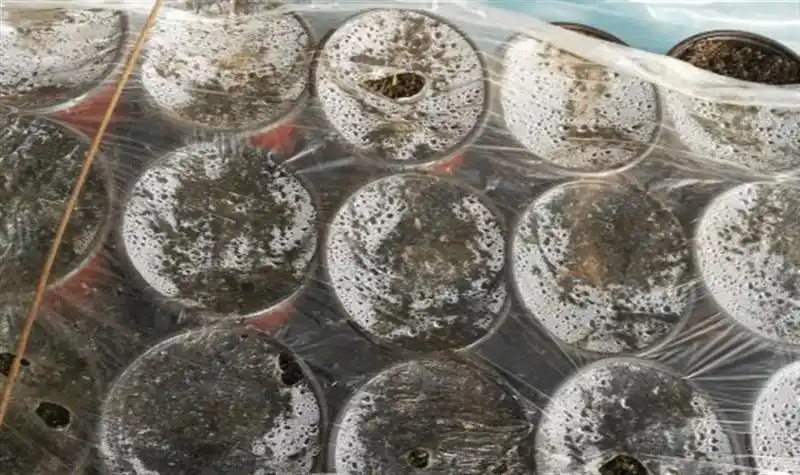
Vacuum or seedling mosaics are ploughed with water, with one seed in each den, and are planted to cover 0. 8-1 cm thick matrix or pearl rock. In winter and spring, the seedlings are humid with thin membranes covered on the lacuna or scavengers, increasing the temperature to facilitate early seeding, maintaining 25-30°c during the day, 18-20°c at night, and maintaining relative humidity of the matrix at around 80%。
Shrimp management: around 25°c during the day and 15-17°c at night. Depending on the dry wetting of the matrix, water is sprayed 1-2 times a day in the summer autumn and generally once every two days in the spring of winter. In the case of urea and potassium dihydrophosphate, which are generally not followed by fat, a ratio of 1:1 can be applied to 0. 3 per cent of the leaf. Cultivation of seedlings with small and green leaves, thicker branches, well-developed roots, disease-free. Speculation of a plant plant: depending on the variety of species, a flower basin of 10-30 cm calibre and 15-25 cm height is generally available. Shorter species may choose to use a flower basin of 10-20 cm in diameter, with one plant per basin, with a larger one, with two to four plants per basin, which can combine different varieties into a combined plant. Selecting a flower pot with trays, which is easy to fix. The material in the basin is suitable for plastics and ceramics. Substrate selection: battery soil, which can be prepared by disinfected sift garden soil: charcoal: quail: pearl rock = 2:1:1 in volume ratio formula, with 3-5 grams of compound fertilizer per litre, evenly mixed back-filled basin。
Plantation matrix, recommended formula sizes of cascading: cylindrical: pearl rock: organic manure = 10:5:3:1, or grass-chard: pearl rock = 3:1 ratio of self-coding matrix, mixed back-up, may also purchase a commodity matrix and use a garden soil with a description of mixing a certain proportion。
When the soil or matrix is fully evened by a water spray, the basin can be filled when the effect of “hands in groups, loose hands” (60-70% water content)。
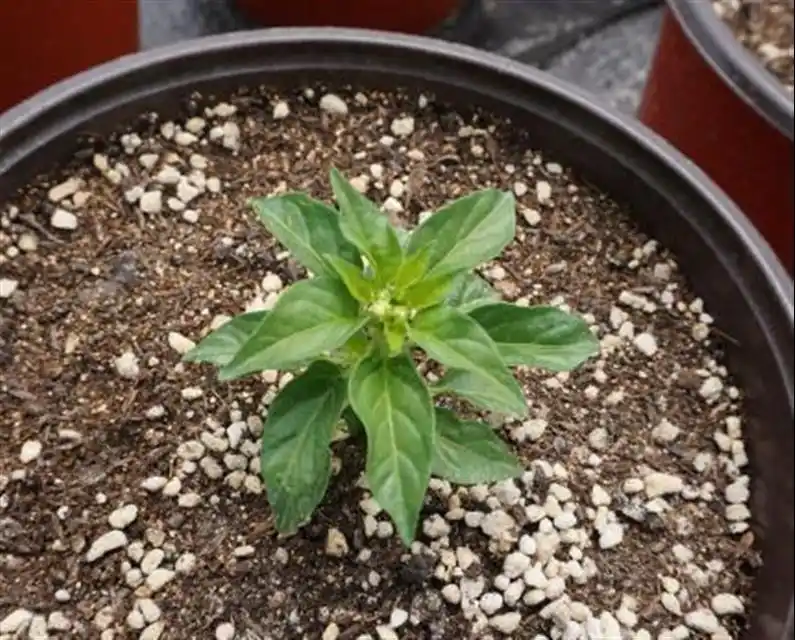
Replanting: when a seedling grows up to 5-10 cm, it is possible to plant a lacuna into the basin when it grows to 5-6 cm, so as to plant a positive, low- and medium-sized plant that does not damage its roots. In order to increase the survival rate of the naked seedlings, the seedlings are placed in the middle of the basin at the time of planting, and the seedlings are raised slightly when the foundation is added, so that the roots stretch to 2-3 cm at the edge of the basin and then they are crushed. Depth is appropriate for “no growth points, no seedlings” and water is timely after planting, and the upper basin can slow down in about seven days。
Wet light management
Temperature: 25 - 28°c during the day and 15 - 20°c at night are more appropriate. Less than 10°c or more than 35°c affect the development of flowers and fruit and cannot be fertilized to the point of falling fruit. When the balcony temperature is low, plastic membranes can be used to keep the plant and the flower basin warm, and when it is high it can be removed and aired in a timely manner. The temperature of the matrix is maintained at 15-22°c and can increase the number of times the water is poured at a higher time, while water is reduced when the temperature is too low。
Humidity: temperature humidity meters can be mounted on the balcony, which is generally low in air, is generally 50-60 per cent suitable for air moisture, can be wet over high levels of pollination, and can trigger falling flowers and disease. If wet enough, ventilation can be reduced; if the humidity is too small, the leaf can be sprayed。
Light: too strong light is not conducive to the growth of peppers and is prone to disease in high temperatures, strong light and drought conditions。
Fertilizer management watered: growing and requiring more water after planting, but still controlling the moisture and inhibiting the growing stock. The demand for water increases during the initial flower period, and the amount of water must meet the demand for flowers and branches. Owing to the limited base of the basin, overwatering and overworking can lead to poor decomposition of the base and even decomposition of the roots; inadequate watering can also cause atrophy of the leaves, with the general principle of “dry-wetting, dry-dry-wetting, dry-drying, water-filling”. In the summer autumn, water is usually sprayed 1-2 times a day and in the spring of winter, once every 2-3 days. Fertilizer: "fatful and hard." the pursuit of fat is carried out in combination with water and is measured appropriately. Roots should be fertilized by the basin, usually with 1 to 2 grams of compound fertilizer, or 1-2 grams of ammonium phosphate, or approximately 10 grams of organic fertilizers, followed up once every 15 to 20 days; or 0. 5 per cent of urea and potassium phosphate solutions at the root, with 1 blow per 15 to 20 days. If the base is prepared in a quantity appropriate for high-quality slow decomposition, the whole plant process does not need to be followed up. Fertilizers are generally applied in the evening, and it is advisable not to apply them around noon during hot seasons to prevent the burning of roots. Plant adjustment
In order to maintain a good attitude and improve the performance of the plant, appropriate plant adjustment measures should be taken for different varieties。
(b) full-scale plug-in: short-lived paprika plants grow self-capturing, and the whole technology is simpler, including the timely removal of the side branches below the door, the disease branches and the cutting of the weak branches and the long branches, improved ventilation and the abundance of the strains. For those varieties that are too thick, as well as for those that are growing in the later stages, the old leaves, yellow leaves, sick leaves and parts of them shall be removed in time so as not to affect the flowering results. When flowers are blooming, the aging crowns are removed in a timely manner, and the plants are kept clean and their growth promoted。
Planting peppers with a base basin is easily lightened and has an impact on viewing effects. It can be inserted at a length of 4-5 cm from a 2-3 mm in diameter in a plastic pipe or a bamboo stick, tied to the plant, or cross-stretching to support the backbone。
Plumbing and spraying fruit: some dwarfs grow smaller plants that remove buds or small fruit and promote branch growth, while later planting increases flowering and results, making the plant more abundant and attractive。
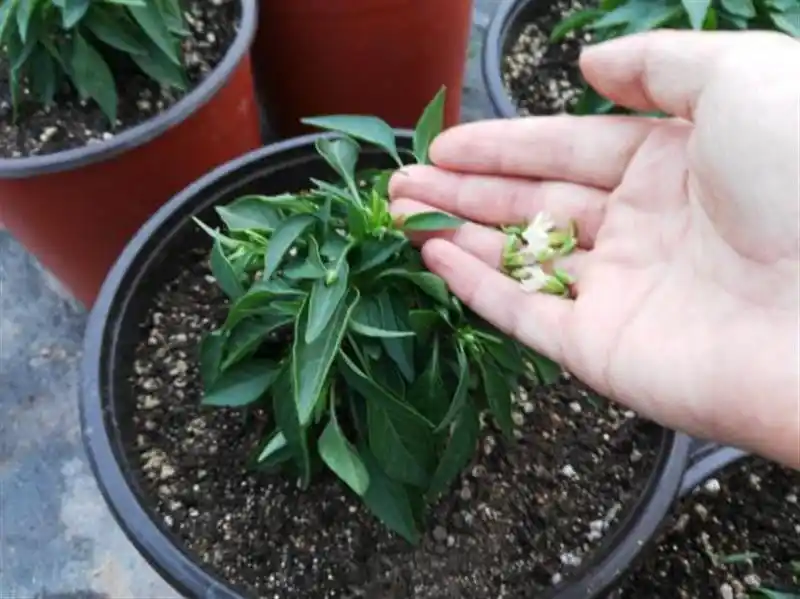
When temperatures are higher than 35°c or lower than 10°c, the pollination rate falls. High temperature can be used to spray potassium dihydrophosphate 500 times more during the flower period; 25-30 mg/l tomato solutions can be used for 25-30 mg/l at low temperatures or sprayed with flowers, porphytes, and spray can take place in the morning。
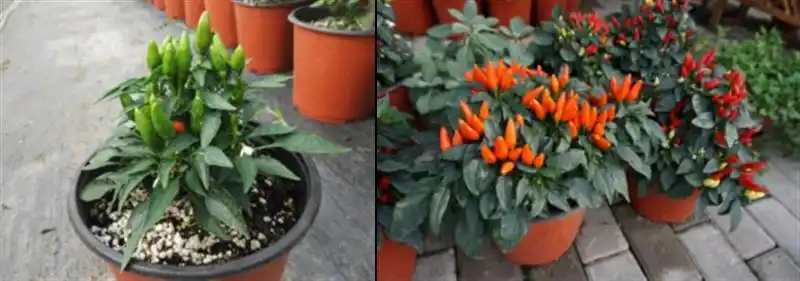
(b) harvest viewing: unfinished fruit is generally green and later converted to different colours such as yellow, yellow, orange, brown, purple and purple black. Shorty view the peppers, mainly for viewing and eating. When more fruit is produced in the outcome period, the old and deforming fruit may be duly harvested in order to reduce nutrient consumption and extend the observing period。
Pest control
The main diseases of the family viewing chili are viral diseases, dusty diseases, root diseases, etc. The pests are mainly aphids, mites, red spiders and white ticks. Aphids, insects, etc. Can be lured with cedars. Pre-stage attention is paid to soil disinfection, seeds are immersed in warm soup, healthy seedlings are selected, abundant water is available, no water is overfed, ventilation is observed, drainage is observed, windows are closed in time, and pests are rare. In the early stages of detection, the pests were filmed with electric flies to kill flying pests, or the vermin attached to the foliage was taken by the gauze. It is also possible to use cedars and insect-killing lamps to lure insects。



