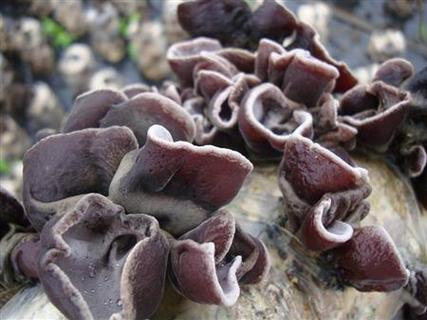
The raw materials for the traditional planting of yellow-backed ears are wood, cotton shells and wood crumbs, while there is a shortage of wood in plain areas and a shortage of cotton crumbs and wood crumbs. In order to address the shortage of raw materials for the production of yellowbacks, the cultivation of yellowbacks with straw is a good method, the operational points are described below:
There are three treatments for softening straw: first, to lay straw on a clean ground, crushing it repeatedly with rock; second, to cut straw into two to three centimetres long, immersed in a lime water solution of 3 to 4 per cent, after 34 hours, to flush the residue with clean water, and to adjust the water content; and third, to crush it with a feed crusher, equipped with a scavenger of about 2 centimetres in diameter, to crush it into strips, thin, loose and soft。
The carbon, nitrogen ratio appropriate for the growth of the yellow back ear is 20:1, which is the formula for the design of the culture based on: 63% of straw, 15% of wood crumbs, 15% of skin, 2% of grasswood ash, 2% of calcium phosphate, 1% of plaster, 1% of red sugar, 1% of salt, and 60% of water in the culture. Softly treated straw is mixed into an adsorbent by formula into a heap of high, about 1 m wide and open-ended piles of plastic sheeting and straw curtains to keep them warm and fermented for approximately 4 days and to be stacked once in the middle. The loosely fragrance and the fragrance of prepared culture and the large amount of white wired fungus。
Before the bag is packed, the culturer ph will have to reach 9 to 10, then the border pressure of the material will be relaxed and moderate, and it will be appropriate to recover as soon as it is packed with a light pressure on the bag face and released. In a timely manner, it is sterilised in a steam pan at temperatures of between 10 and 12 hours at 100°c, which are then naturally cooled。
Years of production of yellow-backed molluscs include cotton shells, wood crumbs and maize cores. Experience shows that these strains are slow to recover and grow slowly. In the case of wheat seed, which has the characteristics of being alive early, growing fast, and thick and thick, the yield is significantly higher than that of other species, and the length of the bag can average around 10 days。
Vaccination is carried out at temperatures below 30°c. Inoculations are carried out with a pre-elimination cone that pierces one end to the other, so that parts of the fungus are planted in the hole, and then at both ends, with a bottle of wheat seed that can absorb 10 to 15 bags。
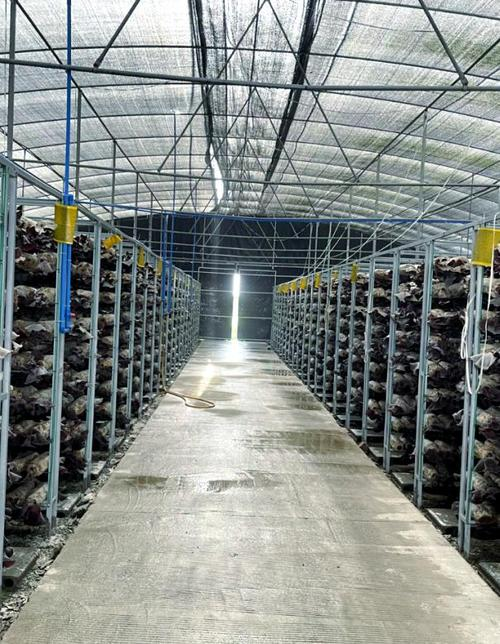
Inoculation is followed by a stacking of five to six floors on the ground of the culture room, with the membrane inoculation of the humidity. Temperatures are contained at 26°c to 28°c, making mycelitis rapidly boom. When eating four centimetres of mycelium on both head of the bag, the cortex is released and the temperature of the culture room is kept at 23°c to 25°c in order to promote the growth of the mycelium. In order to keep the bags warm, the bags should be rotated up and down every seven days, and the bags should be spread evenly for 40 to 45 days。
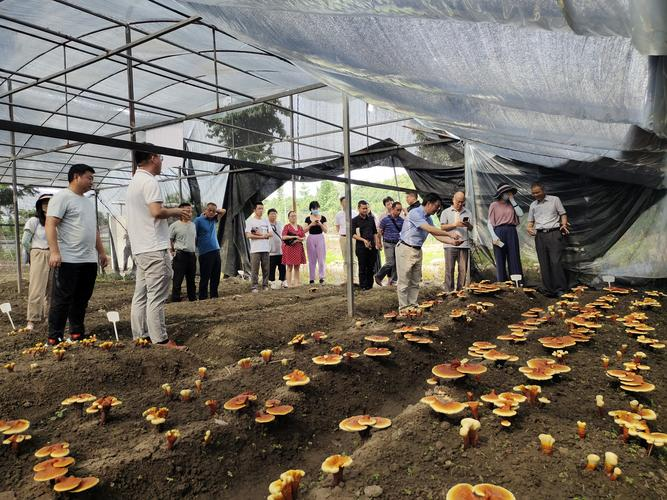
The yellow back ear is a medium-high-temperature fungus with a sub-entity growing at 18°c to 35°c at a suitable temperature of 20°c to 30°c. On the basis of the yellow back ear growth properties, two ear management methods are used for spring planting. First, it grows out of the hole at both ends, then comes out of the sack. Specific operating methods: first, the ear bags, which are covered by mycelium, are moved out of one lined stacks in the earroom, five to eight floors tall, 60 to 70 centimetres in length, maintaining air moisture in the ear room at about 90 per cent humidity, and keeping an eye on ventilating air and appropriate light to stimulate earsticks to form ears. When the eardrum grows, the eardrum grows from both ends of the hole and matures to harvest by standard. When the head is collected, the sunshield is built after the selection, in the trees or under the shades, with a width of 1 metre and a surface of 30 centimetres above the ground, with the back of the turtle. The covered soil requires a good cortex structure, good water penetration and soil within a diameter of 1 cm. The head-headed rods will be sterilized with 0. 1 per cent potassium permanganate on the surface and the slashed pellets will be removed from the film after drying, and will be flattened immediately to cover wet earth particles of between 1 and 2 centimetres thick, with a bow-shaped thinning film. It is visible two to three days after the earth is covered with white filaments that can break out of their ears for about 10 days at temperatures suitable for their ears. This shall remove the bow-shaped film, spray water with a sprayer, saturate the water content of the soil and keep the soil dry and wet. Water is sprayed twice to three times a day in the middle of the day, with bow-shaped thin film used to prevent rain in the middle of the day and two air vents of the film. After taking an ear, the spray is stopped and the bow-shaped thin membrane is humid to restore growth to the fungus. And when the dazzling ears come out of the earth, they remove the film and spray water to protect the ears. Hydrological management as described above, with biological efficiency ranging from 150 to 200 per cent. (source: zhang biao, 19 june 2000)