Introduction to courses
Metallurgy is a long-standing process, with the country's twenty-three thousand-year-old metallurgical products, such as copper instruments, weapons, etc., whose technological level has been amazing to modern metallurgical scientists; however, until the end of the nineteenth century, metallurgical metallurgy was merely a technique, without theoretical guidance, and any modest progress would depend on long-term scrutiny. At the beginning of the 20th century, people used physico-chemical theory for analysis and research. Gold processes, which reveal the intrinsic nature and regularity of metallurgical processes, have developed new disciplines - the principles of metallurgical processes - that make metallurgical technology science. The metallurgical technology, guided by the principles of metallurgical processes, has been rapidly developed and has become a vital industrial sector in the national economy. 1. 1 general description of the steel industry in the national economy
Level of industrialization
Share of national standard of living industrial production
Signs of industrialization
Significant mechanical equipment industrial mechanization, automation
We need a lot of basic material
Labour productivity and means of transport, civilian residential supplies
Promising and efficient per capita steel consumption reflects a country's economic boom, with per capita steel consumption being among the highest in the world, at 800 kg/persons. Per capita steel consumption in the country is 80 kg/person. Stable power resources (water, electricity, etc.) large transport facilities (rail, water, etc.) strong financial guarantees [investment, long construction cycles, slow recovery]
The development of the steel industry marks the improvement of these conditions and reflects the prosperity of the national economy. In the more than 40 years since the second world war, the steel industry has achieved significant steel production: 200 million tons in the early 1950s and 740 million tons in the 1990s of our ancient pre-occupation status (the iron instrument was widely used in the sixth century b. C.); recently lagged behind european countries; and from 1890 (the hanyang iron plant) since the establishment of the new china, and particularly since the opening of the reforms, there has been a major expansion of steel production: 158,000 tons of 2,845,000 tons in 1960 and 2,045 million tons in 1980; 3. 73 million tons in 1986; 51. 9 million tons in 1995; 59 million tons in 1995; and 93 million tons in 1995; the second largest steel enterprise in the world: 25 million tons. Bronze steel company french steel company [15 million] british steel company japanese steel pipe company [11 million tons] squire steel company. Iron and steel production process

The task of iron and metal metallurgy is to smelt iron ore into qualified steel ore to disembowel, impurities and aerobic iron ore. Smelting process [melting] steel refinery and steel refining in steel enterprises
The three iron processes conceptually map the iron furnace process and directly reduce the iron process by smelting and reducing the iron process ore-charted coal-burning ore-combs mine coke
Gas reduction from non-coal and natural gas powder or ball cortex in furnaces
Direct reduction of solid sponge ore non-coal pre-recovered furnaces of liquid iron and steel converters of steel furnaces of steel and steel products
High carbon content (2. 5-4. 5 per cent) low (0. 03-1. 2 per cent) of project raw iron and steel impurity (si, mn, p, s)
1 modern furnace iron refining
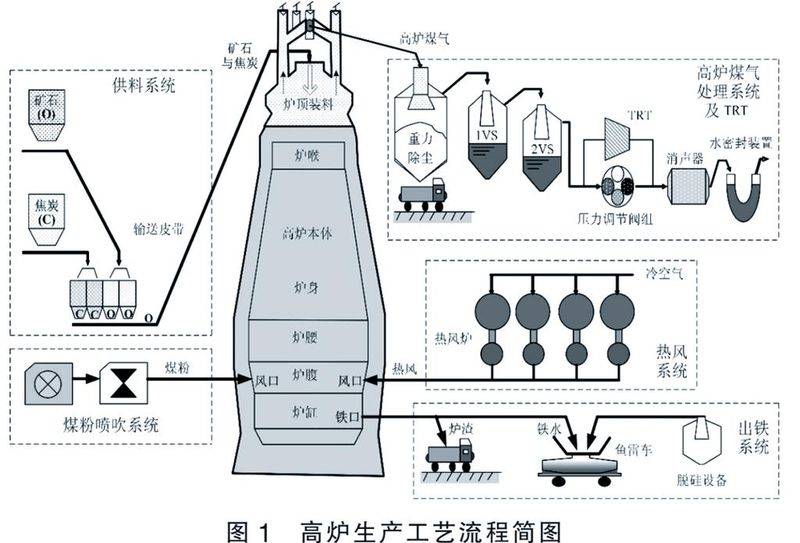
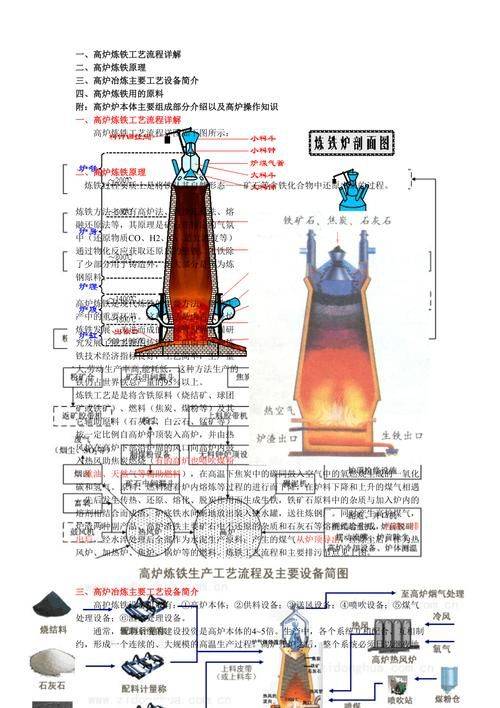
The essence of iron refining in furnaces is iron recovery, i. E. The recovery of iron from the oxide or mineral state to liquid raw iron at high temperatures using coke as a fuel and recovery agent. (c) c+o2=co2co2co2+c=2co3co+fe2o3=2fe+3co2o3=2fe+3co2 height structure block area: the furnace is in stratification at the time of filling, without liquid. Aerodynamic resonances such as hydro-evaporation, carbonate decomposition and recovery of iron ore from co in the zone, with solid iron (sponge iron) producing soft melting areas: consisting of semi-melting materials such as soft and partially melted pulsities, melts, iron, etc., and caracon layers, from the beginning to the full melting of the ore, mainly directly recovered by feo and gasification of carbon. The soft melt belts in the reverse v form act as support for the stove. Its coke layer contributes to the recovery of gas along the furnace path. Drop zone: for liquid sludge, iron drop zone, only coke remains solid in the area and accumulates in a loose state, supplying coke to the circled areas below. The recovery of non-iron elements (manganese, silicon, phosphorus, etc.), carbon seepage and desulphurization of iron, and the gasification of carbon, are among the main causes. Charcoal cycling area: the hot wind enters the furnace through 15-40 vents configured around the top of the furnace wall, with a heat wind pressure of 200-400 kpa and a wind speed of 200-300 m/s, thus forming a bag of gas and coke fast-cycling areas in front of each vent. The spiral zone extends to 0. 5~2m inside the furnace, surrounded by focal blocks, and the coke circled area is the only oxidizing area in the furnace and the main source of heat and gas recovery in the furnace. Cylinder area: iron water and slag seep out of static coke cracks to form a slag smelting pond and complete the final recovery echo. Carbon in iron reaches saturation, and elements such as manganese, iron and phosphorus recover in part and melt into raw iron. Characteristic 1 in reverse. In the process, complex physico-chemical resonance is completed;2 input [loading] and outputs [iron, sludge, gas] in addition to this, it is not possible to observe directly the reaction process inside the furnace;3 maintenance of the furnace follows (ensuring a reasonable distribution of the gas current and a flat decrease in the furnace) it's key to the smelting process. 1. 1 characteristics of furnace smelting and recovery of major process 1 to achieve metal elements in ore [mainly fe] chemical separation of oxygen; 2 slag process to separate the recovered metal from the melting machine of the pulsate; 3 heat transfer and iron resonance of the slag to liquid iron water with the appropriate composition and temperature. 1. 1 characteristics of smelting and main process 1. 1 iron ore from furnaces
Other man-made mineral-rich mineral deposits containing iron substitutes - lime, limestone, albino acid, special silica - plume heights, silhouettes
Sulphides
Requirements for iron-containing raw materials in furnaces for smelting materials
The country's modern furnaces are pursuing low-energy and low-cost production
Requirements for iron-containing materials in furnaces
Low-temperature recovery recovery and low recovery rates of low softener temperatures and high-soft-soft-soft-soft-soft-soft-soft-soft-soft-soft-soft-soft-soft-soft-soft-soft-soft-soft-soft-soft-soft-soft-soft-soft-soft-soft-soft-soft-soft-soft-soft-soft-sand-soft-soft-soft-soft-sand-soft-soft-soft-sand-soft-soft-soft-soft-sand-soft-sand-soft-sand-sand-sand-soft-soft-soft-soft-soft-sand-soft-sand-s ben. Body
Fire-resistant materials for hot stove 1. 3 fire-resistant materials for fire-resistant materials in heat furnaces
On the stove - clay brick
Central-aluminium brick
Under the oven - silicon carbide brick
Bricks, abdomen, carbide
Top of the oven - silicon carbide brick
Bricks on the lower-out side and bottom of the oven, with a high-bracket ceramic cup
Silicon bricks on top of the top through the grid
Other parts of the site are covered with high-baux or clay-brick iron cannon and pre-crystal mud: coat powder + clay + platinum special: goonyu + silicon carbide + cloud mammoth + coke + tar coating al2o3 + sio2 + glue (phosphate, soap soil, water glass, etc.) 1. 2 high-bore products
Si0. 3-1. 25% c2. 5-5. 0% mn0. 1-8. 8% p0. 08-0. 4% s0. 02-0. 07% iron water temperature of 1,400-1500°c, small by-product slags such as high carbon alloy, high carbon manganese silica, high carbon silica, and high carbon manganese alloys of 600 kg/tcao35-44% sio232-4% al2o36-14% mgo4-13% major technical economic indicator 1 of the high furnaces with 1400-1900 kj/kg by-product gas from 1600 to 3500 m3/tco21 to 26% h21. 0 to 2. 0% ch40. 2 to 0. 8% co214 to 21% n255 to 57% q 3200 to 3800 kj/m31. 3 (m) definition: qualified iron produced day and night per effective volume per m3 furnace (t/m3. D). Our country η1. 6 ~ 2. 4 t/m3. D; japan =1 = 1. 8 ~ 2. 8 t/m3. D2, definition of focal ratio: kg of coke consumed per ton of iron (kg/t). Our focal ratio is 250-650 kg/t3, definition of coal ratio: kg of coal powder consumed per ton of iron. Our coal ratio is 50-220 kg/t4, fuel ratio [coat+coal ratio] definition: sum of fuel consumed per ton of raw iron refined [kg/t]. Our fuel ratio is 450-700. 5. Combined focal ratio [focal + coal x coal focal ratio] 6 coal focal replacement ratio definition: kg number of coke that can be replaced by blowout of 1 kg coal powder. In general, around 0. 8 major technological economic indicators for furnaces,7 definition of coke smelting strength: tons of coke burning day and night per effective volume per m3 furnace (t/m3. D). In general, 0. 8 to 1. 0t/m3. D8, definition of the combined smelting strength: tonnes of combined coke burning day and night per effective volume per m3 furnace [t/m3. D]. In general, 0. 9-1. 15t/m3. D utilization factor, focal ratio and smelting strength when pure cocal smelting: utilization factor = coke smelting strength/cococoby blow-out fuel: utilization factor = primary technical economic indicator 9 for composite smelting strength/combustion furnaces; definition of burn strength: tons of coke burning day and night per m3 cask area [t/m3. D]. 10. Process energy consumption ci = [fuel consumption + power consumption - secondary energy recovery] / product production [t-standard coal/t] 1kg standard coal with 7,000 kcal heat. Iron refining process energy is consumed at 510 kg standard coal/tonne iron, accounting for 50 per cent of total steel consumption. Main technological economic indicators 11, coke load of furnaces
Definitions: ratio of total iron and manganese ore weight to coke carbon weight per batch of stoves
For assessing fuel use levels and regulating key parameters for formulations. 12. Conformity rate for raw iron
Definition: qualified biomass as a percentage of total production of furnaces. 13, ventilation rate
Definition: the temperature of the furnace is used as a percentage of the required operating time. 14. The age of the furnace
Definition: the time of smelting between the opening of the furnace and the overhaul of the furnace or between two major repairs adjacent to the furnace. Main technological economic indicators for furnaces, 1 and test 3 characteristics of steel production processes. 2. Briefly describe the characteristics of the atoll smelting process and the three main processes. 3. Draw a map of the furnace itself and indicate on it four major systems. Summarize the quality requirements for iron ore from furnaces. 5. Test three main roles and quality requirements for coke in furnace iron refining. 6. Test the quality requirements of coal powder for blowout in furnaces. 7. Proficiency in the expression of key technological economic indicators of high-tech smelting. Chapter i
Thinking