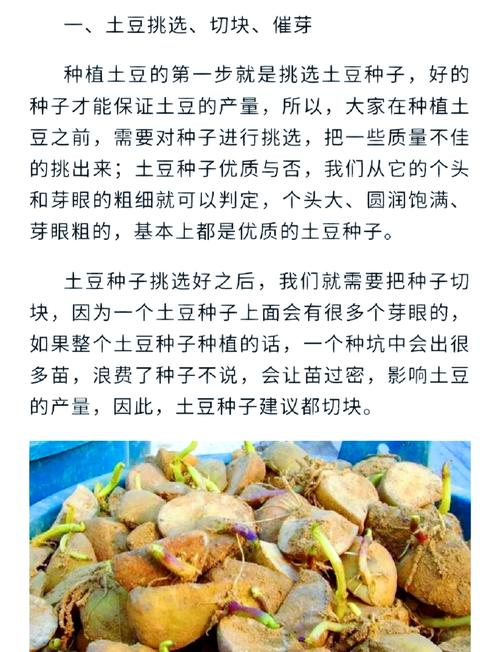
I. Cut-block seed. Twenty days before the seeding began in early march. At least one eye for each piece of potatoes is cut. 10-15 bucks per pound. After cutting, water impregnation is sterilized with a small ash dried or polybacterial powder 1:200 times. The seedbed sprouts begin when the remaining blocks are dryed, with two methods: a salvo in the corner of the house above 15°c at room temperature, with a layer of sand seeding; and a pit sprout in the direction of east and west of the outdoor ventilated sun, with a pit deep about 25 cm deep, a layer of sanded seedlings suitable for three floors, which are then covered with an accelerator film, which is kept warm at night. Both methods were sprayed one to two times during the sprouts to prevent drying. When the bud grows to 0. 5 to 1. 0 cm, seeding begins。
Ii. Discrepancies. In the event of a lack of affection, consideration should be given to the use of a gutter for the next 7 to 10 days. Potato cultivation is generally set for trenches, which can be opened with 50 centimetres in length and 40 centimetres in size。
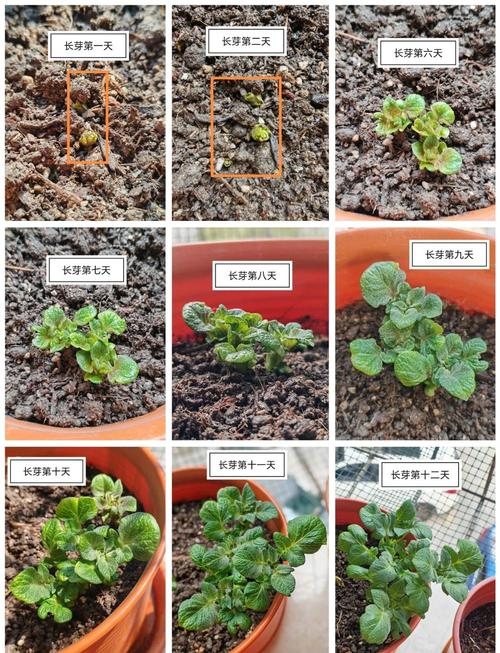
Iii. Spreading the lid. In particular, when spring is at its best, it should be mentioned that detoxification potatoes can be broadcast early, before the spring break is finished, and the distance can be controlled at 20 cm. The seeding is preceded by the spraying of 1,10,000 times more water in a ditch to prevent underground pests. Organic fertilizers can be released directly into a ditch or in the ground as a whole; chemical fertilizers can be moved into a ditch or between seed blocks (not to be in direct contact with seed blocks). There are two ways to sow the seeds in the ditch: a sprout, which grows with a small but large potato root, but two to three days late; and a sprout, which grows relatively short, with a small but large potato and two to three days early. At the end of the next plant, the earth will be taken from both sides of the main row, so that the space for the potato ditch and the small rows will be flatened and the microfilm lid will be compacted. Iv. Feeding and seeding management. After light, around 20 days after seeding, there will be seedlings that will wash the microfilm out of the air to prevent evaporation. When the seedling grows to 10 cm high, the membrane around the seedling is compacted with soil to protect the water from the grass. Potatoes should not be watered in the pre-growth period, but only after the flowers. If the rain is dry, water can be poured every 10 days, usually twice or three times the water can mature and is stopped 10 days before the harvest. Insects such as aphids or parrots are protected from seeding. V. Rational fertilization. Potatoes enjoy the use of farm fertilizer at a rate of 4,000 to 5,000 pounds per 666. 7 square metres, with the appropriate application of fertilizers in combination with nitrogen, phosphorus and potassium. Potatoes require high amounts of potassium, with scientifically sound rates of 1. 85:2. 1 for nitrogen, phosphorus and potassium. Potatoes like to absorb ammonium nitrogen, and more sour. According to the experiment, each additional kilogram of potassium sulphate fat is capable of producing 100 to 150 kg of potatoes。