How can the pure forest of eucalyptus be modified to be more efficient? Guangxi yu lin national provident forest has handed over a sample of 4 business models of eucalyptus +
In order to promote the sustainable management of national reserves and the establishment of a healthy, stable, high-quality and efficient forest ecosystem, the city of jade forest explores high-quality forest ecosystems that are optimally structured and functionally upgraded through the promotion of four models, namely, the “two fastest”, of pure forest conversion, to promote modern forestry under the operation of the multifunctional forest ecosystem of green water and silver mountain. In recent days, journalists have entered a multi-purpose model base for the operation of a multi-purpose operation of the state reserve forest in the village of shige and tongmao, in the fukumong district, to explore the practical results of the conversion of the pure forest trees of the jade forest。
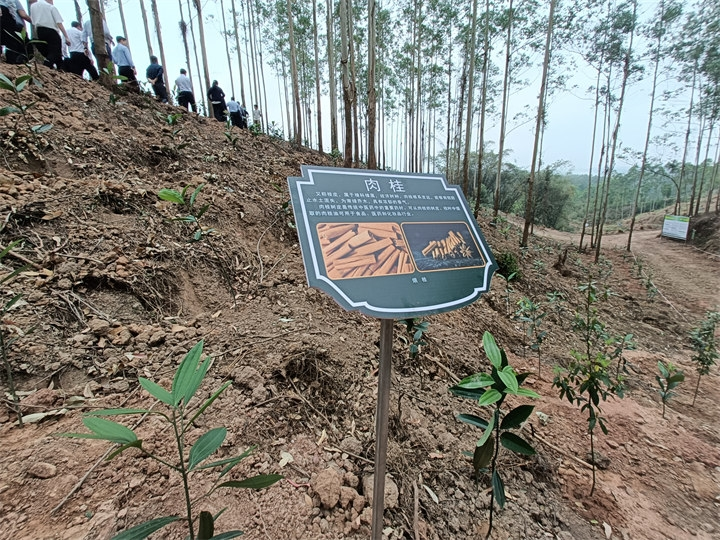
At present, the forestry sector is promoting the “silver + cinnamon” model, which will yield higher planting benefits in a short period of time。
Enhancing economic efficiency
In guangxi, first explore the four models of elm +
In this model area, journalists have seen new seedlings, such as cinnamon, black mussels, logs and mussels, planted in separate areas between the mountains, where the former pure forest of eucalyptus has been cut. This is a model of the pure forest conversion of eucalyptus, which was opened this year by yulin rural forestry investment company ltd., which plans to complete a total of 2,860 acres of retrofitting over the course of this year, with a total investment of $11. 5 million。
"there are four main operating models for the conversion of eucalyptus trees, the first of which is the transformation of the `two best' models..." according to the foresters, the model is mixed with precious broad-leaved forests, such as eucalyptus (the fastest tree species) + black mussels, logs, and guannan (the most expensive tree species). Of these, eight years of aluminum breeding cycle, 14 years of black mix, 21 years of aluminum and 40 years of aluminum were achieved through short-term growth, “the fastest-growing”. This model is appropriate for the cultivation of large-scale materials in commercial forest areas, as well as for the construction of water source forest areas。
The second model is the “two-speed” model, modified by the pure forest of eucalyptus, which combines eucalyptus (extreme tree species) with cinnamon (quicker tree species), eight-year cycles of eucalyptus cultivation and four-year cycles of cinnamon cultivation, and a fast plus faster production of high-quality, short-cycle benefits, which is applied mainly to the cultivation of medium-duration and specialty economic forests in commercial forest areas。
The third is the multifunctional business development model of the eucalyptus +n, which is mainly based on the conversion of euphoria trees, preserves around 8 species per acre of target tree and replants, replants or replants valuable or rural species between forests, constructs mixed forests such as euphoria + black wood + gyeon + rhesus + red cones, and improves the culpability of water and soil conservation capacity in forest areas, while nurturing multi-layer forest ecosystems and valuable tree species. This model is appropriate for the cultivation of large-scale materials in commercial forest areas, as well as for the construction of water forests。
The fourth is the multifunctional business development model of the “oil tea plus n”. The model is dominated by the “oil tea + cinnamon” crop, which, as a result of the use of oil tea as shrubs or cucumbers, and cinnamon as a medium piece of wood, is complementary in vertical space, allowing for the full use of light and land resources and maximizing product diversification and economic benefits while enhancing the stability of forest ecosystems。
Among these, the social benefits of the “two-istreest” “two-speed” model are evident, not only in terms of enhancing forest quality and optimizing forest structure and enabling rural renewal by strengthening forest operations, but also in terms of making the benefits of high-quality forestry development felt by the population through good demonstration and extension, and further optimizing the eco-environment of the jade forest on the basis of safeguarding economic benefits。
"jingyang+sing" tree hybrid
Expansion of cinnamon cultivation
Currently, in the area of guinan, the pure forest of eucalyptus is being transformed and the forestry sector is promoting the “eucalyptus + cinnamon” model, a model created by farmers themselves. This model, which is based on the preservation of 60 and 70 acres of eucalyptus, can achieve a higher economic value in a short period of time than the cultivation of pure apricot trees。
Guangxi is the main production area of cinnamon (approximately 2. 5 million acres of cinnamon and 1. 3 million acres of cinnamon) in the country, while cinnamon is also a dominant tree of the jade forest's sancin (estimates of eight points, cinnamon, thin) industry, which is used as a cogent of medicine, with its skin, branches, flowers, leaves, fruits, etc., and a rich variety of products, and with a strong fragrance and high oral sensibility, and stable demand and prices in the market. In addition, cinnamon cultivation has a long and short life cycle, which can be harvested within a period of up to four years, and has a good cultivation base in guangxi. However, due to constraints such as land conditions, it has been difficult for the industry to continue expanding cultivation。
Since eucalyptus are a positive, deep-rooted tree, while cinnamon is a negative, shallow-root tree, they happen to be complementary, with neither the sun nor the fat of each other, the planting of cinnamon in the eucalyptus is an effective exploration to address the constraints on the development of cinnamon plantations。
At present, the city of yulin, in addition to promoting the model in the fukumong district and town, is engaged in mixed and model forest cultivation at the bobi forest site. Over 4,000 acres have been built last year at the boba forest, which will be developing nearly 20,000 acres of mixed forest, such as the “cain + cinnamon” model forest, which will serve as a reference for the development of mixed aluminum forests everywhere. (reporter tang jingmei)