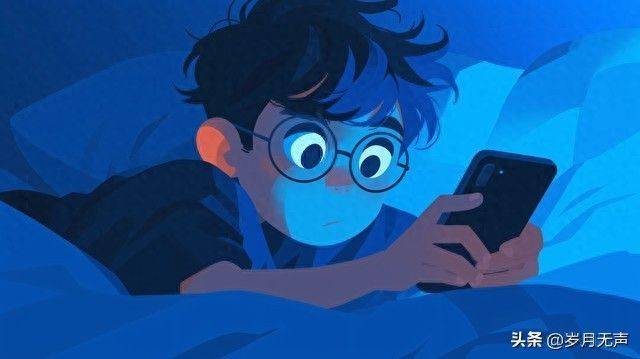
At night, many people have similar habits: they turn off their lights and brush their cell phones in their beds, watch dramas, return the news, and their eyes start to swollen, sour, and even see things vaguely. The next day, it was always my fault to stay up all night, but very few people realized that the type of screen in hand and the way it was changed were the key to influencing fatigue。
The debate over old and lcd on the internet continues year after year, with some saying that old is colorful but sad, some saying that the lcd is eye-protected but out of date, and that, with the "eye-protective screen" "low blue light" of marketing terms, ordinary users are becoming more confused, buying a mobile phone is entirely sensory, and it is not comfortable to find it late at night。
The article, which does not create anxiety, does not absolute conclusions, does not exaggerate hazards, is based only on current industry-recognized screen technology, real-use experience and objective differences, does not involve medical diagnosis, does not create data, does not compete in black or white, makes you truly understand the difference between the two screens, makes more rational choices based on their usage, makes mobile phones at night more comfortable and is not biased by parameters and marketing。
First, get to the core: what's the difference between old and lcd
Many people think that the screen gap is only “perceptive” and that what really affects night comfort is the way it glows and the logic of brightness。
Lcd: unified light by backlight
The lcd screen does not glow itself and relies on a whole back layer at the bottom for continuous lighting, which is then generated through liquid crystal control。
Because it's a unified backlight, it's more evenly balanced. When the brightness is regulated, the medium-high-end machine type mostly uses dc luminaries to control the brightness and smoothness of the light by changing the size of the current, which is the main reason why many people find lcds softer at night。
But it must be objectively stated:
Lcd does not amount to "total non-frequency flash."。
Some low-end, early old, or some low-cost lcds also use pwm for lighting. So we can't just look at the lcd, and it's about the way this phone is tuned。
Old: every pixel glows itself
Old does not have a back optic layer, and each pixel does it independently. Turns off pixels if you want to show black, so the contrast is very high, the colour is more colorful, the screen is thinner, the face of the curves, the folding screens are also the reason why oled is now widely used on flagship aircraft。
For a long time, oled has generally used pwm pulsed light at low brightness, simulated brightness by rapid pixel luminous neutralization, with eyes that are not easily detectable, but the visual system is able to sense fluctuations, thus generating varying degrees of fatigue。
But there is a particular need to correct a common error:
The high-end, flag-ship type of national production listed after 2024 has become widely available for dc lumber, 1920 hz and above, and even 3840 hz uhf pwm. Such programmes have significantly reduced flash perception, and the level of comfort used at night is significantly higher than that of early-age machines, as well as significantly reduced infirmity experienced by sensitive populations。
Simple understanding:
- lcd bias towards "stable and sustained light" and a more secure medium and high-end machine
- new oled is no longer a "low frequency flash," uhf/ class dc program is very mature
The gap between the two experiences at night is being rapidly brought closer by technology。
What's so uncomfortable about playing your phone at night
Many articles refer to “scattered wounds”, which is neither rigorous nor a source of anxiety. In the context of the current open industry consensus, it is more objectively understood that:
1. Fractions lead mainly to visual fatigue rather than physical damage
Whether traditional pwm or uhf pwm, there is currently no conclusive evidence that oled frequency flashes directly cause permanent retinal bodily harm and cannot simply be equated with “nearsightedness, blindness”。
In low-light, dark environments, however, flash fluctuations are more likely to occur:
- the eyes are sour, dry
- dizziness, distress, loss of attention
- it's obvious it's been a long time
The feeling of people who are extremely sensitive to flash is even more pronounced。
In the last two years, however, when the use of medium- and high-end high-end aircraft was widespread, the perception was already very weak, and the majority of the population would not be clearly uncomfortable with normal use at night。
2. Blue light should not only look at the type of screen, but also at brightness
Many people mistakenly think that "oled blue light is much more obscurantistic" and that this conclusion is too one-sided。
Actual impact of blue light, associated with brightness height:
- at low brightness, old short-wave blue light is usually slightly lower
- under highlight, old does not necessarily have less blue light than lcd
And now, whatever screen, the system supports eye-protecting patterns, night-time patterns, color-temperature regulation and reduces the proportion of short-wave blue light. It is often not the blue light, but the constant slight irritation of flashes that really opens up the night。
3. Turning off the light environment magnifies the discomfort of all screens sensor
In an overall black environment, light is weak, pupils are magnified and the stimulation of screen light is significantly magnified。
At this point, any screen flashes, brightness fluctuations, coloured issues will become more prominent and fatigue will come faster。
In other words:
It's not the screen that suddenly turns "injury" but the environment makes the eye more vulnerable。
Iii. Non-blowing: oled and lcd true advantages and disadvantages
Actual performance of the lcd screen
Strengths:
- most of the medium-high-end machines are dc. Lights are smoother, texting is easier to read
- no burnscreen risk, more stable static images over time
- it's soft. It's not beautiful
- maintenance costs are generally lower and durable stable
Insufficient:
- it's thicker, it's hard to make very light, curved, folded
- black's not pure enough. It could be light
- it's a general contrast. It's less immersive than old
- some low-end/old lcds still have pwm flashes that cannot be generalized
Actual performance of the old screen
Strengths:
- high contrasts, black purity, better visualization of games
- the screen is thin and bendy. It supports high-screens, screen prints, folding patterns
- respond faster, the game drags less
- darker mode saves electricity
- universal uhf pwm/ class dc luminous for high-end aircraft in the last two years, with significant improvement in frequency flash problems
Insufficient:
- old, low end old still has a problem with low-light flashes
- there's a potential burn screen risk
- higher maintenance costs
- there's a risk of color imbalance at low brightness
Iv. How can different groups of people be more suitable? Take your seats as usual
Someone better placed to prioritize lcd
- long days of reading, reading, working, long hours of light
- he's always playing with his cell phone in the lights
- very sensitive to flashing screens. Very low frequency tolerance
- for students, elders, first and foremost stable, soft, durable
- not only the lcd name, but also the dc light
A better choice for old
- every day it's a play, a video, a game
- likes warp screens, folded screens, light-faced looks
- purchased high-end/flagships of national production after 2024, equipped with uhf pwm or class dc light
- it's not very long at night
- not sensitive to flashes. Use far more in the day than at night
- for flagship experience, high-screen, screen fingerprints, etc
It's already using old. It's more comfortable
- open the scintillation, class dc, hf pwm optimization
- don't keep the light down at night. Keep it comfortable
- turning on eye-protective/night mode, with proper heating wen
- try not to watch the screen in the dark for a long time
- avoid staring at the screen for a long time and relax
V. Electronic protection of the eyes: more effective use than the screen
Whether it's old or lc, there's no completely "eyeless" screen。
It's not the panel type that really determines how tired you are at night, but the habits:
- not in the whole black environment
- keep the right distance, not too close
- control of the duration of continuous use and appropriate rest
- the night is bright, but dark
- to reduce the number of cell phones that stay up all night
The screen is just a tool. It's the best thing for you. It is a healthier digital lifestyle that is not marketed to create anxiety, not blindly new, not superstitious to a single parameter, rationally chosen on the basis of its true use of scenes, used proportionately and cared for。
Interactive topics
Are you using a new phone for the last two years, or is it the old machine? When you turn off the lights at night and play with your phone, do you notice that your eyes are more tired? Do you care more about the screen quality, or about the eye comfort? Welcome to the comment section to share your real experience。
Disclaimer
1. This paper is intended to be objective in terms of screen technology, modulation principles and experience, and does not involve any medical diagnosis, treatment or health advice. Professional institutions should be consulted in a timely manner in the event of persistent eye discomfort。
2. There are differences between different brands, models and system versions of mobile phones, lumbering strategies, screen parameters and functional access points, which are generic references and do not represent full consistency of all types。
Screen comfort varies from person to person, influenced by multiple factors such as personal sensitivity, length of use, environmental light, and the absence of an absolute “eye-protective” device, which does not constitute an effect commitment。
Information references
1. Official screen technology and eye-protective feature documentation for mainstream mobile phone manufacturers
2. Ieee shows industry standards relevant to equipment flash risk assessment
3. Display industry open technical information on pwm, dc, dc type
4. Statistics for high-end and medium-end screen luminescence programmes, 2024-2026
# how do you choose the screen # old versus lcd #