The working principles of the double layer capacitors
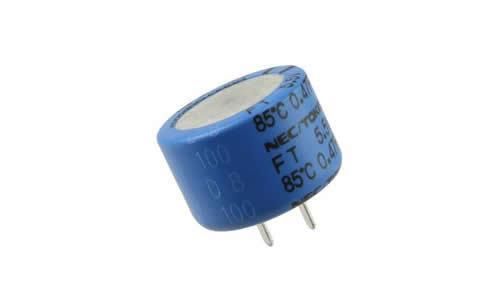
Double-layer capacitors are more resistant than aluminium electrolytic capacitors, so they can be charged directly without load resistance and, in case of voltage charge, the double-layer capacitors will open the circuit without damage to the device, a feature different from the upper voltage of the aluminium electrolyte capacitors. At the same time, the double-storey capacitors can be recharged indefinitely compared to the chargeable batteries and can be recharged more than 10 ^6 times, so that the double-storey capacitor not only has an electric but also a battery feature, a new special metre unit between the battery and the capacitor。
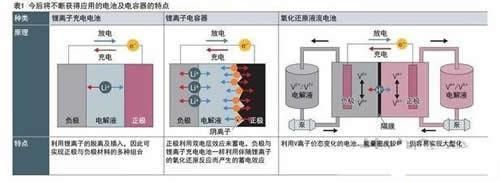
The rationale is that, when charged to the electrode, the charge of the electrode surface in the ideal polarized state will attract the heterogeneity of the electrolyte solution around it, which will be attached to the surface of the electrode to form a double-charge layer, forming a double layer of the condensation. Because of the very small distance (generally less than 0. 5 nm) between the two charge layers, combined with the introduction of special electrode structures, which result in an increase in the surface area of the electrode by a factor of 10,000, resulting in a high level of electrical capacity, the rationale for the two-storey capacitors is as follows:
Characteristics of the double layer capacitors
(1) power density high
It can be up to 102-104 w/kg, well above the power density of the battery。
(2) long cycle life
After a few seconds of high-speed deep discharge cycles ranging from 500,000 to 1 million times, the properties of the double-layer capacitors have changed very little, reducing capacity and internal barriers by only 10-20 per cent。
(3) work temperature limit
Because the adsorption and desorption rates of ion in double capacitors in cryogenic conditions are not changed significantly, their capacity changes are much smaller than in the holding cells. The working temperature range of commercialized double-storey capacitors can be as high as -40°c ~ +80°c。