The concept of “controversial” is a familiar one. The term “controversial” is both a philosophical concept: “controversial” is a core category, both in the classical german philosophy and in the marxist philosophy; and “controversial” is a political concept: in the context of marxist chineseization, through the concept of “continuation”, we have developed a set of tools to analyse and understand society and to derive from the concepts of major social contradictions, inter-people conflicts, class conflicts, enemy conflicts, etc.; “continuation” or daily life: in life, we often use conflicting concepts, such as internal contradictions, which are so great between zhang san and li si. How, then, is the relationship between the “concords” as philosophical concepts, the “concords” of political concepts and the “concords” of everyday social concepts understood
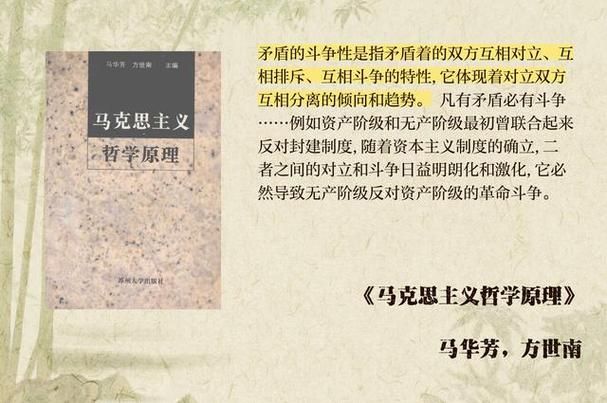
The original meaning of the term “controversial” is contradictory. Whether as a concept of everyday life or as a philosophical concept, whether in western philosophy or in traditional chinese culture, the original meaning of the contradiction is “opposition”. As a concept of daily life, the “controversials” in the “controversials” of “controversials” are “oppositions”. In german, the term “widerspruch” is used to describe the concept of contradiction, which literally means rebuttal, opposition, protest. In the history of western philosophies, ancient greek philosophers have begun to explore contradictory concepts. But in the ancient greek philosophy, the main contradiction is “opposition”. Many of the basic concepts of ancient greek philosophy, such as one and many, forms and materials, static and motion, nature and phenomena, and life and death, have emerged as “opposes”, which is a contradiction. In china's traditional culture, the term contradictory is composed of the words “pike” and “shelter”, which were written by the former qin, han fei son koichi. “the chu people have shields and spears. And the spear, that the spear will profit, and that nothing will fall upon it. Or, "how is it that the spear of a child is put in place?" and so is his answer. A husband must not be shielded and a sword must not be set in the same place.” here, the word “controversial” means that two things cannot be established at the same time. Of course, in china's traditional culture, we place more emphasis on “and”, in external relations, on “coherence and harmony” and, in personal interactions, on “concrete and different”, “and not fluent”. Thus, the “controversial” as “opposition” is a concept with a negative connotation in chinese ancient history. In western cultural traditions, “controversial” is a neutral concept and is not given emotional colours。
In the history of philosophy, hegel was the first to interpret the term “controversial” as a philosophical concept and to interpret it as adversarial. The ancient philosophy's perception of contradictions is based on simple, intuitive and empirical facts, and the understanding of “controversials” has not reached the level of philosophy. Hegel is the conglomerate of contradictory theories, and the concept of “controversial” has been systematically demonstrated here in hegel, where he views “controversial” as the essence of philosophical thinking, “the nature of which is the essence of philosophical thinking when it comes to understanding contradictions and understanding objects”. Hegel has broken the formal and logical understanding of the contradictory concept, developing it from a formal contradiction to a dialectical contradiction, which is understood as an opposing unity. In logicals, hegel explores contradictions in the “substantial doctrine” and uses “contingents” as the link after “same” and “differential”. In his “purely reflection provisions”, hegel discusses “contrary” when he criticizes “the abstract same” and emphasizes “the specific same”, whereas the so-called “specific same” is the same that contains differences and contradictions, “we need to pay special attention first and foremost not to regard the same simply as the abstract same which excludes all differences”. Hegel sees contradictions as the essence of things, “everything is contradictory in itself”. He argues that contradictions are the driving force and cause of change in the movement of things, “which is the source of all movement and life; what moves only because it contains contradictions in itself, so that it can move”, “which is a denial in its essence, which is the principle of all movement, and which is the manifestation of contradiction”. Of course, hegel only addresses the “continuation” in the logical provisions, considering contradictory movements as self-regulation of concepts。
Marx, on the other hand, elevated the “continuation” to social analysis on the basis of hegel. Marx has not published books and papers devoted to the analysis of “controversials”, which, in marx's text, are hidden in his analysis of society. Marx saved the “controversials” in the concept of self-regulation, and he analysed the general norms of human society and the special laws of capitalist society with the “controversials”. According to marx, the historical evolution of human society manifests itself in a ambivalent process of movement: “in our view, all historical conflicts are rooted in a contradiction between productivity and the form of interaction” and “we judge that such an era of change cannot be based on its consciousness, which, on the contrary, must be interpreted from the contradiction of material life to the existing conflict between social productivity and productive relations”. The particular pattern of capitalism is also manifested in a contradictory movement in which, according to marx, productivity has reached the level of socially productive production in a capitalist society, where productive relations (forms of association) are still the private domain of capitalism and, therefore, the paradox of a capitalist society is “a contradiction between social production and capitalist occupation”. In this way, “controversial” becomes a method of social analysis. In marx's view, in the final sense, all areas of tension can be reversed to “the contradiction between productivity and the form of interaction”, since “conflicts between classes, ideological contradictions, ideological struggles, political struggles” are “the incidental forms” of “the contradiction”. That is why we analyse society in order to analyse its “relations”. Marx gave us an example of analysing “this contradiction”. Marx talks about such contradictions as the nature and existence of human beings, the contradictions of the proletarian and bourgeois classes, and the contradictions of nature and history. In his view, communism is a “real solution” to “controversial conflicts”: “it is a true solution to the conflicts between man and nature, between man and man, and between existence and nature, targeting and self-identification, freedom and necessity, and individual and class struggles”. In capitalism, marx, by analysing the contradictions within the “commodity” — its duality and its contradictory movement — reveals, step by step, the nature, secrecy and operating mechanisms of capitalism, the historical pattern of its inevitable demise and the triumph of socialism。
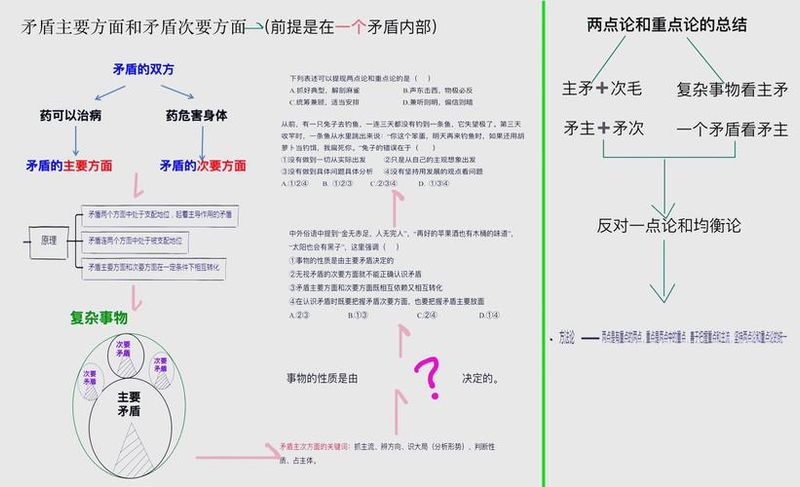
The communist party of china (cpc) has further elevated the concept of “continuation” to a methodological one, which analyses the chinese revolution and chinese society. Marx analyses the general patterns of human social development and the special patterns of capitalist society through “controversials”. The communist party of china inherited marx's analysis, which was first used to analyse the chinese revolution. In the history of marxist development, mao zedong has been an important creator, operator and promoter of the concept of “controversial” — a concept that we chinese know very well stems mainly from mao zedong's “continuation”. In the contestation, mao systematically explains the status, essence, logic and role of the contradiction. Mao raised the question of the relationship between the universality and speciality of the contradictions, the main and minor contradictions, the main and secondary aspects of the contradictions, and the question of their transformation. The in-depth discussion of these issues has not only made the concept of “controversial” popularized, but has also made the concept of “controversial” a distinct marxist chinese-style concept that has evolved from one of everyday life and philosophy to one of politics. Since then, we have introduced the concept of “the main social paradox” as a criterion for analysing the stage of social development, further reinforcing the political rhetoric of the concept of “controversial”。
The term “controversial” is thus a non-complicated term in itself, but because of its triple role in philosophical, political and everyday life, it has different connotations in different roles。