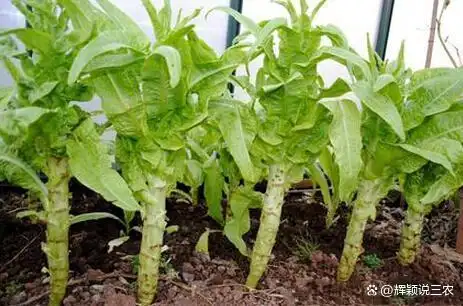
They are made of curds, curds, cyanide, fragrances, which belong to the chrysanthemum, char, and one or two years of grassland. It originates on the mediterranean coast and is widely produced in the north and south of the country, mainly using its burgeoning penis. For one of the main vegetables in autumn winter and spring, seeding is carried out in different varieties across the south, with a phased harvest available almost on an anniversary basis. The meat is soft, the tubers and leaves can be warmed, boiled, dried or asleep。
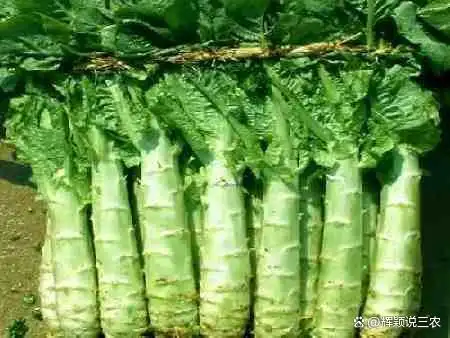
1. Production planning programme development and agricultural preparation
Based on the scale of production and production objectives, detailed production plans are developed, plastic sheds are built and relevant agricultural production materials (seeds, membranes, fertilizers, pesticides, etc.) are prepared。
2. Choice of varieties
Different varieties should be selected according to production seasons, climatic characteristics and production requirements. If you have to choose cold-resistant varieties, you should choose more heat-resistant varieties in the summer and autumn. The main varieties produced in the chengdu region are the sichuan dou-technology company, inc., which has the highest number of species, and the city institute of new agricultural crops, which has the highest number of white leaf stubs, no. 2, no. 2, no. 2, no. 2, no. 2, no. 1, no. 1, no. 1, no. 1, and no. 1。
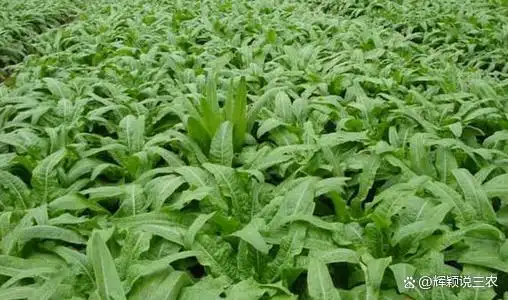
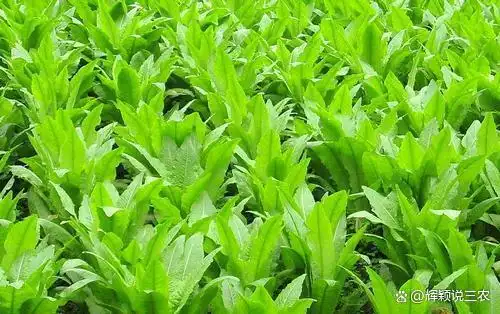
3. Cultivation
(i) seed treatment. When seeding takes place at temperatures above 20°c, seeds need to be treated at low temperatures to promote germinate. The treatment is by immersing the seeds in water first from 3-5h. After recovery, wash with fresh water, then wrap it in a gauze, put it in a freezer room, can also be placed 20-30 cm above the water surface of the well or in a cave, wash it once a day with fresh water, and 80% of the seeds can sow after 2-3 days without the need for cryogenic treatment when the temperature is right。
(ii) the planting of seedlings is mostly carried out in the form of pre-planting and post-planting. To grow seedlings, seeds of good quality should be chosen。
Sapling beds are selected for fertilized and easily drained soil, with deep ditches high enough to flatten, and wet beds before seeding. Pay attention to sowing density, with the appropriate downscaling, usually 10-15 m' per 20g seed, so that the seed can be mixed with the appropriate fine soil and then spread a layer of trophic soil of 0. 5 cm thick and then cover warm and wetting, such as straw curtains or sunnets。
(3) shrimp management is generally broadcast from 4 to 5 days. When seedlings are released, the cover is removed in time. More than 800 times the fungus. The pharmacological fluid can be sprayed once, and 10 per cent of the thin human urine can be applied in combination with two to three saplings. The age of seedlings varies from one production season to another, and can be established when there are 4 to 5 real leaves。
Four, steady
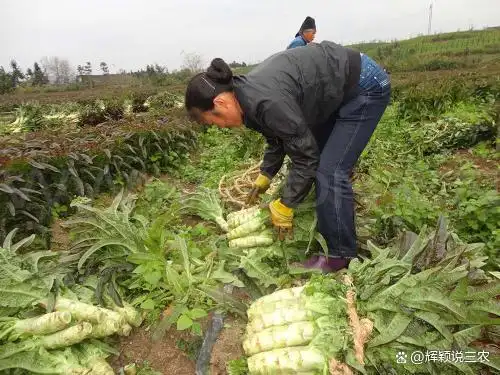
(1) in the absence of deep roots in the ground, organic rich and water-preserving fertile soil shall be chosen for production. Around 10 days before the planting, the ground was consolidated and applied to base fertilizers, usually 3000 kg of manure per acre, calcium per phosphate 20-30 kg, potassium fat 10 kg. And then tilling and sleeping. In spring and autumn, it's usually made of a broad, wide 3. 5-4m. Slept in the summer high-temperature, wet or winter low-temperature wet season, 2 m wide. Eight lines down 20 cm。
(2) high plant density. The range of plant sizes varies from 25 to 40 cm to x (30 to 40 cm) depending on the species and season, with a smaller density of pre-cooked species and a greater distance between medium- and late-crop plants: cultivation may occur during periods of high temperatures that are not suitable for growth, and may be rare in seasons that are suitable for growth, with as many earth masses as possible during planting, without damage to the root system, and when soil moisture is appropriate or in the middle of the day, so that root water can be ploughed in a timely manner。
5. Field management
(1) fertilizer water management a light “smooth fattening” is applied when the seed is slow and a small water is poured in pursuit of 10 kg of urea per acre. This period should promote the union and be primarily controlled. When the leaf grows to eight leaves and starts with a “package tree”, water is poured through and followed by a “opener fat”, and a three-dollar complex of 20 kg per acre is applied to 20 kg per acre. The plant is grown to 16 to 17 leaves, the lore leaves are fully developed, the heart leaves are flat with the lore leaves, and the tubing ends when the tubing starts to grow. • timely watering - secondary flooding, combined with water re-energizing “diplomatic fertilizer” and a three dollar complex of 25 kg per acre. This time, it's time to take care of it. It's too early for the mussels to grow, it's higher for the tubers, it's less commercial, it's too late for the tubers to grow horizontally, it's too late for the skins to grow old, and it's more fissive for the next time. Half a month later, the "margins" were pursued again, with a three dollar compound of 15kg per acre, and thereafter no more, and the ground was often kept "wet dry" until seven days before the harvest, in order to prevent the cracks。
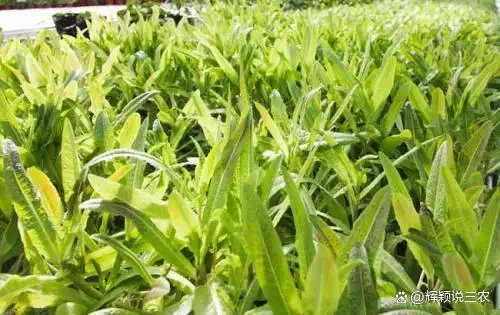
(2) weeding in china. When the stem starts to be fatter, it is said that when it rains, it is then ploughed and warmth is added to the sapling, and the guard is “high”. No more tillage after closure. The use of membrane-covered production can effectively prevent weed growth, while preserving temperature protection, preventing “water run” and “early run” and controlling air moisture in the field and mitigating the occurrence of diseases such as frosting。
(3) chemical regulation in the process of production of the summer autumn, because of high temperatures, pre-spills are more likely to occur, which can be prevented by using 15-20mg/l of condensant or choacetate, or a mixture of the two, for a period of 5-7 days, for a total of 2-3 times, during the lichen season and when the tubing starts to expand。
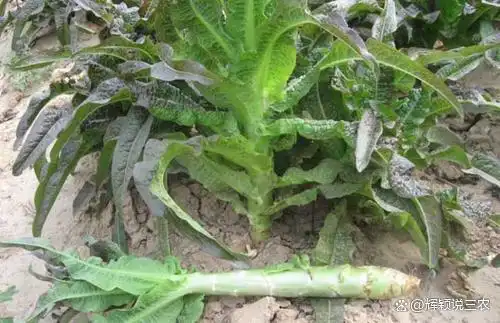
(4) the diseases of pest control are mainly viral diseases, frost, soft rot, fungi nuclei, as well as as asympathia. Virus disease can be combated with 2 per cent ninganicillin, 20 per cent contour 1: frostosis can be combated with 25 per cent reedomir, 50 per cent methamite, etc.: molluscs can be treated with fungicides, new corrosions, etc.; bacterium nuclei can be combated with 70 per cent methylsulphorism, 50 per cent crackling, 50 per cent platinum, 50 per cent styrene, 40 per cent styrene, 50 per cent platinum, etc.: the main pests are aphids, with 10 per cent smokedrin, 10 per cent acetai, 25 per cent acteamide, and 20 per cent pythrin。
6. Collection
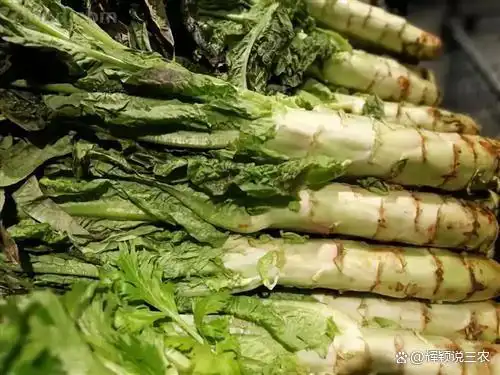
When the top of the plume is at the same end as the top of the highest outer leaf, it is fully enlarged, at which point it is ready for harvest. In case of over-harvesting, the yield is reduced, while the harvest is too late, and it is easy to draw flowers, emptying the bones of meat and reducing their commerciality。
Concluding remarks