


In practice, write a good answer to the sandshield; time to witness the change of desert to oasis。
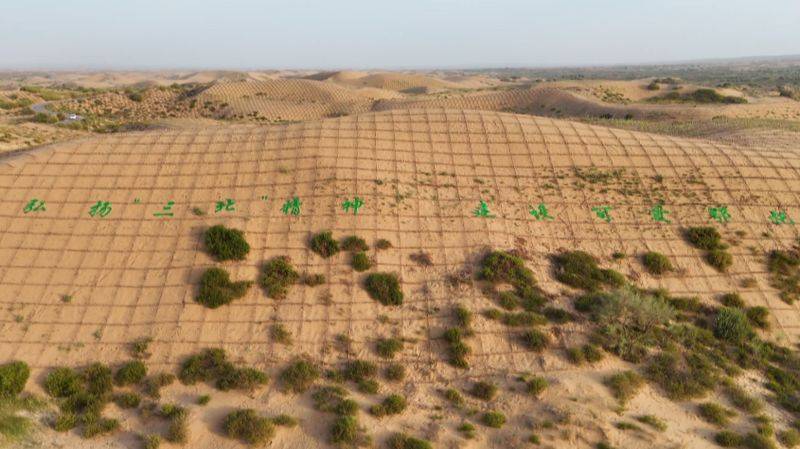
In 2024, the otok flag of the city of ordos, in inner mongolia, focused on the “twice” battle of the yellow river, the implementation of a number of priority ecological projects, such as the priority project on integrated management of the sandy soil in the mausteru desert, the management of the upper- and lower-musak ground, and the integrated conservation and protection of the grasslands of the western desert, effectively enhancing the green green internal power of the green tube and establishing a green ecological barrier。
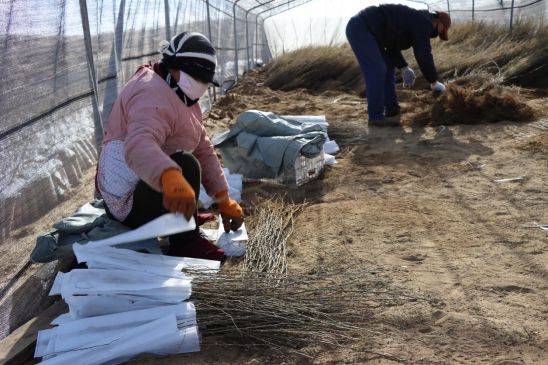
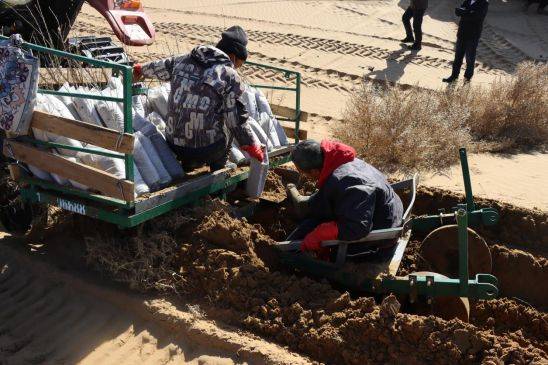
In the cold, at the site of the otoke flag mau souza united prevention and control project, workers were distributing lemon strips, and the tracked mechanical vehicle was transporting the separated seedlings to the not-too-distant sand slopes for “silver-opening ditch cultivation”, with a single seedling standing in the sand ditch, forming a “living sand barrier” against sand。
From man-made to mechanical sand management, from local adaptation to immediate extraction of materials new technologies, new materials and new methods show the wisdom of the sand cure and the power of technology. The otoke flag has been moving towards “new” in the sand-resilient process, and the technological “breath-out” has led to innovations in the system of sand-resilient institutions, as appropriate, and has explored new models in areas such as the living sand barrier rate。
“we are currently using sand management techniques, such as `limber-trea', which can lead to an expected increase of 10 to 15 per cent in tree activity. Innovative promotion of degradable duct-free seedling techniques, combined with the use of water-conserving agents and root powder, increases the rate of seeding by nearly 30 per cent for arid areas, ensures one-off survival of trees, and effectively addresses technical difficulties such as water scarcity, short fattening and low yield rates in arid sand areas.” the oktok flag forestry and grassland station, nagaya, said。
Over the years, the otoke flag has been developing innovative and improved models of sand management and has been exploring effective models of sand management, such as “building first and then providing food for work”。
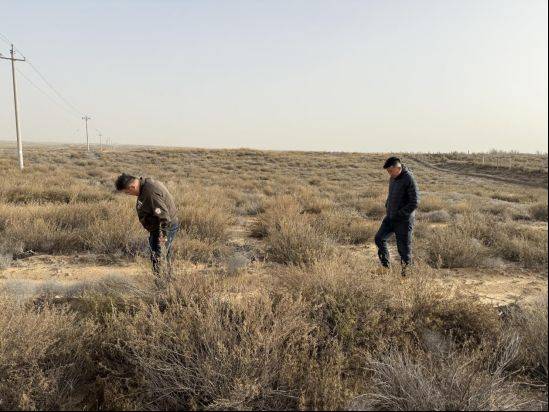
The otoke flag began in 2020 to experiment with the “building-in-the-front” management model, whereby farmers and pastoralists start to grow on their own in the first stages, followed by the co-organization of the village of ghacha, sumu town and third-party institutions, with a yield of over 70 per cent of the population, and the payment of subsidies to farmers and pastoralists at the rate of 4:3:3. The hamazhegha herd von laiyun is one of the beneficiaries of this model。
“i have planted more than 2,400 acres of lemons this year, at a cost of more than 270,000, and today the rate of harvests is 76 per cent, with the first grants amounting to around $340,000. I think it's good to build it first, to restore the pastures, and to get subsidies. Hammar zelig is too close to the herd von laiyun。
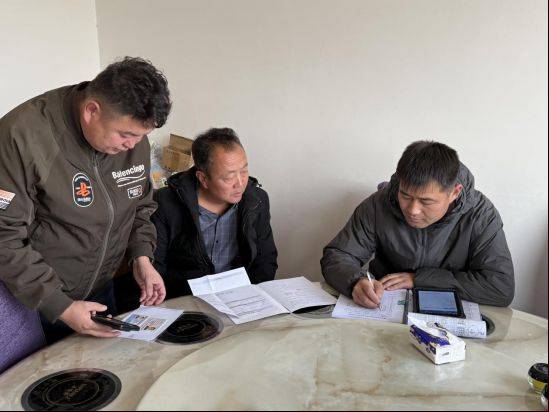
From the 2020 trial to the 2023 full implementation, the otoke flag has grown 6418,000 acres of lemon paste in the “building before patch” model, representing 88. 7 per cent of the total area planted since 2019. A large number of new groups of forest grass-growing ecological constructions, such as the “family grass-growing” “households”, have emerged through the “building before supplementation”。
Sand management is a roller rock-up process, and a little relaxation is repeated, and sand control is a long-term historical task. To date, the oktok flag has sought 1,266. 5 million dollars from its superiors, and invested 797 million yuan in 2024, cumulatively completing 3. 82 million acres of annual engineering tasks。
Green is the colour of hope and the background for high-quality development. For the future, the oktok flag will continue to insist on integrated protection and system governance of mountain forested fields and lakes, vigorously advance the construction of priority ecological projects such as the “thir north”, comprehensively strengthen the integrated control of desertification and desertification, accelerate the promotion of integrated sand management and wind voltage projects, and contribute to the building of an important ecological security barrier in the north of the country。
Zhao ji-da
Make, make, make, make, make, make, make, make, make, make, make..



