Little garden spring day
The grass willow willows will be long and the smoke will shine。
It's nice to have a small garden. It's very busy。
Introduction: the weather code in spring
During the year of north song ka-joon (about 1060), the poet liu queu walks in the garden, seeing the new grass, the long willows, the morning fog, the warm wind, and the almonds are waiting for them. This is an ordinary spring-day scene, written by him as a fine little poem。
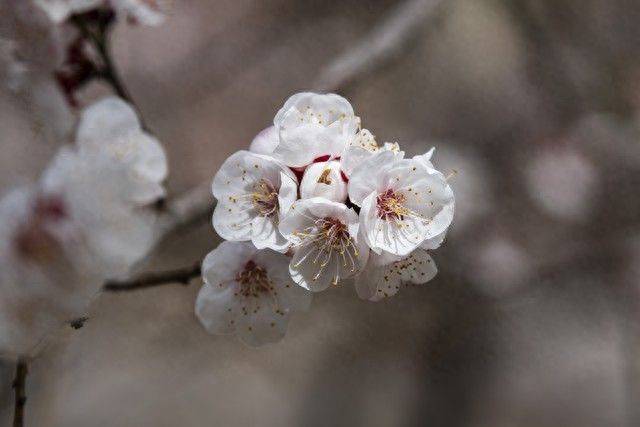
Today, more than 900 years later, we re-enter the park from a meteorological perspective and see not only poets' joy in spring, but also a report of early spring weather in the central region of north song. The "new" grass, the "long" willow, the "clean" smoke, the "preliminary" flower letter — every scene is talking about scientific patterns of seasonal transformation。
“screen new willows long”: evidence of the recovery of temperature
The first sentence, “the new grass-coloured twilight willow long”, highlights the physical features of early spring。
The word “screech new” is the exact record of objects. Grassland plants return to chrysanthemum, requiring a steady average daily temperature of 5°c and soil unfrozen to a certain depth. At this point, the roots are active, the chlorophyll synthesis is activated and the yellow grass is green。
"live length" refers to more specific temperature conditions. Willows are one of the most temperature-sensitive species in temperate falling trees. The flow of tree fluids requires a steady average daily temperature of 5°c, while the apparent extension of branches requires a temperature rise to 8-10°c. Liu quan saw the “long willow belt”, which indicates that the temperature has exceeded this threshold at this time and that the willows have entered the fast-growing long term。
According to modern meteorological data, the north song central region has similar spring temperatures today. Liu quantified with the new grass, and the long willows, is precisely the complete chain of warming and material response。

“smoke clear and wet”: meteorological from morning fog
The second sentence, “smoke clean and wet,” is the essence of the whole-synthesis。
(i) meteorological interpretation of the term “smoking”
"smoke" is not a smoke, but a morning fog. In the early spring, at night, radiation cooled strongly and near-ground temperatures fell rapidly. When the temperature drops to the surface, the water vapour in the air is saturated, condensed into tiny droplets, forming a radioactive fog。
The fog is usually the most intense before and after sunrise, and when the sun rises, it dissipates with warming on the ground. Liu quan saw a “smoking smoke” in the garden at a time when the sun was rising and the fog was still running out. The word “hostilities”, the light of which is the night, and the morning is still there。
(ii) physical causes of “cleaning”
The word "sweet" accurately depicts the touch and visual effects of morning and morning fog. The small and moderate water drops of the early spring radiation fog do not obscure the line of view like the deep autumn fog, nor are they as wet and sticky as the summer morning fog, but rather give people a sense of “clean” and “sweet”。
From an optical point of view, the word "wet" is better. As the sun passes through the mist drops, it is dispersed in the form of blue purple light with short wavelengths, with long wavelength red orange light penetrating and forming soft light. At the same time, the reflection and reflection of the mist drops on the light allows the light to form a flowing sense in space — the scientific connotation of the word “flowing light”。
(iii) weather background from radioactive fog
Radiation fog formation requires clear, windy and more humid weather conditions. Clearness means that radiation cools at night; breezes trade in a mixture of cold and warm air; and high humidity ensures sufficient water vapour. There is fog in liu quan garden, which indicates that the previous night was a typical early spring air with high pressure and no clouds。
“small gardening first”: temperature ladders for objects
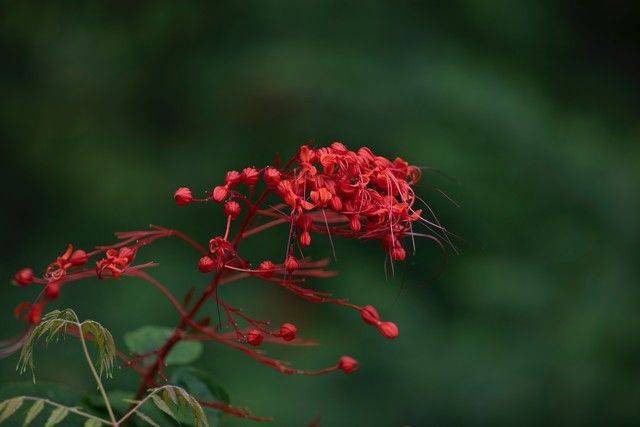
In the third sentence, “small gardening has been warmed up”, revealing the correspondence between temperature recovery and the flowering period。
(i) the meteorological content of “wind warm”
The word "wind warm" contains information on both direction and temperature. In the early spring season, winter winds in the north were gradually replaced by winds in the east and south from the sea. This wind-directional shift is a sign of the adjustment of the monsoon circulation in east asia — the beginning of the delivery of heat to the continent。
In terms of temperature, “wind warm” means that the average daily temperature has reached more than 10°c. At this time, the wind is no longer cold in its face, but rather brings warmer and warmth. Liu quan was keenly able to capture this change and to summarize the feeling of temperature breaking the comfort threshold by the word “heating”。
(ii) effective pre-flower temperature
“flowers first” means that almonds, peaches, etc., in the garden are already contained. The opening of these flowers requires a certain threshold for accumulated effective warming. In the case of almonds, for example, it takes about 10°c to open up to 100-120°c day。
The “first-off” of liu quan indicates that the accumulation of temperature has been achieved, but has not yet reached the level of abundance. This is exactly the poetic expression of criticality — the first wave of letters has arrived just before spring。
It is worth noting that the `small garden wind first' and the `breathing new willow long' form the temperature ladder: grass and willow need 5-10°c and flowers need more than 10°c. The poet co-opted the three and inadvertently presented a scientific sequence of the sequences that responded to the temperature by class。
“being busy”: monsoon transition and spring idols
The last sentence, “pretty and busy”, raised the image of nature into a personalized image of spring god。
(i) the meteorological content of “tojun”
"tojun" was an ancient myth, but here it points more to the east wind. In the eastern part of the country, the dominant wind in the spring has shifted from north to south, with the eastern wind accounting for an important proportion. The change in direction of the wind is a sign north of the warm and wet current。
Meteorologicalally, east wind carries water and heat from the sea. When the east wind continues to blow, the temperature rises steadily, the probability of precipitation increases and the entire ecosystem wakes up from winter hibernation. It is precisely the poetic interpretation of this monsoon shift that liu quang is expressing himself as a humanist by “doing his duty”。
(ii) synergetic evolution of materials and weather
In four words, a complete chain of early springs:
Phrases, meteorological/physical elements, scientific principles
The grass willows grow, the temperature rises, the daily average temperature is 5-10°c, the soil is unfrozen, the fluid flows
Smog, optics
Small garden wind warms first, temperature, date, daily average temperature >10°c, effective temperature achievement
Tung is busy, monsoons turn, east wind increases, warm and wet air flows north. Let's go
Together, these four sets of information point to one conclusion: this is a typical early spring season — temperatures have just crossed the 5-10°c threshold, morning fog and warm winds are in place, grass and trees are moving, flowers are arriving, monsoons are changing。
V. Humanity: the information in the zone
The interpretation of a meteorological perspective is ultimately linked to the human face。
Liu quang (1019-1068) is a distinguished north song scholar with a great knowledge and specialty in " spring autumn " . He's a straight man. He dares to speak straight. And when he receded in the later years, the grass and the wood of the spring of the garden became a window for him to observe the heavens and the earth and to understand nature。
(i) to see heaven from the surface
Agent song has emerged in pursuit of “knowledge of the good” — understanding of the good by observing everything. Liu quantified by the new “black-coloured” “willow-wielding”, “fresh-heading”, on the face of the scenery and, indeed, respect for and conformity with the laws of nature. The poet senses the rhythm of the journey from the small changes in the long willows of grass。
This approach to “images” is the expression of the concept of “one human being” in china's traditional culture. Meteorology and objects are never just scientific questions, but also philosophical questions — how can people resonate with the rhythm of nature between the heavens and the earth
(ii) the modern revelation of “doing your duty”
"being busy with the east" -- the spring god is busy and everything is growing. It's a poem that i read today. Don't make any sense。
In the context of global climate change, significant changes are taking place in the spring: plants bloom early and migratory times change. The time node of yoo qui qui qui qui is different from today's. In this sense, the poem is not only a literary heritage, but also a reference point for climate change。
When we reread “small gardens first”, we both feel the sensitivity of the ancients to nature and think: is today's “sweetness” coming earlier? Are the flowers first? The reading of poetry from a meteorological perspective has added to our aesthetic aesthetic awareness of climate change。
Vi. Conclusion: the big world in the hurt
Spring day is not just a wing chun poem, but also an observation of early spring weather in the central region of north song. It concentrates, in 28 words, multiple scientific information, such as warming, radiation fog formation, monsoon transformation, and effective warming。
Liu quan's small garden is actually a tiny weather observatory. He records grass colour with his eyes, senses the wind with his hands, and hears the news of spring with his ears. And that spring, a thousand years ago, was thus set in poetry, and it is still in circulation。
Today, as we reread the “smoking light of the night”, even as we feel the leisure of the poet's morning playground, we should read: there is a physical process of radiation cooling in that morning fog; there is the optical principle above that light, there is the optic principle of the mi-dissemination; there is a weather rhythm between the warm flowers and the monsoons。
From a meteorological perspective, we can see that every word in a poem is the crystal of nature, and every wind outside the poem, every cloud, carries a scientific code across the millennium. And it is not only spring, but the news of the heavens and the earth, that liu qun is caught in a small garden。