A little red culture protocol
1 scope
This document sets out a number of terms and definitions for mangrove cultivation, the environment of the place of origin, site selection, seeding, field management, harvesting and processing, and production files。
This document applies to a little bit of cultivation。
2 normative citation documents
The content of the following documents constitutes an essential provision of this document through their normative references. Where the reference document for the date of the notation applies to this document only in the version corresponding to that date; the reference document for the undated date, the latest version of which includes all the changes, applies to this document。
Gb3095 ambient air quality standards
Water quality standards for irrigation of gb5084 agricultural land
Gb15618 standard for controlling the risk of soil pollution from agricultural land by soil gb/t8321 (all parts)
Ny/t496 organic fertilizers
Technical instruction terms and definitions for packaging of pharmaceuticals in sb/t11182
3 terminology and definitions
The following terms and definitions apply to this document. 3. 1
A little red

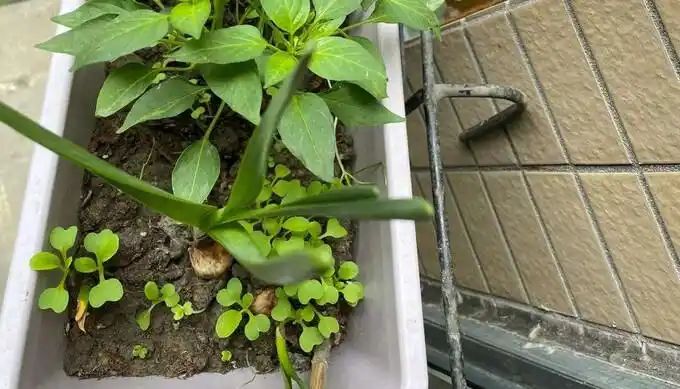
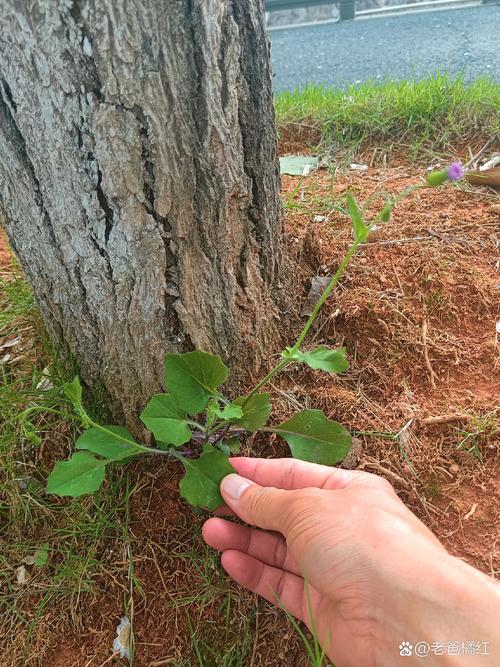
A little red, alias red back leaves, red under leaves, sheep hoof grass, a little red herbs for herbs, and a whole herb。
4 selected fields
4. 1 landing
It is appropriate to select land with a moderate or weak alkalinity, for example, for easily drained, loosely fertilized and fertile soils. A little red has been turned against melon crops and grass-crop crops, which are associated with and flooded。
The ambient air quality of the site shall meet the requirements of gb3095. The soil environment shall meet the requirements of gb15618。
The water quality of agricultural land irrigation should meet the requirements of gb/t5084。
4. 2 sf
For every 667 m2 application of fully decomposed organic fertilizer, 1,500 kg ~ 2000kg is applied as base fertilizer, or a combination of 10 kg ~ 15 kg ~ 25 cm ~ 30 cm. The quality of organic fertilizers should meet the requirements of ny525, and the quality of fertilizers should meet the requirements of ny/t496。
4. 3 total area
It is appropriate to apply a mechanically lax approach to the ground, with a depth of 25 cm to 30 cm in the field, to flattening, to make deep trenches of 1. 5 m to 1. 8 m wide, 20 cm to 25 cm high and 30 cm to 40 cm wide。
Five
5. 1 selection
The selection of varieties suitable for local cultivation, with seeds free of moths, imperviousness, light and full seed capacity, 80 per cent pure seed, 80 per cent clean, water content and gerontology levels are excellent。
5. 2 period
It's suitable for march to july。
5. 3 volume
For each 667 m2 broadcast during the broadcasting cycle, the volume may be increased appropriately if the site is of poor quality or delayed。
5. 4 sowing methods
Seed-breeding is used to sow the seed from impregnated seed in a wind-free weather in a thin, dry sanded bed of 1:100
Two times。
Six plants
6. 1 deplanting time
It's 40d-50d, 5cm-7cm, and it's four-five leafs. It is advisable to choose whether to move in the rainy weather or in the evening。
6. 2 cultivation density
Plant 8,000 to 14,000 plants per 667 m2 at 25 cm x 20 cm. 6. 3 emplacement
Caves, 1 puddle, grounded and watered。
7 field management
7. 1 saplings
Four centimetres of time and two to three saplings at 15 to 20 centimetres. 7. 2 shrimp
Following the transfer, 5d-7d seedlings were replaced, and a shortage was found to be timely。
7. 3 cropping
A full-scale weeding, pine earth before the closure. A little of the red root is shallow, so that it tends to be shallow, so that it does not hurt the root. Artificial weed after sealing。
7. 4 chase fat
A little red for fresh food followed by urea 25 kg per 667 m2 after every harvest combined with water to fatten。
A little red-coloured farming followed by compound fertilizer of 15 kg ~ 20 kg per 667 m2. Fertilizer quality should meet the requirements of ny/t496. 7. 5 drainage
After planting, water is poured in time to keep the soil wet. Water should be drained in time for heavy rains。
8 pest management
8. 1 type of pest
There is less red disease, and the pests are slashed night moths, aphids, etc。
8. 2 principles of prevention
Priority is given to agricultural, physical and biological control measures based on the principle of “preventive, integrated and curative”, which should be based on efficient, low-toxic and low-residual pesticides, strict control of application and safety intervals. Pesticide use should meet the requirements of gb/t8321 (all parts). Pesticide residues cannot be exceeded