I. How many of the poppy plants are illegal
1. The law provides for the criminal prosecution of more than 500 poppy cultivation plants, which is illegal and, in the case of less than 500 plants, generally based on security cases. The illicit cultivation of more than 3,000 opium poppy or other drug plants is punishable by a term of imprisonment of more than five years and a fine or confiscation of property。
Legislative authority:
Article 71 of the covenant provides that any person who:
(i) illicit cultivation of less than 500 or other small quantities of narcotic plants;
(ii) illicit trade in, transport, carry and hold small amounts of raw drug plant seeds, such as raw opium poppy, or seedlings;
(iii) the illicit transport, trade, storage and use of small quantities of opium poppy shells。
The first act in the preceding paragraph shall not be punishable if it is self-destructed before maturity。
Article 350 of the people's republic of china provides for the compulsory eradication of all illicit cultivation of opium poppy and narcotic plants. The penalty shall be imprisonment for a term not exceeding five years or a fine if:
(i) the cultivation of more than 500 opium poppy plants and less than 3,000 or larger quantities of other drugs
(ii) growed after treatment by public security organs
(iii) resistance to eradication。
The illicit cultivation of more than 3,000 opium poppy or other drug plants is punishable by a term of imprisonment of more than five years and a fine or confiscation of property. The illicit cultivation of opium poppy or other narcotic plants, which is automatically eradicated before harvest, is exempt from punishment。

The illicit cultivation of opium poppy and the identification of drug plants
Object element:
The object of the crime is the state's control over the cultivation of narcotic plants. The state has traditionally strictly prohibited the illicit cultivation of narcotic plants, such as opium poppy and cannabis, and has issued a series of laws, decrees and circulars, such as the regulations on the management of narcotic drugs promulgated by the state council on 13 september 1978, which provide for serious treatment in the event of unlawful acts such as the private cultivation of opium poppy。
The narcotic drugs management act provides that “the unit of cultivation of narcotic drugs shall be subject to review and approval by the ministry of health, in cooperation with the ministry of agriculture, livestock and fisheries and the national medical administration, and shall be copied to the ministry of public security. The annual plan of cultivation of narcotic drugs shall be reviewed and approved by the ministry of health, in conjunction with the ministry of agriculture and fisheries, and shall be implemented in accordance with the law. The unit shall not change the plan without its own permission”
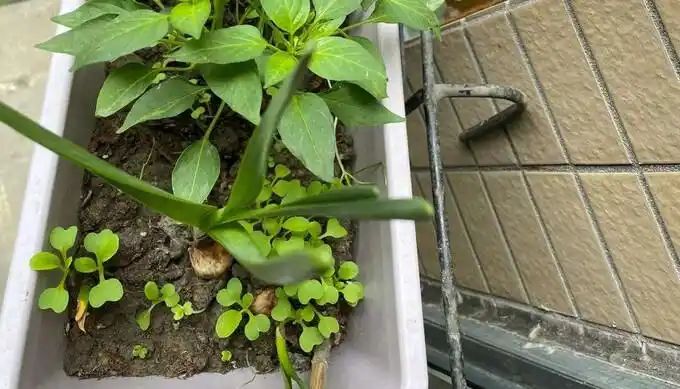
The crime is committed against the drug plant, i. E., the plant used to refine and process narcotic drugs such as opium, heroin, methamphetamine, morphine, cocaine and psychotropic substances. Illicit cultivation of narcotic plants, mainly opium poppy, is taking place in my country, and cannabis is being cultivated in a few areas。
Objective elements:
This crime is objectively manifested in the commission of acts that violate the relevant national legislation, the illicit cultivation of narcotic plants in large quantities, or the subsequent cultivation and resistance to eradication by public security organs。
Cultivation, which refers to sowing, fertilization, irrigation, semen extraction, seed collection, etc., can be considered as planting whether the perpetrator has committed all the above-mentioned acts or only one act. The offence is committed if there is evidence that the perpetrator did so, even if he did not have the seed, and the area was estimated to reach the amount specified in the act。
Under this article, the cultivation of more than 500 opium poppy plants and less than 3,000 plants is larger and other drug plants are larger. In general, 250 cannabis plants are considered to be the equivalent of 500 opium plants, 1,500 cannabis plants are the equivalent of 3,000 opium plants and more than 250 plants are the norm. Locally appropriate standards can be determined by local realities。
2. A person who, after being dealt with by a public security organ, cultivates a plant means that the perpetrator, after being punished by a public security organ or forced to eradicate it, shall, in principle, be guilty of an offence. If the amount of replanted is small, it can also be excluded as a crime and, in the case of a crime, the number of strains of narcotic plants that have previously been treated administratively is no longer cumulative。
3. Resistance to eradication means that the perpetrators of the illicit cultivation of narcotic plants, the use of violence, threats of violence, coercion or other coercive means, are sufficient to prevent the competent authorities from eradicating the drug, and, if a minor act of resistance is used, the use of soft and soft bubbles, verbal abuse, etc., is not sufficient to prevent the authorities from eradicating it, in a manner that should not be criminalized. The use of violence to resist eradication is essentially an act of obstruction to official duties, and we believe that other methods of resistance, such as violence, coercion and other forms of resistance, to resist eradication, both as crimes against the illicit cultivation of narcotic plants and plants, are theoretically implicated in criminal law and are punishable by a felony and not applicable. If the use of violence against a person causes death or serious injury, the penalty shall be equal。
Main elements: the main subject of this crime is the general subject, i. E. Anyone who has reached the age of criminal responsibility and has committed illicit cultivation of narcotic plants may constitute the crime。
Subjective element: the crime is subjectively intentional and negligence does not constitute it. It is an offence for the perpetrator to grow illicitly, whether for profit or for the benefit of the individual, knowing that he or she manufactures the original plant of the drug。
If you have any other questions, you can click the bottom button or consult a professional lawyer on the walnet。