Green food. Eat healthy
In order to ensure proper seeding and regulatory management, which coincides with and overlaps with periods of heavy rainfall, the following observations are made on the management of production techniques。
Land selection
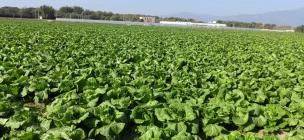
It would be desirable to select a land with deep earthy, organic, well-filled and drained land that is easily accessible. Neither the previous year nor the front crops were suitable plots for the cultivation of cross-flower vegetables。
Varieties selection
It is desirable to select varieties that are resistant to disease, good-quality production, strong resilience, good commodities and durable transport. Pre-cooked cabbage can be used for 60 small, yellow, sun-yang, etc., and medium- and late-cooked cabbage can be selected for beijing no. 3, beijing no. 4, and green no. 3。
Suitable duration
It's on time
Depending on the characteristics of the species, they are broadcast early during the suitable period. The cabbage is colder and cooler. Cultivation is premature and the ambient temperature is high, and although it can meet the temperature required for the growth of cabbage, plants are vulnerable to diseases such as viral diseases. Rainfall during sowing periods affects seedlings, and young people are easily washed out by rain and breakable, resulting in loss of seedlings and exposure to diseases such as froste and morbid diseases. The late planting of seeds and the mildness of the disease do not meet the temperature required for the growth and development of large cabbage, which results in false and low yields. Therefore, depending on the characteristics of the species, early delivery during the suitable period is key to high productivity。
Seed time
Pre-cooked cabbage: with a shorter reproductive period, planting can take place between late july and late august, but no later than 20 august. Mid- and late-literate cabbage: the plain area planted directly from 5 august to 11 august。
Cleaning fields
Cleaning of residues, rotten leaves and weeds (including weeds around plots) in a timely manner after the harvest of front crops, and concentrating outside the plots for high-temperature composting or using ozone for harmless treatment. Cleaned plots are disinfected。
I'll do the whole thing
Fertilizing the whole place
The acres are applied with fully decomposed, shredded and high-quality organic fertilizer of 5,000 kg or 3000 kg of biological organic fertilizer, three quarters of which are distributed before the ground is thrown, then the floor is thrown deep and the floor levelled, and the remaining quarter of the organic fertilizers and perphosphate calcium (30 kg/acre) are applied during the preparation of the precipitation。
It's a tweezer
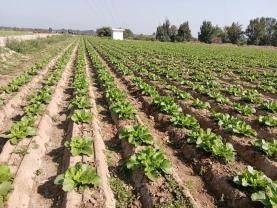
Take an east-west direction, with a back wide of 25 centimetres, a height of 15-20 centimetres, and dig a drain about 15 metres apart. The high-altitude radio is used to flatten the soil at depths ranging from 40 to 60 centimetres, requiring a straight, flat back, flat height and width, and a three-thousand-threshold slope。
Seed management
Plantation density
There are about 3,500 pre-cooked cabbages and 2600-3,000 mid-late-cooked large cabbage acres. The direct seeding method is 100-150 grams per acre and the use per acre using telecast technology is reduced by 50 per cent。
Sowing
The method of growing large cabbage can be either direct seeding or seeding. Direct seeding may be manual or mechanical. Artificial seeding can take the form of opening caves and ditches, with two seeds per lacuna, open by the distance of the dam. The ditch is opened in the middle of the back by opening a shallow ditch of a consistent depth, with 1. 5 to 2. 0 centimetres of soil, including the earth that rises when rowing, and spreading the seeds evenly within the ditch. Mechanical seeding can be used to sow various items directly by mechanical means or to lay wires containing seeds inside them. In the case of plots that cannot be planted directly in time, for example because of the weather and the lateness of the pre-surgery land, three days before seeding can take place, it is possible to select dry plots of land, which are grown using 105 or 128 dens, and which are to be planted when three or six of the real leaves are planted。
And sowing and crushing
Fill in shallow trenches where seeds have been sowed or where seed ropes have been laid, and the soil is evenly thick, which is then suppressed. In the aftermath of the repression, the soil was 0. 5-1. 0 cm thick。
Field management
Weed cultivation in china
Medium planting of pine soil during seed season 2-3 times to prevent soil slabing. In accordance with the principle of “deep girdles, shallow girdles”, the length of the girdles is 8 to 10 centimetres and the depth of the back is not more than 4 centimetres in order to promote the growth of the root system, and the seals are followed, as the case may be, only by the girdles, but it is desirable to do so in the middle of the day when the leaves are softer in order to avoid damage to the leaves。
Control the water
In order to grow a strong, early ball, cabbage, before entering lian's mid-term to the end of the ball, needs to be managed with water seedlings to promote the ligature of the roots, the thickening of leaves and the accumulation of nutrients. The outer leaves planted during the scavenger season abated slightly during the noon period and returned to normal after the afternoon, when the scavengers were significantly thickened and the scavengers were green。
Fertilizer management
Water
It is managed by three-water seedlings, five-water tree saplings, each of which is wetted once after planting, topsoil, out-sapling, growing up to three to four leaves, and growing up to six to eight leaves, ensuring that the soil is 80 to 90 per cent wet, and preventing seed sprouts and seedlings due to soil drying and sheeting. When seeded, small water is poured in time to reduce the temperature for growth and to prevent the occurrence of diseases such as viral diseases, septics and blacks. The season is the period of greatest growth and the period of greatest water demand, and soil moisture should be maintained on a regular basis. The water is usually watered every 5-7 days, requiring even water levels to prevent flooding, otherwise it is prone to causing diseases such as soft decay. Water was stopped 7-10 days before the harvest。
Fertilizing
In the early stages of the ball, the pursuit of potassium nitrogen phosphorus at a compound weight of three centimetres, 20-30 kilograms per acre, with an interval of about 10 days, followed three times, followed by water to sequester calcium fat one or two times, at a rate of 3-5 kilograms per acre. Leaf sprayed two to three times, during which time it was avoided when the light was strong at noon and when there was dew in the morning, and as much as possible sprayed on the back of the blades to facilitate absorption。
Pest control
The common pests in the production of cabbage are viral diseases, frosted diseases, soft decay, larvae, leachate, aphid, etc. In order to combat the above-mentioned diseases and pests, pest hazards need to be contained within a “preventive and integrated approach”. Strengthening the application of physical measures, such as insecticidal lamps, biological measures, such as natural enemies, and preventive measures, such as medicinal agents, based on adherence to such measures as crop rotation, clean fields and rational irrigation. Drug control requires the selection of high-efficiency, low-toxic substances, the rotation of medicines and strict control of pesticide safety intervals。
Collection and storage
In order to prevent cryogenic frosts, timely harvesting at the lowest temperature at night down to around 0°c is best done after the drying of the clear open water or after noon to minimize the wounds. In late november, they will be stored in a cellar, refilled in a timely manner, suitable for temperatures of 1-2°c。