


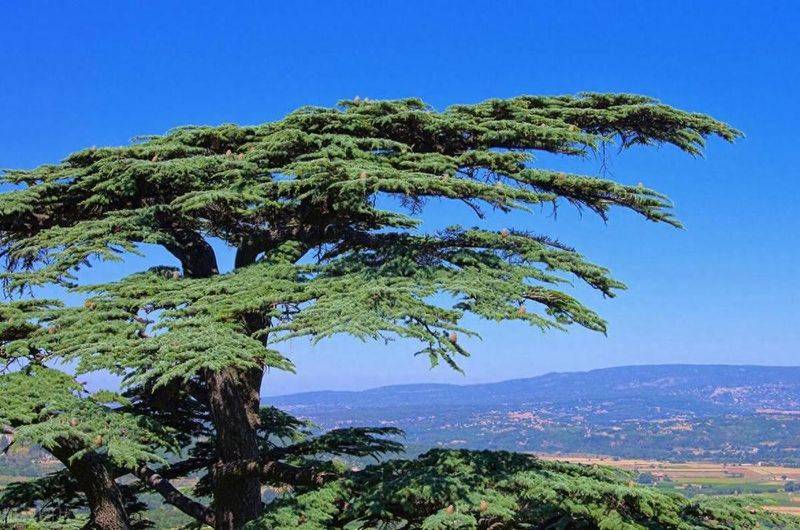
The cedar tree is tall and beautiful, and it is a world-renowned viewing tree. Indian folk are considered sacred trees. It would be most appropriate to plant alone in the middle of the lawn, the centre of the front court, the centre of the square or the entrance to the main building and the entrance to the garden. The branches of its main cadre are spread from near to the ground for years and can form a vast tree crown. In addition, they are planted on both sides of the garden road, forming a ramp, which is spectacular. Before planting cedars, we need to figure out what kind of plant cedars are. The simplest answer: cedars are shallow roots. What does light root mean? The choice of a cedar plant1 and the requirement of light for cedar cedar light should be planted in sufficient light to grow in the shade. 2. The requirement for cedars in the soil is less stringent and can grow normally on the sticky yellow soil and the infertile soil, but best in the deep, fertilized sandy sandy soil. Cedars are the best growing in neutral soil and micro-acid soil, but also have some saline resistance and are normally growing in light saline soil at ph 8. 8 with a salinity of 0. 25%, without adverse reflection. 3. The requirement for a cedar to the ground is water-restricted and should not be planted in low-lying areas. Groundwater levels should be below 1. 6 metres, and cultivation on the lawn should be appropriately elevated, failing which the plant will grow badly or even die. 4. While cedars, which require the environment, are cold-resistant, it is better to plant them in the backwind, with relatively good air quality, and where there is more soot, which can affect plant growth, often in the form of fast atrophy of leaves. One, you can't dig too deep when you grow. You're deep-seated in a normal growth pattern against cedars. The roots of cedars are the best growing and most active near the surface of the soil; - three, transplanted cedars are resistant to the wind. Because the roots are shallow, you have to build a triangle to support the cedar. Otherwise, the cedar will be dead. Now the cedars are sorely seeded. The cedar seedlings were often found in the pre-03 period, when cedar seeds were expensive and farmers could not afford cedar seeds to replace them with twigs. The most notable features of seed seed seeding are: one, thick branches, stacking of layers; two, coloured zezer, nearer to dust; and three, fast growing, straight and strong. Finally, the cedars are afraid of water and drought. It is important that the cedar's fear of water is reflected in the permanent harm caused by the cedars, even if they have been sown once. Since then, it has grown at a much slower rate, and the colour has become yellow, and when it is serious, the needles will fall off in small quantities and the cedars will die very quickly. How to avoid this catastrophic water build-up



