[target signature: core engineering theory, systematic understanding, zero basic interpretation]
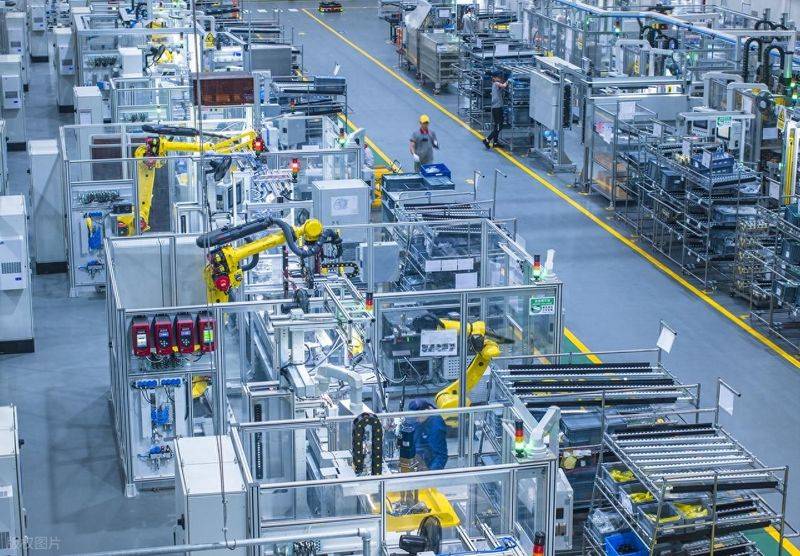
In modern industrial operating systems, the principle of automatic control is the bottom logic hidden behind all automated equipment, production lines, and industrial control systems, from simple water level control, temperature regulation, to complex plc process control, servicing of precision velocity and full automatic operation of industrial flow lines. It is never confined to the textual formulas and images, but a complete system of thinking that teaches us how to sense the system's state, correct system deviations, and allow equipment to operate steadily and efficiently。
This overview, based on the practical logic of the work-control site, the popular philosophies of feynman, links the scattered points of knowledge into a chained cognitive framework that speaks to both theoretical sources and industrial practical applications, so that every person who comes into contact with the work-control system can truly understand the core core of the automatic control principle and the close link between theory and realism。
I. Opening of the session: understanding automatic control, first grasping the nature of industrial control
Automatic control, which is essentially a substitute for human beings, completes the precise intervention and state control of equipment, systems and allows people to operate independently of the repetitive, cumbersome, high-precision requirements。
Each of the automated scenes around us, air conditioners, water pumps, electric velocity, production line delivery, is supported by the principle of automatic control. And that theory was born in order to address a central issue: how to keep the accused in the state we want, without outside interference or deviation from the goals set。
In an automated world, all systems cannot escape two basic structures: open and closed. Open-ring control is a one-way command output with no feedback, no correction, like an ordinary time switch, powering, power outage, whether or not the actual operation results meet the standards, and closed-ring control is at the core of automatic control, with feedback links, real-time capture systems through sensors compared to the actual performance of the target values we set, and command adjustments are issued as soon as a deviation occurs, which is the basis for all industrial control systems。
The requirements for automated control systems at industrial sites have always been centred around three cores: steady, accurate and fast. “stable” is the bottom line in which the system operates, without convulsion, failure or loss of control; “equitable” is the target of control, with the actual value being unlimitedly close to the set value and the error being minimized; and “quick” is the efficiency of the system's response, allowing rapid adjustment and recovery in the event of disturbance or deviation. These three requirements, which cut across all chapters of the principle of automatic control, are the final starting point for all theoretical analysis, parameter alignment and system correction。
Jurisprudence: the ultimate meaning of control is never to restrain operations, but to maintain the established trajectory of the system in the midst of thousands of disturbances, which is the bottom wisdom of industrial automation and the beginning of the theory of automatic control。
From image to abstract: building a mathematical expression system for control systems
In order to analyse an automated control system and optimize its performance, the first step is to transform the likeness of physical equipment into a mathematical model that can be calculated and analysed, which is the first step from the principle of automatic control to a theoretical analysis。
The real-life engineering control equipment, electric machines, valves, sensors, heaters, each of which has its own operational characteristics, the differential equation is the first tool to describe their dynamic operating patterns, and the equation is presented by physical patterns that clearly convey the relationship between the input signal and the output state. But the differential equation is too cumbersome for the whole analysis of the system, which gives birth to the transmission function -- this is the core building block of the principle of automatic control and is a key tool for simplifying complex physical systems into “input-out” mathematical relationships。
The conveyance function removes the internal structure of the system, focuses only on the transmission between input and output, and transforms every device, every link, into a standardized mathematical module, whether it be the transformer of an electric machine, the opening of a valve, or the rise or fall of a temperature, into a corresponding transfer function, making the analysis of a complex system simple and feasible。
The box charts and signal flow maps, in turn, transform abstract mathematical models into visualized system structures that clearly indicate the direction of signals, links to links to links, feedback paths, even more complex industrial control systems, can break down into a typical link, one step by one, clear control logic。
This part of the theory, which appears to be a mathematical operation that is detached from realism, is the “common language” of the oms. As in the case of on-site debugging equipment, before you can clear circuits and control processes, the analysis of control systems must be preceded by the establishment of an accurate mathematical model on which all subsequent time, frequency and root trajectory analyses are based。
Jurisprudence: all complex industrial systems can be broken down into very simple mathematical patterns; all seemingly disorderly operating states can find controllable logic through models, a theoretical bridge to realism。

Iii. Multi-dimensional analysis: three core approaches to seeing the system operate
With a good mathematical model of the system, we need to determine, through professional analytical methods, whether the system is stable, whether the precision of control is met, and whether the response speed is adequate. This is also the core analytical panel of the principle of automatic control, consisting of three main tools, time-area analysis, root trajectories, and frequency-area analysis, which complement each other and interpret systemic performance from different dimensions。
The time-area analysis method is the most intuitive and relevant method of analysis of the work practices, with time being the direct axis of the coordinates, and the output of the observation system, upon receiving instructions, varies over time. We focus on the dynamic response of the first and second tier systems, the most common model of systems in industrial sites, which can be visualized “fast and unstable” by analysing overmodulations, reconciliation times, peak times; rapid determination of the stability of the system and avoidance of shock and loss of control through the laws-helwiz judgement; and stabilization of the state error analysis, which directly corresponds to the control accuracy of the industrial control system and addresses the problem of “no-no-no-no-no-no” as a core indicator of the effectiveness of the system's control。
The root trajectories approach is to analyse the impact of a change in parameters on systemic performance from the perspective of changes in the extremes of the system. When the system's open-enhancement, metaware parameters change, the polar point of the system forms a specific trajectory on the plane, and by mapping the root tracks, we can clearly see how the change in parameters affects the stability of the system, the speed of response, quickly finding the range of parameters that will enable the system to reach its optimal state, and providing direction for the consolidation and correction of subsequent parameters。
The frequency-area analysis method is a completely new perspective, away from the time dimension, and analyses the frequency characteristics of the system by means of sine signal input at different frequencies. The berdeto and nequester stabilization certificates are central tools for frequency-based analysis, in particular by byteto, which is a common tool for industrial control of the debugging system and the ability of the system to resist interference. They are able to determine the degree of stability of the system by means of phase and width, and to understand the system's ability to inhibit interference with different frequencies, from theory to reality。
These three approaches, which appear to be stand-alone theoretical blocks, are a layered, progressive and mutually supportive whole: the time horizon looks at visual responses, the root trajectory looks at the impact of parameters, the frequency range looks at the level of stability, and together they form a complete system of analysis of the automated control system, which helps us to read every feature of the system。
Philosophy: a single perspective can never read the essence of the system, multi-dimensional disassembly, full-dimensional analysis to find the best solution to the system's operation, which is the idea of theoretical learning and, above all, the norm of practical exercise。

Iv. Optimization and landing: the logic of correction and control that makes the system perfect
The analysis of the system's deficiencies and the identification of deficiencies in performance will have to compensate for the system's weaknesses through the system calibration and core control algorithms, so that the system meets the industrial requirements of “stable, accurate and fast”, which is a key link in the evolution of automatic control principles from theoretical analysis to practical application。
The essence of the system correction is to incorporate appropriate correction devices into the original control system, to change the structure and parameters of the system and to address the problems of system instability, lack of precision and slow response. Pre-correction, delayed correction and delayed-pre-correction are the three most commonly used methods of correction at industrial sites. They correspond to different needs for increasing response speed, improving control accuracy and balancing speed and accuracy. Depending on the actual problems of the system, appropriate correction options can be selected to optimize the system。
In all control algorithms, the pid regulation is a well-deserved “work-control universal controller” and the most extensive application of the automatic control principle to industrial sites. The three components of scale (p), score (i) and calculus (d) are assigned to each division: the scale chain corrects deviations immediately, the fraction eliminates a steady state error, ensures control accuracy, the micro-point pre-judgement bias trends, and pre-empts fluctuations. The three combinations make it possible to fit the vast majority of the work-controlled scenes, whether temperature, pressure, process control at the liquid level, or speed control at the electric power, service, etc., with the pid algorithm。
The core essence of the pid lies not in the complex operation of the formula, but in the consolidation of parameters on the ground. The ratio of the p, i and d parameters, which directly determine the control effect of the system, is the process of consolidating the parameters by combining the characteristics of the system to find the balance of the three, so that the system does not shock, but is able to reach its target state quickly and precisely, which is the core skill that every worker must possess。
Psychic gold sentence: there is no inherently perfect control system, only an optimisation programme for constant rectification, precision matching and adaptation, and the process of control is one of constant balance and continuous improvement。

V. Progress digital control and enhancing application of the enjoyment of the most-enhancing industrial
As industrial automation continues to develop, traditional analogue controls are no longer sufficient to meet on-site demand, and discrete control theory has emerged as the core theoretical basis for digital engineering control。
Discretion control conducts research on digital signals, computer control systems, sampling theorems, z transformations, core mathematical tools for discrete systems, corresponding to la plas transformations and transmission functions in analogue controls, analyses the stability, steady-state error, dynamic performance of discrete systems, adapts the automatic control theory to digital controllers such as plcs, monocards, industrial computers, etc., and adapts to the digitalization and intellectual development trends of modern industries。
Plc process control and servo velocity control systems, on the other hand, are the most direct applications of the automatic control principle in industrial sites. The plc, as the central vehicle for industrial control, converts the automatic control theory into an enforceable procedure for closed loop control, logical control, chain protection, which is the core control equipment for production lines, chemicals, metallurgicals, electricity, etc., while the servos system focuses on high-precision control scenarios, depending on the automatic control principle, achieving precision control of location, speed, rectangular rectification and meeting high-end industrial control requirements such as mechanical processing, robotics, precision assembly, etc。
At the same time, the absence of an absolutely ideal linear system at the industrial site, the analysis of non-linear control systems, which allow us to jump out of the ideal model, the dead zone, saturation and friction of straight-faced metre devices, and to learn to deal with the control of the system in an undesired state, to make theoretical knowledge truly fit in the field and to avoid “paper talk”。
Jurisprudence: technology is iterative, control forms are upgraded, but the bottom logic of automatic control has never changed, from simulation to numbers, from simplicity to complexity, and always revolves around the core of “stable, accurate and efficient”。

Vi. Closure systems: the knowledge and core values of the basic control principles
The complete system of the principle of automatic control, from basic control awareness to mathematical modelling, to three main analytical methods, system correction, pd control, to dispersive control, industrial exercise, 12 chapters of content chained to each other, layered to the next level, has resulted in a complete body of knowledge closure** on “cognition-model-analysis-optimization-deposition-extension”.**。
It appears to be a purely theoretical discipline, but each point of knowledge points to industrial exercise: the conveyance function is the basis for system analysis, the time/frequency domain analysis is the basis for system debugging, the pid reconciliation is the core of on-site control, and plc and server control are the vectors for theoretical landing. Learning the principle of automatic control is never a dead-back formula, image, but rather a system of working-control thinking, learning how to analyse systems, optimize systems, regulate systems, and solve practical control problems at industrial sites。
For industry operators, the principle of automatic control is the core theoretical foundation of the firm industry, and it is underpinned by it, whether it be debugging equipment, system set-up, or troubleshooting and upgrading. It teaches us not only the method of control, but also the engineering thinking of solving problems through phenomena。
From simple one-way controls to complex industrial automated production lines and to future intelligent engineering control systems, the principle of automatic control remains the backbone of the core. By reading the theory, the key to the world of industrial automation is available, the logic of the operation of each automation device can be understood, the optimization of each system of industrial control can be addressed, and there is a real leap in thinking from theory to control。
Jurisprudence: the principle of automatic control is the bottom order of the industrial world. It is the perfect integration of realism and theory, learning through it and learning about the automated past, the present and the future。