


Is there a binary code in the life sciences that pays the same two-dimensional code? By studying the stem cell induction process, pei ting, of the institute of biomedicine and health of guangzhou, the chinese academy of sciences, found that the dyed “switch-off” state of the cell, when it returned to childhood, was exactly the same as a two-dimensional code. By deciphering the intrinsic meaning of these “two-dimensional codes”, they describe the mechanisms for change in stem cell induction processes. The results of the study have recently been published in cell stem cells。
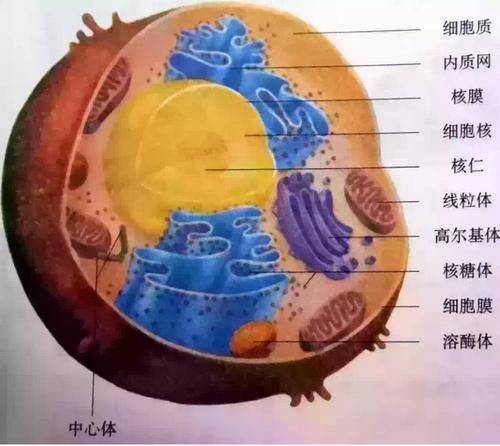
When a fibre cell is imported, it initiates a wonderful unknown procedure to return the cell to its childhood about 3. 5 days after fertilization. This is the ideal system for exploring the mechanisms for the transformation of the cell's fate. Scientists around the world have been studying this wonderful process for the past 10 years, but there is no abstract universal logic or pattern in deep institutional research。
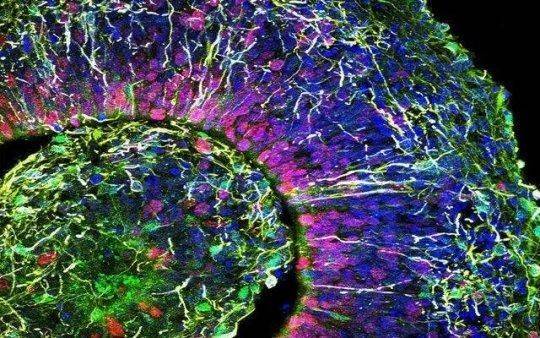
“imaginely, dna is like an encyclopedia, where every cell carries all the information that can form an individual, but at some point only a part of the book can be opened. Our job is to record the way the book is opened from the body cell to the multi-energy stem cell, and to study what "hand" is going through." the first author of the paper, dr. Lee dong wei, said. By using atac-seq technology to read the “two-dimensional code” of the dye state, they find that the chromosomal structure in the multi-energy acquisition and cell fate transformation has a pattern of dual variations from open to closed (oc) and closed to open (co) and that the “two-dimensional code” has been changing throughout the stem cell induction process。
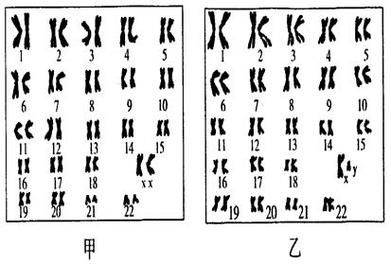
By detecting the dynamic patterns of dye switches during the transformation of the fate of the cells, the research team found that the cytology “returning to childhood” process was accompanied by a large-scale repainting of the dye structure, beginning with the closure of the cytology specificity of the body and gradually opening up the multi-energy-related position; in the process of the chromosomal reprogramming, sap30 was found to be activated as an important factor in the reprogramming process, which would discourage the critical transfer factor of the cell by promoting deaceleration, thereby contributing to the shift of the fate of the cell to a multi-energy orientation. This part of the study revealed, for the first time, patterns of changes in the chromosomal structure during the reprogramming of the body cells and provided a new reference theoretical model for understanding the reprogramming of the cells and the fate of other related cells. (reporter yeh qing, correspondent huang jin)



