


Intelligence is often recognized as a key driver of success and is seen to be particularly relevant in the areas of science, innovation and technology. Many of us have endless thoughts about the minds of some famous men. In fact, however, in some of the greatest achievements in the history of humanity, the intellectual excellence is not the primary cause behind them, and many of these achievements depend primarily on the qualities of creativity, imagination, curiosity and common sense。
Many of these qualities can be incorporated into the “cognitive flexibility” of scientists. The so-called cognitive flexibility refers to a skill that allows us to switch between different concepts and adjust behaviour in new and changing environments in order to achieve our goals。

Essentially, it explores how to learn and how to learn flexibly in different ways, including changing strategies to obtain the best decisions. In a recent study, a team of researchers at cambridge university sought to identify how best to increase cognitive flexibility。
Before exploring how to increase cognitive flexibility, let us first have a deeper understanding of the importance of cognitive flexibility。
Cognitive flexibility provides us with the ability to see that what is being done may not bring final success, and thus drive us to make the right changes. To give a simple example, what would you do if you used to go on the same route to work, but suddenly there was a road construction on that route? Some would stick to the original plan, even if eventually it would be late, while the flexible would be better equipped to adapt to emergencies and find solutions。
Cognitive flexibility can also influence the way people respond to quarantine. Segregation presents us with many new challenges, but some are better equipped than others to adapt to everyday life when isolated from home. Those who are able to respond flexibly to isolation may, from time to time, change their habits and try to find better and more diverse ways to live, while others struggle, with little flexibility or change, and eventually become more rigid。

Creativity is the ability to come up with new ideas, create new links between ideas, and generate new inventions. Flexible thinking is a top priority for creativity. Moreover, it plays a supporting role in academic work and in working skills such as problem-solving. In other words, it is largely intellectually irrelevant. For example, many visual artists may be intellectual but highly creative, producing many outstanding works。
Contrary to what many believe, creativity is also important in science and innovation. Researchers at cambridge university, for example, found that entrepreneurs who created too many companies had greater cognitive flexibility than managers of similar age and intelligence。
So, to some extent, can greater cognitive flexibility make people smarter, which is not always reflected in intelligence tests
Scientists know that it leads to better “cold cognition”. Cold perception refers to non-emotional “reasonable” thinking. For example, it enables children to read better and to perform better in school; it also helps to prevent prejudices, as people with flexible cognitive skills are better aware of their potential deficiencies and can find ways to overcome them。
Moreover, the flexibility of people in dealing with negative events in life and the quality of life of people in old age are also related to cognitive flexibility. It also benefits from emotional and social awareness, and studies have shown that cognitive flexibility is strongly linked to the ability to understand the emotions, ideas and intentions of others。
Opposing cognitive flexibility is cognitive rigidity, which exists in many mental health disorders, including stress disorder, severe depression and autism spectrum disorders. Neural imaging studies show that cognitive flexibility depends on a network of regions of the brain's forehead and tattoos. Zone is related to high-level cognitive processes, such as decision-making and problem-solving; zone is related to rewards and motivations. Researchers have developed methods for objectively assessing cognitive flexibility, such as the wisconsin card classification test。
One encouraging news is that cognitive flexibility seems to be available through training, for example through cognitive behaviour therapy. Cognitive behaviour therapy is an evidence-based psychotherapy that helps people change their thinking and behaviour patterns. For example, when a person suffering from depression does not contact her friends for a week, ta is likely to blame his friends for not liking ta anymore; the aim of cognitive behaviour therapy is to re-establish their thinking and give ta more flexibility to think about other possibilities, such as that friends may be busy or otherwise unable to reach them。
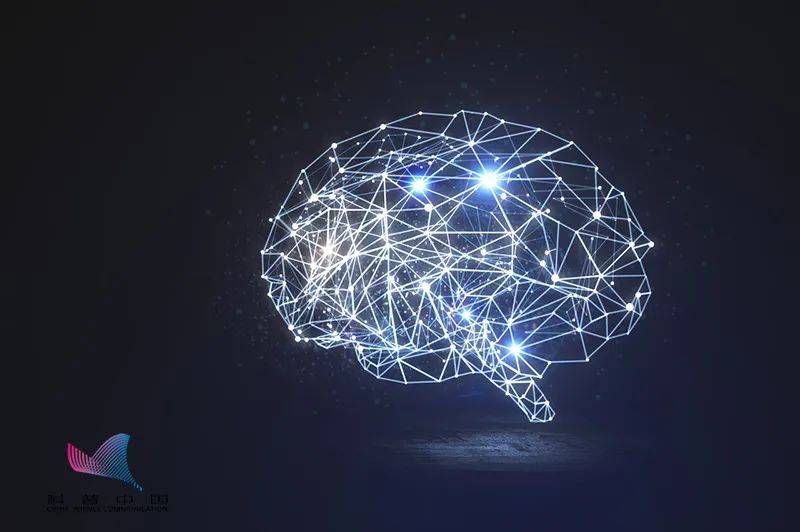
Another possible direction of development is structural learning, which is the ability to extract structural information from complex environments and to interpret sensory flows that are initially incomprehensible. This type of learning, which is similar to cognitive flexibility, relates to areas of the brain's forehead and tattoos. Currently, researchers at cambridge university are working with researchers at nanyang polytechnic university on a “real world” experiment to determine whether structural learning really improves cognitive flexibility。
The benefits of training cognitive flexibility have been demonstrated in many studies, and this has been demonstrated in observations of autistic children. As a result of cognitive flexibility training, autistic children have not only improved their performance in cognitive tasks, but have also improved their socialization and communication. In addition, cognitive flexibility training has proved useful for children and older persons without autism。
Cognitive flexibility is essential for the prosperity of society. It helps us to maximize our individual potential, generating innovative ideas and creative inventions. Ultimately, those qualities will be needed to address the major challenges facing the world today, such as global warming, conservation of the natural world, sustainable energy and food security。
Source: rationale (id: principia 1687)
# creative team:
Prepared by:
Barbara jacquelyn sahakian (professor of clinical psychology, cambridge university)
Christelle langley
Victoria leong (associate lecturer in psychology, cambridge university)
Translation:
Ame



