3g, all known as 3rd general, means third generation digital communications。
The first-generation simulator cell (1g) was introduced in 1995 to make only voice calls
The emergence of the second generation of gsm, tdma and other digital mobile phones (2gs) between 1996 and 1997 has increased the ability to receive data, such as e-mail or web pages
The 3g was not born in 2009, it was a product of the last century, but it had already produced 4gs abroad as early as 2007, and china had successfully developed 4gs in 2008, the speed of which could be two gs per second, which would be equivalent to just one second for the next film. In a japanese-korean film such as " my wild girl " , late in the 1990s, the leading woman used a video phone that allowed her to be seen, one of the important applications of 3g technology. The use of 3gs in japan and korea was at the end of the last century. Some regions abroad are now piloting 3. 5g or even 4g networks。
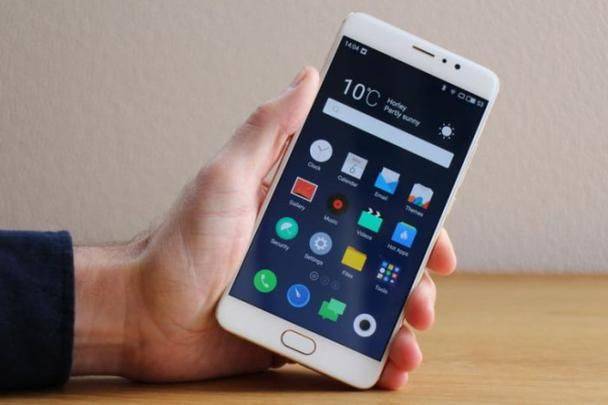
The main difference between the third generation (3g) and the first generation in 2009 (hereinafter misleading) is the speed of transmission of sound and data, which can better achieve seamless roaming across the globe and deal with a variety of media formats, such as images, music and video streams, providing a wide range of information services, including web browsing, teleconferences and e-commerce, while also considering good compatibility with the existing second generation systems. To provide this service, the wireless network must be able to support different data transmission speeds, i. E. At least 2 mbps (mbbit/sec), 384 kbps (kbbit/sec) and 144 kbps, respectively, in indoor, outdoor and motor environments. (this value is based on changes in the network environment。
The 3g standard, the international telecommunication union (itu), currently identifies four global 3g criteria: wcdma, cdma 2000 and td-scdma and wimax。
In may 2000, the international telecommunication union (itu) established the standards for the w-cdma, cdma 2000, td-scdma and wimax four main mainstream wireless interfaces, which are included in the 3g technical guidance paper, international mobile communications plan 2000 (imt-2000). The cdma is the acronym of the code division multiaccess, which is the technical basis for the third generation of mobile communication systems. The primary disadvantage of the first generation of mobile communication systems, which use a analogue mode of multi-site (fdma) mode, is the low frequency spectrum utilization rate and the interference of the message business. While the second generation of mobile communication systems has been able to achieve significant improvements in the system, mainly through the use of the time multi-site digital modifier (tdma), increased system capacity and the use of independent channel transmission orders, tdma still has limited system capacity and limited off-site switching performance. The cdma system shows great potential for development with its simple frequency planning, high system capacity, high frequency reuse factor, high multi-variant capability, good communication quality, soft capacity, soft switching, etc. Several criteria for 3g are described below:
(1) w-cdma
Also known as wcdma, known as wideband cdma, also known as cdma direct spread, which is meant to be a multi-accessible wide-frequency fraction code based on the 3g technical norm developed by the gsm network, and the european-proposed broadband cdma technology, which is largely in line with that proposed by japan, and is now being further integrated. W-cdma supporters are mainly european producers based on gsm systems, and japanese companies are more or less involved, including the european-american manufacturers of ericsson, alcatel, nokia, lange, north electric, and japanese ntt, fujito, sharp, etc. The standard proposes an evolutionary strategy for gsm (2g)-grps-edge-wcdma (3g). The system could be located on the existing gsm network and could be easily transitioned for system providers, but the acceptance of the new technology in asia, where gsm is fairly widespread, is expected to be quite high. W-cdma thus has a natural market advantage。
(2) cdma 2000
Cdma2000 is a wide-banded cdma technology, also known as cdma multi-carrier, which is led by the united states corporation for north america, with the participation of motorola, lucent, and later the korea tristar, which is now the leader of the standard. The system is derived from the narrow-frequency cdmaone digital standard and can be upgraded directly from the original cdmaone structure to 3g at low cost. However, as only japan, korea and north america are currently using cdma, there are fewer supporters of cdma 2000 than w-cdma. But the cdma 2000 technology is the fastest of the current standards, and many of the 3g phones are already in the first place. The criteria propose an evolutionary strategy from cdma is95 (2g)-cdma20001x-cdma20003x (3g). Cdma20001x is known as 2. 5 generations of mobile communication technology. The main difference between the cdma 20003x and the cdma 20001x is the application of multi-road wave technology, which increases bandwidth through the use of three-carrier waves. China telecommunications is now transitioning to 3g using this programme and has completed the cdma is95 network。
(3) td-scdma
It's all called time division-synchroNous cdma, a standard developed by mainland china alone, was presented to itu on 29 june 1999 by the institute of telecommunications science and technology of the former ministry of post and telecommunications of china. The standard incorporates today's international leading technologies such as smart wireless, synchronized cdma and software wireless, with unique advantages in spectrum utilization, flexibility for business support, frequency flexibility and cost. In addition, due to the large market in china, the standard has been valued by major telecommunications equipment manufacturers, more than half of which globally have announced their support for the td-scdma standard. The standard proposes a direct transition to 3g, without an intermediate of 2. 5 generations, and is very applicable to the gsm upgrade to 3g。
(4) wimax
Wimax's full name is worldwide access for microwave access, also known as the 802-16 wireless urban area network, and is another broadband wireless connection programme that provides “last mile” for business and household users. Combining this technology with microwave equipment that needs to be authorized or exempted will expand the broadband wireless market and improve the awareness of businesses and service providers, given the low cost. On 19 october 2007, at the itu wimax plenary meeting in geneva, which was adopted by a majority vote, wimax was formally approved as the fourth global 3g standard after wcdma, cdma 2000 and td-scdma。