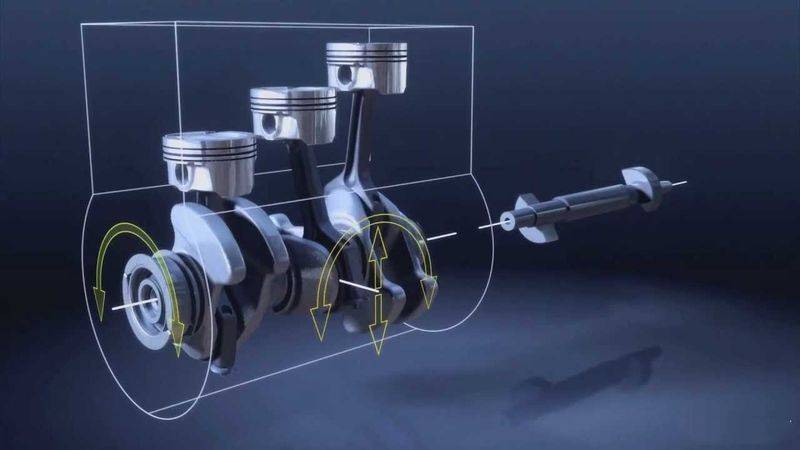
We welcome the interest shown in the old homeless, the good faith with which we share our knowledge of the car and our dedication to solving the problem。

We talked about how the engine works. It's in a gas tank loop. In fact, single-cylinder engines are rarely used in cars。
This is mainly due to the fact that single-cylinder engines work with power only in the process, while the other three: gas, compression and exhaust, are power-consuming. The engine is working faster, slowing down in the other three. This would result in the engine working at a short and slow pace, which would be extremely unstable. For this to happen, a very high-quality flying wheel must be deployed to store energy to power the infusion, compression and exhaust process, otherwise the engine cannot run. In addition, the ability of single-cylinder engines to overcome changes in external loads is also very poor, with a slight change in external loads resulting in the speed of engines, suffocation of vehicles, fire outages, etc。
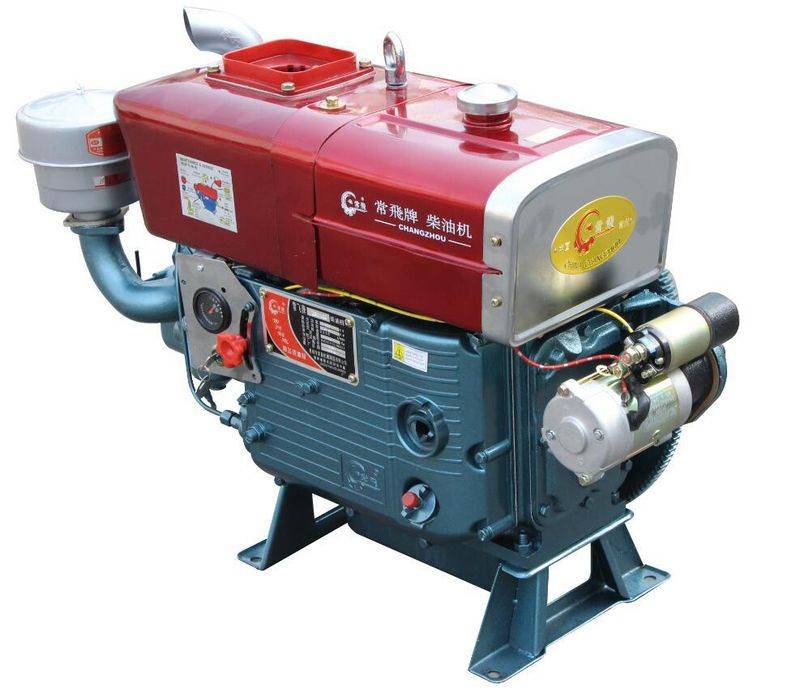
So, single-cylinder engines are almost non-existent in cars, which use multiple-cylinder engines. It's a combination of several of the same single jars in a certain form on one body and shares a curved axis of external output power. The number of engine cylinders commonly used on modern cars is 3, 4, 5, 6, 8, 10, 12, of which 4 or 6 are the most common. In recent years, due to energy-saving emission reduction policies, the three-cylinder machines have begun to rise, not excluding the use of double-cylinder engines on cars in the future (fiat 126p was a double-cylinder engine in the 1980s). The structure, order of work, etc. Of multi-cylinder engines will be read in more detail in our subsequent articles。
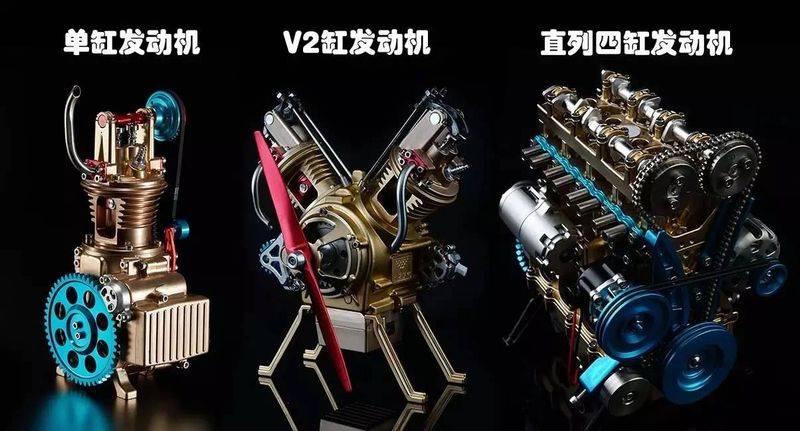
The greatest difference between a multi-cylinder engine and a single-cylinder engine is that a multi-cylinder engine operates in a work cycle with multiple gas cylinder intervals. A single-cylinder engine rotates 720° in a work cycle, but does only one job and the engine is not working smoothly, while a multiple-cylinder engine rotates 720° in a work cycle, but it can do multiple work. For example, an ordinary four-cylinder engine, with a cylinder working every 180-degree turn in one cycle, is accelerated twice every turn of the axis, thus making it more smoother. In addition, since the operation of the cylinders can provide the power for the preparation of the run-off of other cylinders, the number of ships used to store energy can be reduced。
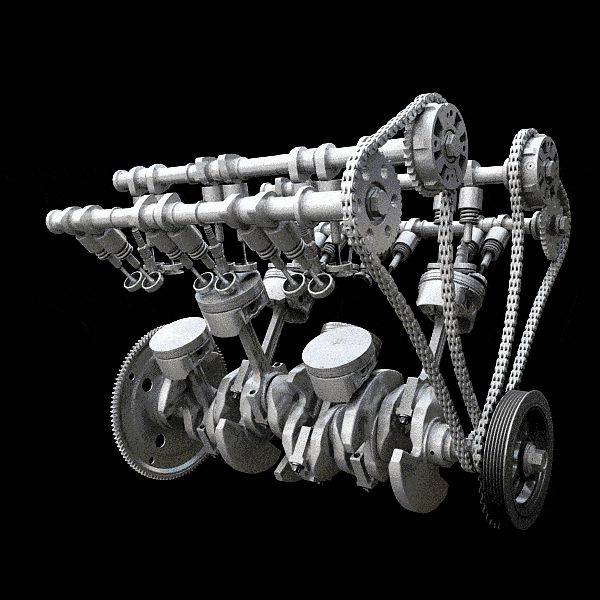
So, multi-cylinder engines are smoother to run, and the more they are, the more smooth they are to operate. For example, when a six-bar engine turns 120 degrees, there's an air tank to do it, and at this point the last tank to do it is not over! Because of duplication of effort, there will be more power available for auxiliary impulses, and the engine will be smoother, the more numerous it will be, the more it will be, the more it will be. It's like we turn the wheel. Can you imagine the difference between one, two, three, four, six, eight
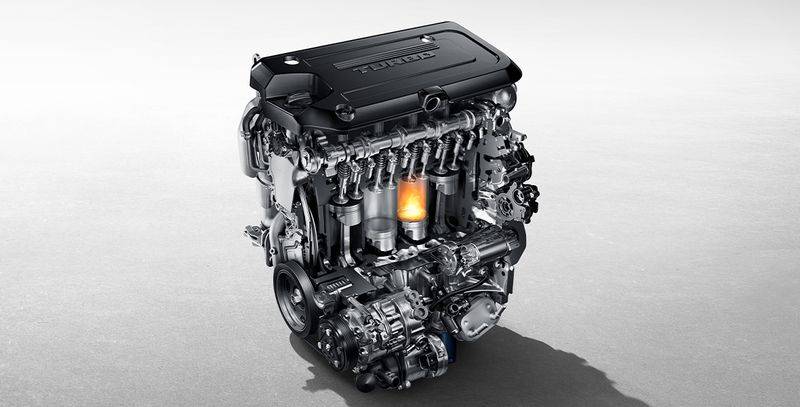
And now there's an ever-widening three-cylinder machine, and the biggest disease you've ever had is shaking. It's shaking because each of the axes has a cylinder working at 240°, while the contour angle of each of the four-stroke engines corresponds to 180°, so there's a 60° time frame for the functional window, in which the contour speed is falling and the engine is not working smoothly. However, various measures are used to reduce this vibration, such as the installation of balancing axes inside engines and the use of hydraulic foot mats。