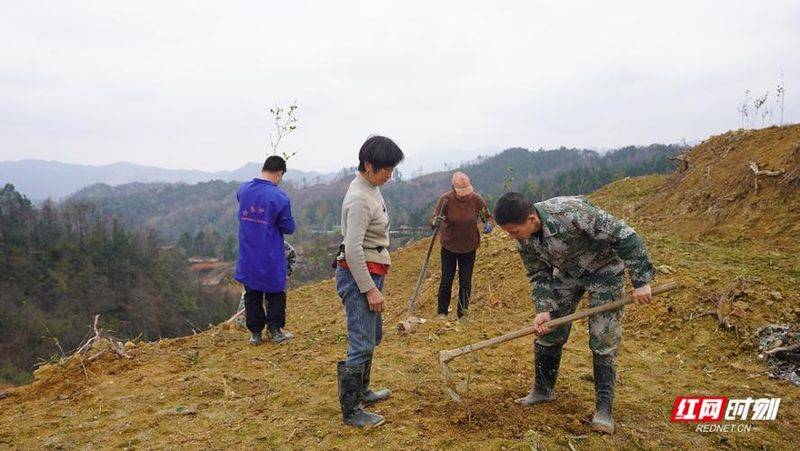
Every morning, the fog has not spread out, and the planting base in the village of dragon field in hanbridge town, in hunan province, is already hot. The local population is busy carrying and planting oil and tea seedlings to sow green hope for rural renewal。
At the planting sites, the local villagers worked with technicians on the division of labour, raising seedlings, raising earth, and compacting, and each process was orderly. “the planned 800-acre farm base at the base, which is now more than 90 per cent complete, has completed the planting of 400-acres, with between 28 and 30 people working on the ground per day and is planned to be fully completed by the end of april”
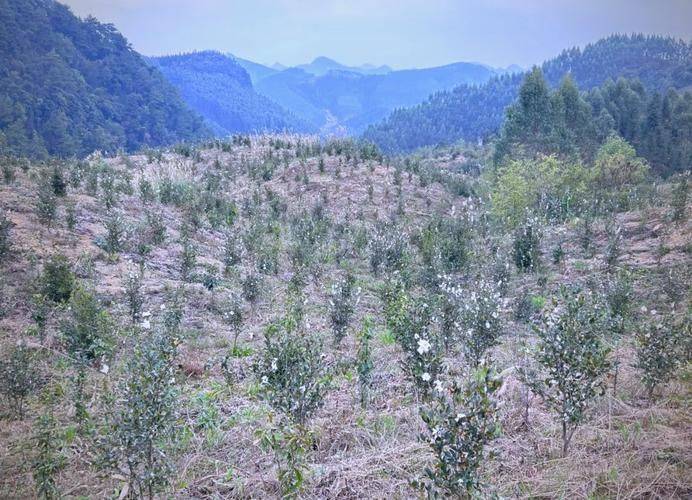
According to the chief engineer of the forestry department of china county, tan fong hong: “in 2025, china county was successfully integrated into the city central finance oil and tea industry development model award project, which covers 11 townships and covers a total area of over 5510 acres. To date, the project has completed 90 per cent of the site and 70 per cent of the plant has been installed, with full completion expected by the end of april.”
The project is extensive and covers infrastructure development in the areas of new oil and tea construction, low-yielding forest rehabilitation, larvae care, complex operations and water fertilizer integration. It is located in 25 villages in 11 townships (towns) such as hanbridge, jilong and xianyang. Of these, 2405. 2 acres of high-quality, high-efficiency and inorganic oil plantations were newly built, 2713. 6 acres of low-yielding forests were rehabilitated and 395 acres of juvenile pipelines were implemented. At the same time, 800 acres of oil and tea forest complexes have been developed, with the construction of 3250 acres of water fertilizer integration facilities, 7698 metres of workway and 5 signposts. The construction of the project is guided by good breeding practices, with a focus on the introduction of new high-yielding, high-quality oil and tea varieties in hunan province, such as the zhuhu, hua zhuang and huolin 210。
“these new varieties are well managed, producing more than 3,000 pounds of fruit per acre and yielding more than $4,000 per acre at current market prices. At the same time, using scientific planting techniques, we have managed to grow 56 plants per acre, which have been significantly optimized compared to traditional density and have effectively improved the efficiency of land use and output.”
The project has innovatively linked the interests of the “base + farmer” and has led to diversified revenue generation for villagers. The villagers of lungamura, xiao jinyu, are happy to say: “the base is built and planted free of charge. We don't have to work, and when the tea is made out of trees, we get a steady gain.” it was described that the project owner had adopted a multi-business model: three years after the base management, the fruits of the next five years would be fully owned by the villagers; and the forest land lease model, whereby the forest owners would pay the rent for the forest land, allowing the villagers to earn a double income of “rent + work”。
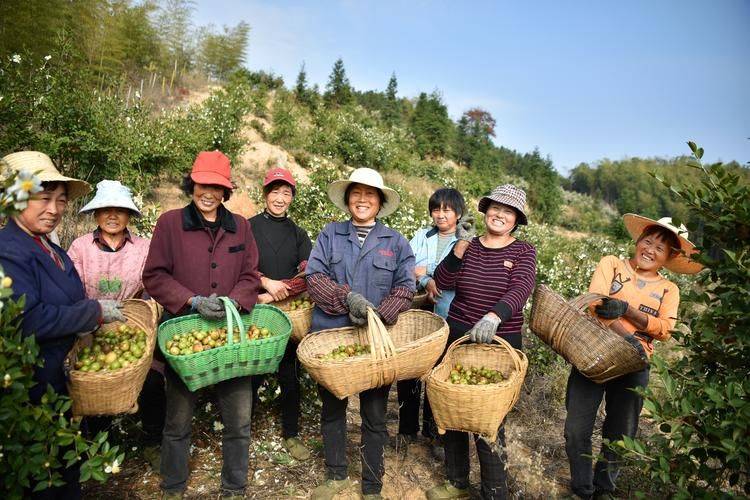
At this time, the oil and tea industry in china county is developing well and the implementation of the central fiscal award supplement is becoming a powerful engine for the revitalization of rural industries. When fully implemented, the project will not only effectively increase the local population's income from labour, but will continue to generate substantial economic gains, making the mountains truly “green banks” and making the oil trees “happiness trees” for the people to reap wealth. (chang)