In the course of the use of industrial electrical equipment, we will inevitably have access to frequency transformers (hereinafter - vfd), but the failure of vfd for industrial electrical and electronic equipment is difficult to avoid. If there is a problem with vfd, it may result in other equipment not functioning properly. And if you don't handle it in time, you can easily cause secondary damage to the equipment. We all know the importance of vfd here, so today we highlight some of the common tests used in the maintenance of vfd, which we hope will be of effective help。
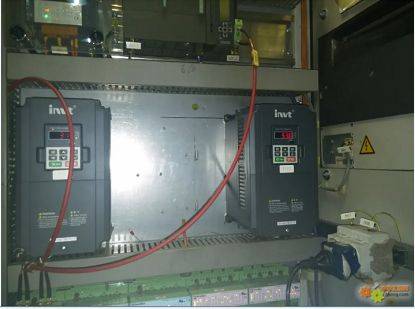
1. Barrier test methods. Resistance testing is a common measurement method. Usually means a method for measuring the normality of electrical machines, circuits, contact points, etc. Insulation between and over the earth is measured by a mass-use meter, or by a mega-eat meter to match the use of nominal values and whether they are connected or disconnected. When measuring, attention is paid to the accuracy of the range of measurements and the proofreading forms used. When commonly measured by resistance, the usual practice is to select a lower level. Attention is also being paid to whether circuits are being measured and electrical measurements are prohibited。
2. Pressure test method. The voltage test method is a method of measuring the voltage value on a circuit using the voltage level corresponding to the mass table. Usually, the power and load voltage are measured sometimes, and open circuit voltage is measured sometimes to determine whether the circuit is normal. When measuring, care is taken about the slotting of the instrument and the appropriate scale is selected. When measuring unknown communication or open circuit voltage, the maximum voltage is usually selected to ensure that the instrument does not operate at high voltage and low-volume scales to avoid damage to the instrument. When measuring dc, be aware of the positive-negative polarity。
3. Current test methods. The current test method is usually used to determine the cause of the failure by measuring whether the current in the line meets normal values. For weak circuits, current gauges or kiosks are frequently associated to measure in circuits; plier current tables are often used to detect high voltage circuits。
Instrument testing. Various parameters, such as the observation of waveforms and parameter variations with oscilloscopes, are measured using various instrument instruments to analyse the cause of failure and are used mostly for weak electrical circuits。
5. Regular inspection methods. People-dependent sensory organs (e. G. Some of the vfd equipment has the smell of burning, lighting, electrical discharge, etc.). ) and uses simple instruments (e. G. Universal tables) to identify the cause of the failure. This method is the most commonly used and first used in maintenance。
6. Replacement of original parts. That is, when it is suspected that a device or circuit board is malfunctioning, but it is not possible to identify an alternative, the test can be replaced to see if the failure has disappeared and is back to normal。
7. Direct inspection. Information about the cause of the failure or the determination of the location of the failure on the basis of experience may be obtained directly from the suspected failure point。
Progressive exclusion. In the event of short-circuit failure, part of the circuit can be gradually cut to determine the extent and point of failure。
9. Method of adjusting the parameters. In some cases, there was a problem, and the metaware in the line was not necessarily bad, and the line contact was good. The system parameters may change or the system values cannot be automatically corrected due to external factors, which renders the system not working properly, simply because of inappropriate physical volume adjustments or longer operating times. At this point, adjustments should be made to the specific equipment。
10. Rationale analysis. Based on the structure of the control system, analysis is conducted to determine the point of failure and the cause of the failure by tracking the signals associated with the failure. The use of this method requires maintenance staff to have a clear understanding of the working principles of the entire system and the modular circuits。
Comparison, analysis, judgement. It is based on the rationale of the system, the operational procedures of the control chain and the logic of the relationship between them, by comparing, analysing and judging in conjunction with the phenomenon of failure, reducing the measurement and inspection chain and quickly judging the extent of the failure。
The above describes some of the tests that are common in vfd maintenance. The above methodology is not only designed to test a malfunction, but can be applied flexibly on a case-by-case basis。