Automobile four systems (iii) brake system
Cars may have to slow down or park while travelling, and only the release of the accelerator pedals may sometimes not fully meet the requirements for a slowdown, so the brake system is available at this time. The previous articles describe the structure of the motor system and the transition system, as well as the working principles, and i will summarize below the learning perceptions of the motor system。
Automobile braking systems are defined primarily as a series of special devices that exert a certain amount of force on certain parts of the vehicle (mainly wheels) to prevent movement or movement trends of the vehicle, including, inter alia, brake pedals, vacuum boosters, brakes, brakes, brakes, etc。
Of course, the car brake system includes car brakes and stationary brakes. This is mainly about car brakes. In simple terms, the brake process of the car brake system is the foot-to-pedal pressure, which is transmitted to create friction in the brake work, thereby converting the motor energy of the car to thermal energy for the purpose of the brake。
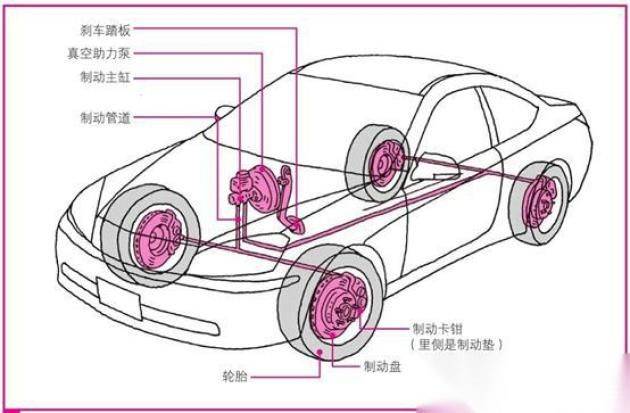
The brake systems are all of the following four basic components:
One power supply unit, two control units, three transmission units, four brakes
(b) energy supply devices: the so-called energy supply devices are primarily those that supply, regulate the energy required for brakes and improve the condition of the transmission medium. The part that generates brake energy is called brake energy. Like foot brake pedals, brake fluids。
Control devices: parts that produce brake action and control brake effects. For example, brake pedals, brake valves。
(b) a transmission device: transfer the brake energy to the parts of the brake and the tube. For example, brake the main tank, brake the cylinder to connect the pipe。
Brakes: parts that produce the power to stop motor movements or movements。
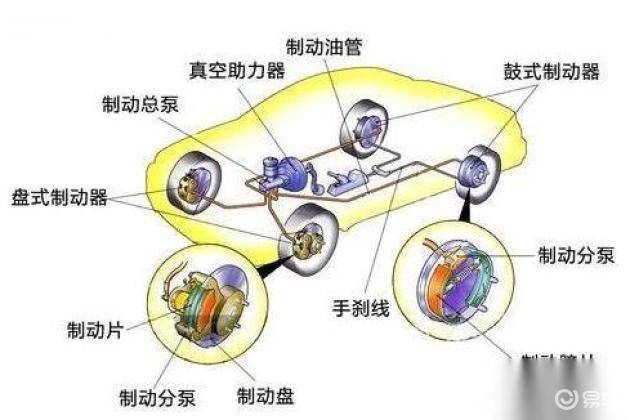
The following is a brief analysis of the basic structure and rationale of the main components involved in each component。
Vacuum booster and brake main tank
Vacuum boosters use engine vacuums to increase the strength of foot pressure on the brake main tank (the total brake pump), which is a metal tank containing smart valves and film. A pole runs through the centre of the tank, with two separate links to the brake main tank piston and the brake pedal pole。
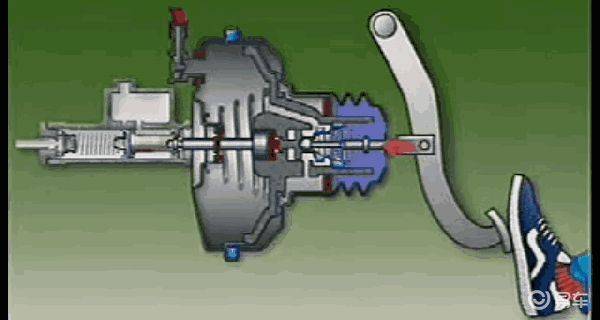
In vehicles equipped with vacuum boosters, the brake pedal pushes a pole that passes through the booster into the brake main tank and drives the main tank piston. The engine forms a partial vacuum on both sides of the film in the vacuum booster. When stepping down the brake pedals, the pole opens a gas door and puts the air into the side of the membrane of the booster while sealing the other side of the vacuum. This increases pressure on the side of the film, thus helping to push the poles and, in turn, the pistons in the main tank. When the brake pedal is released, the valves will isolate the external air while re-opening the vacuum valve. This will restore the vacuum on both sides of the film, thus restoring everything。
Brake
Common brakes consist mainly of disk and drum brakes. It works on the conversion of motor energy from cars to thermal energy releases by friction。
Drum brake
Drum brakes include, inter alia, brake cylinders, brake hoofs, brake drums, friction blades, return springs, etc. The effect of brakes is mainly caused by frictions on the inside side of the brake drums, which are applied mainly through hydraulic pressure devices, which are friction blades and wheeled in their age。
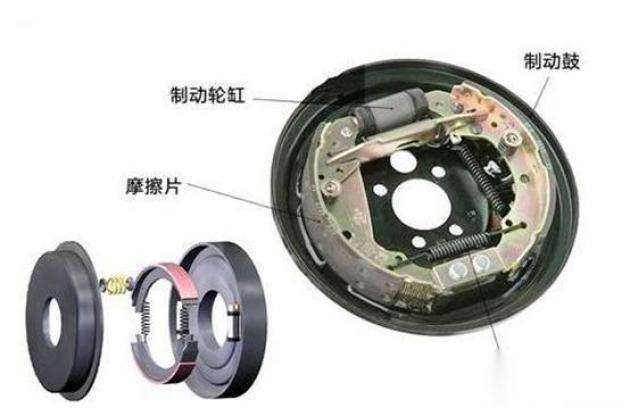
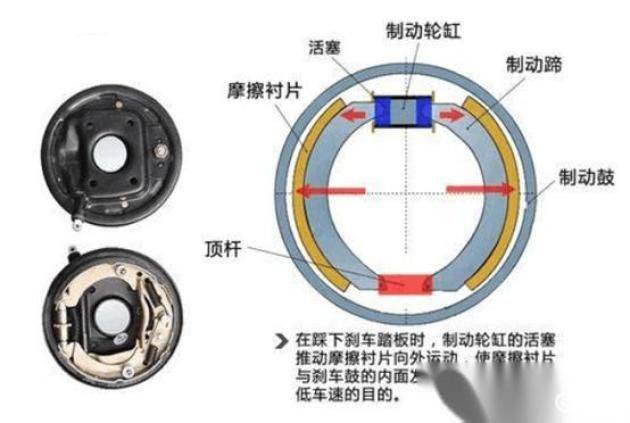
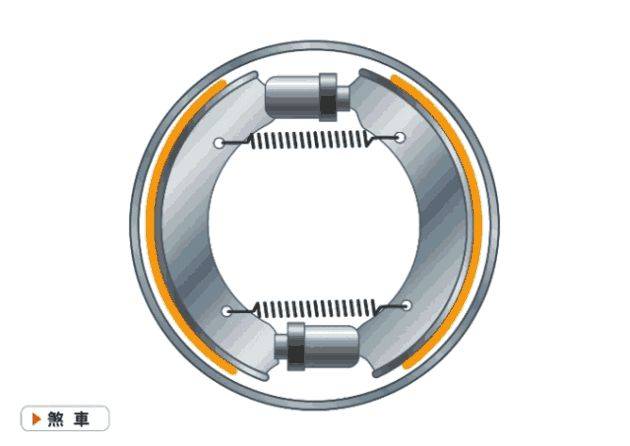
Owing to the relatively closed working environment of the drum brakes, the heat generated during the brake process is not easily dispersible, and there is a significant heat effect on the brake if the brake is too frequent. However, drum brakes can provide higher power and are more widely used in large trucks。
Disk brake
Disk brakes consist mainly of brake plates, brake clamps, friction plates, subpumps, pipelines, etc. The disc brakeer exerts pressure on the brake clamp through the hydraulic system, which causes friction between the brake friction tablet and the brake disc that moves with the wheel, thereby achieving the purpose of the brake。
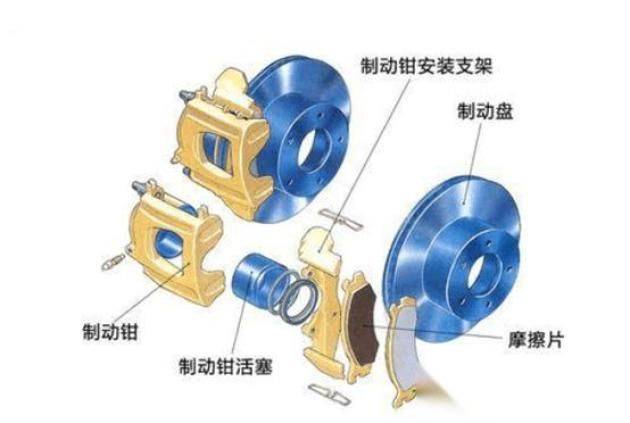
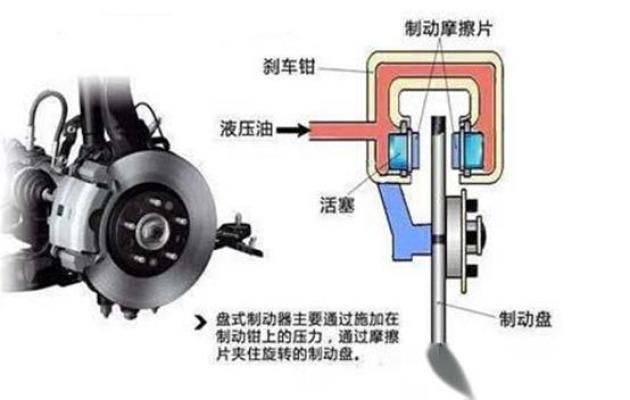
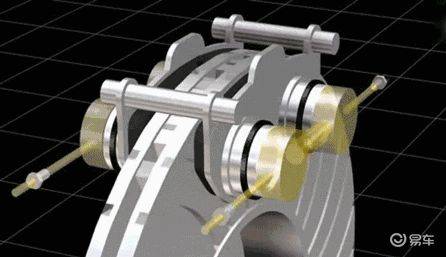
Unlike drum brakes, disc brakes spread better and are now widely used in small cars. As car technology continues to develop, so does the disc brakes, which create many small holes on the brakes, which further increase the heat dispersion capacity on the basis of the solid discs. There are, of course, more efficient and expensive ceramic brakes in high-performance or luxury vehicles。
These are brief descriptions of the structure and rationale of the car brake system, and the video below is an animated workbook of the car brake system, which can be studied with interest. (english has been translated into chinese
Of course, as technology continues to improve and as automobile technology continues to develop, so does the brake system. Abs, bas, eba, ebd, esp, etc. Have emerged as auxiliary systems on the cars, all of which provide some protection for their brake safety, and now abs is the standard for cars。
The so-called abs is the death-resistant brake system (anti-locked braking system), which consists mainly of components such as ecu control units, wheel speed sensors, brake pressure control devices and brake control circuits. In the braking process, it is mainly smooth and lock-proof。
The esp is the electroThe control unit uses the signal of a control unit to determine the operational state of a vehicle and, in turn, to give a control instruction, which is an advanced form of vehicle sliding。
There are also power auxiliary systems (bas), electronic power allocation (ebd) and electronic control brake aids (eba) which are all supportive systems in the braking process。
This is what i have learned from my own studies, and if there is an error, please be critical。