Recently, the most frequently asked questions, whether they were personal or commental, never turned around the screen: “my eyes are sensitive, choose oled or lc?” “playing a cell phone before bed, which screen doesn't sleep?” “why is it a flagship plane, some say oled eye protection, others say lcd is more comfortable?”
Today, we are not playing games, we are not exaggerating, but we are making clear, using the most glamorous words, the latest machine-type empirical data from 2025 to 2026, the authoritative body-testing reports, the eye protections and sleep effects of oled and lcd. Whether you're a student party, a late-night worker, a flash-sensitized crowd, or an ordinary person with a budget of 2000-5,000 dollars who wants to pick an eye-sighting machine, read this, and no longer have to be fooled by merchants, you can choose a screen that suits you。
Put the core conclusion ahead: there is no absolute winner for the eye, and the lcd wins with no frequency, no time; old wins with low blue light, dark light friendly, no sleep. Different scenes, different groups of people, suitable screens are completely different, and below we go from theory to reality, one step at a time。
First, understand the underlying logic: two screen-luminescence principles that determine the gap between eyes
Many know only that “oled is well coloured and lcds are cheap”, but they do not know that luminous principles are the core cause of eye and sleep effects. We don't use professional terminology, we say it in simple words, and we understand the gap at once。
(i) lcd screen: lighted by back light, "wind brother"
Lcd full name lcd screen, with a simple structure: bottom backlight + middle lcd + upper colour filter. At work, the backlight is always lit, and light is sent out, and the liquid crystal layer is able to control how much light is passed by deflection, and eventually the picture is created。
In short, the lcd is “the light of the back is always bright and the light is slowly perforating”, and the brightness adjusts by changing the backlight power, using dc for the whole journey — without flashing, the light is soft and even, which is its natural eye protection advantage。
But its hard wound is also obvious: backlights continue to eject high energy. The blue light (400-455nm) is extremely penetrating and can reach the retina, and the lcd cannot control pixels alone, and the dark-coloured picture will leak and the total blue light will not drop。
(ii) oled screen: pixel self-luminous “small young”
Oled is full of organic light diodes, the largest feature being that each pixel does its own light without a backlight. Bright pixels glow, black pixels don't shine directly, pure black images are pure, and contrasts are high。
Its advantages are significant: blue light radiation is 70-83 per cent lower than lcd, because spontaneous light accurately controls pixels, dark images without light or blue light, the spectrum is closer to natural light, and safe blue light (over 460 nm) is higher。
However, it is not possible to avoid it: old cannot light with dcs (low voltage renders colours distorted), but only with pwm (pulsive width) - it controls brightness by fast switch pixels, and cannot see flashing in the eyes, but retinas can sense it, which is more visible under low brightness。
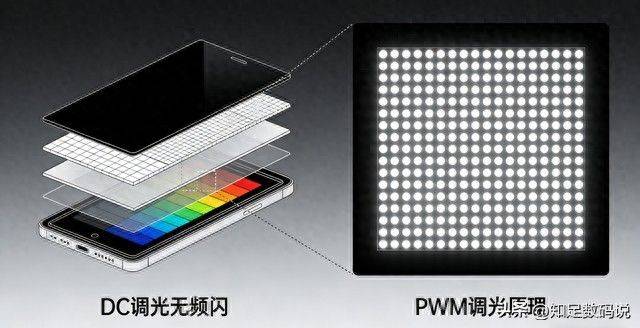
In conclusion, the contradiction between the fact that the lcd has no frequency but high blue light, and the low blue light of the oled, which has a high frequency, corresponds to the core of the dispute between the “worn eye” and “impacting sleep”. We're going to compare these two critical dimensions in detail。
Ii. Eye-protective comparison: flashing, blue light, fatigue. Who's hurter? Yeah
We judge the screen to be intact, looking at three indicators at the core: flash irritation, blue light intensity, long view fatigue. I offer you the truest and most impartial comparison, taking into account the authority report of sethi laboratory, the 2026 mainstream machine-type empirical data。
(i) frequent comparisons: lcd is unflexed and old is lightened (sensitized crowd protection)
First, flash, the primary cause of the dryness, sourness, headaches, and also the central core of the lcd。
- lcd screen: full dc luminous, oscillating depth of 0%, full brightness non-frequency flash, and steady output of light. Whether the brightness is high during the day or 10 per cent low at night, the screen is not flashing, and it is particularly friendly to flash-sensitive people, student parties, and heavy cell phones。
- oled screen: all pwm luminaries, in 2026 the high-end type (e. G., plus 15, iphone 17 pro) was upgraded to 2160 hz-4320 hz hf pwm, which is far better than the earlier 360 hz low frequency. The ieee (institute of electrical and electronic engineers) standard is clear, however, that frequency flashing thorium 3125hz is risk-free and 1250-3125 hz is low risk and less than 1250 hz is vulnerable. This means that even the latest high frequency old is still at high risk of flashing at low brightness and that sensitive populations are vulnerable to fatigue。
Case studies: i found three flash-sensitive fans (normally looking at oled in half an hour) using the ldc type (iqoo z8) and the oled type (oppo reno15 pro), which increased to 20% (commonly used at night) for one hour. As a result: three of the lcds were not discomfortful; two of the olds had dry eyes, slight headaches, and one felt very acidic。
(ii) blue light comparison: oled natural low blue light, lcd high blue light (injury of retina, influence of sleep)
If you look at the blue light, the short-wave blue light not only hurts the retina, but also inhibits the distillation of the melanoid, which directly affects sleep。
- lcd screen: the back optic blue-light peaks are concentrated in the 400-455nm hazard band, and it is not possible to close back-lights, even if black is shown. Actual data: regular lcd cell phone blue light radiation of approximately 120-150 μw/cm2。
- oled screens: spontaneous light-precision, dark pixels are not luminous, blue light radiation is 70-83 per cent lower than lcd and peaks are above 460 nm and above safety bands. Real data: in 2026, the main old mobile phone had only 20-40 μw/cm2 in blue light, which was lower at night。
(iii) long-term fatigue: lcd is not tired and oled is more comfortable
Combined flash and blue light, let's see the fatigue actually used:
- high-light day environment (50-100% brightness): lcd is finished. The drop in the oled frequency at the height of the brightness, combined with the low but high brightness of the blue light, makes the eyes more tired by looking at it for a long time (e. G., brushing short videos, working hours); the lcd light is soft and unflashy, it is not so glamorous that it is suitable for students to take notes from classes and work during the day。
- night dark light environment (10-30% brightness): old is better. At night, the lcd is strong in blue, inhibiting melanone, and the more sober it is; the old is low in blue, the pure black picture is not obscuring, and it is measured for two hours that the melancholic secretion is 8. 1 per cent higher, but it helps sleep; and the lcd is two hours in which it is 2. 7 per cent lower and prone to insomnia and sleep。
Authoritative studies support this: lg shows that the united korean national university experiment involved 40 adults in two groups, watching lcd/oled screens for two hours at night, resulting in an increase in oled group faeces, a decline in lccd group, and direct confirmation that oled is more sleep friendly。
Iii. Recommendations for machine 2025-2026: different population groups, budget, direct copying operations
After all that is said and done, what is most important is the purchase of a mobile phone and what is the lcd/oled type? How do i choose a different budget? I'll recommend it directly by population group and budget by year of end-2026, without water。
I) lcd selection: fit for flash sensitivity, student party, budget 2000 - 3000
The core advantages of the lcd are: non-frequency, insatiable, pro-poor, resistant to fire screens, suitable for people with long cell phones, sensitive eyes, and limited budgets。
1. Iqoo z8 (2026, $2299): 6. 64 " 120 hz lcd direct screen, tokyo east/steam screen, full-scale dc non-frequency flash, tianjin 820 processor, high performance, student party, heavy user preferences, eye-protecting and fluid。
2. Red rice note 11t pro (2025 upgrade, $2099): 6. 6 inches 144hz lcd screen, dc luminous, 8100 skylight, performance balance, continuity, within a budget of $2,000, eye-protective value over ceiling。
3. Glory x60 (2026, $2599): 6. 7 inches 120 hz lcd screen, hfdc luminous, eye-protected, lightweight, suitable for ascendant, day-to-day and light use。
(ii) selection of oled: suitable for night-time, graphic, budget of $3,000-$5,000
Oled's core strengths: low blue light, pure black paint, light and good looking, support for underscreen fingerprints/high brushes, suitable for people who play their cell phones before sleeping, who like to chase dramas, who want to have face value and fluidity。
1. One plus 15 (2026 flagship, $4299): oled screen, 4320 hz ultra-high frequency (uhf) pwm lighting, 1 nit at night shows low brightness full eye protection, ltpo 1-165 hz dynamic refreshing, smoothing and power-saving, night pursuit, reading preference。
2. Oppo reno15 pro (2026, 3499): amoled soft screen, 2160 hz pwm light, hardware-grade low blue light, colour brightness, light body, suitable for girls, day-to-day photo + night use, eye protection and face。
3. China is mate 80 pro (2025, 4999): since the study of oled screens, high frequency pwm luminous + low blue light optimization, dark light displays softness, and the hong mon system is fluid and suitable for an old chinese user, privacy-oriented and eye-friendly population。
(iii) hole avoidance alert: do not buy these screens
Low frequency old (<1250hz): the old money machine type until 2024, which has a severe low brightness, must not be touched by sensitive populations。
2. Poor lcd (no dc luminous): 100-dollar machine, old thousand-dollar machine, blue-lighted high + frequency, visible, bruised, budget low。
3. Blind and wind hfoled: the higher the frequency, the better the screen, the colour, and some hfoled colours affect visual comfort。
Iv. Final purchase proposal + eye-protective techniques: no waste of money, no sleep without eye-protecting
(i) summary of selected purchases, directly in pairs
- frequently sensitive, student party, heavy during the day: selection of lcd (iqoo z8, red rice note 11t pro), non-frequency flash, long-term observation。
- play cell phones before bed, play with the play party, pursue the painting: choose high frequency old (≥2160hz) (+15, oppo reno15 pro), low blue light, no sleep。
- budget 2000: priority lcd, highest value for eye protection。
- budget 3000+: select hfoled, experience and eye care。
(ii) universal eye protection techniques, which apply regardless of screen
1. Eye-protective/dark mode at night: lcd blue light down, oled low frequency flash + blue light double protection。
2. Do not be less than 20% bright: oled has increased its low brightness to 20-40% brightness and is comfortable for eye protection。
3. Do not turn off the light on the mobile phone: the screens of the dark environment are very different from the light of the environment, the burden of the eyes is doubled and at least a small nightlight is opened。
4. A five-minute break of 40 minutes each: far away, blinking, less fatigue than selection screens。
Summary of dry goods
Today we're going to tell you about old and lcd eye protection, sleep effects, four dimensions of light, flash, blue light, and measured fatigue
1. Lcd: non-frequency, long-sighted, suitable for heavy and sensitive people during the day; the disadvantage is blue light, which affects sleep at night。
2. Oled: low blue light, dark light friendly, sleep friendly, night-time, play-tracking party; the disadvantage is that low brightness is flashy and sensitive people are carefully selected。
3. Selection in 2026: lcd selects iqoo z8, red rice note 11t pro; old selects one plus 15, oppo reno15 pro, closed eyes。
Finally, i'd like to ask you: do you normally use old or lcd screens? Have you ever had an eye dry, acidic, insomnia? If you change your phone, do you prefer eye protection or paint? Welcome to the comment section. I'll answer the questions