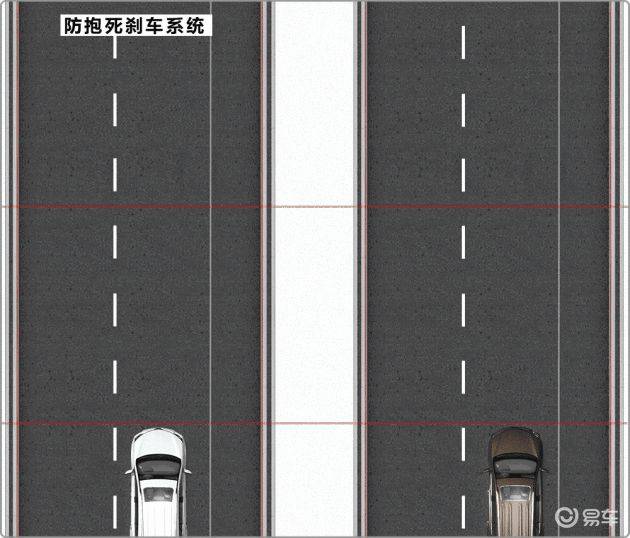
Autobrake death-proof system, known as abs. The effect is to reduce the distance of brakes and control over vehicles during brakes。
First, let's find out how the brakes work。
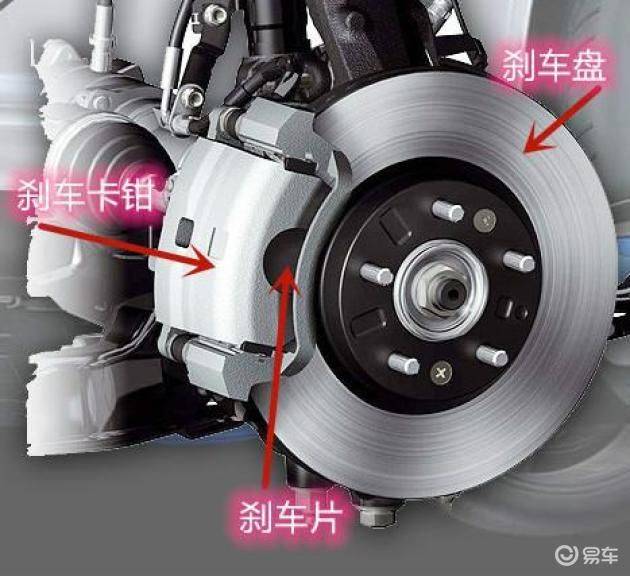
When we press the brakes on a moving vehicle, the brakes squeeze the brakes so that the wheel stops, when the wheel stops, the wheel and the ground slides, and the wheel stops with friction。
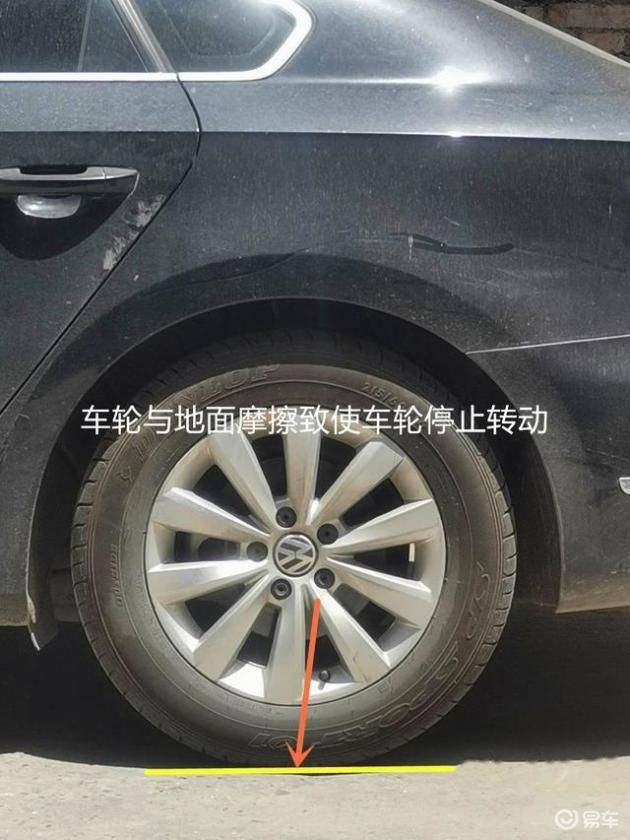
Secondly, let's get down to understand the rationale for the shift: the whole shift is based on rolling wheels. Wheels will always avoid sliding on the ground, which means that wheels and ground points of contact are at zero speed. The wheel has two kinds of movements, it rotates on its axis and it moves in the direction of the vehicle. Since the two wheels produce two speeds, rotation speed and forward speed。
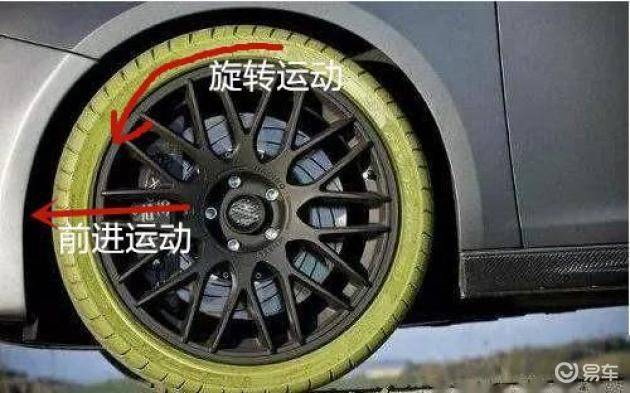
Based on non-sliding conditions, the rolling and moving speed of the wheel surface is zero. Remembering this principle makes it easy to understand the workings of the transition to an institution, and for cars, the four wheels are always rolling. This avoids vehicle slippage. In fact, this simple rolling principle is the reason why cars that turn to the front wheel also turn。
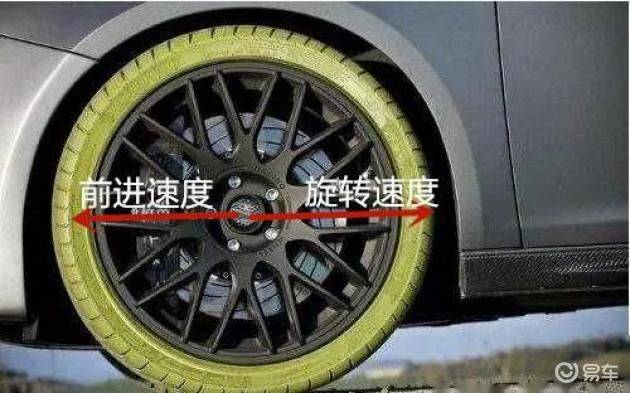
Let's check it out. Assuming the front wheel has turned, but the vehicles are still moving straight ahead。
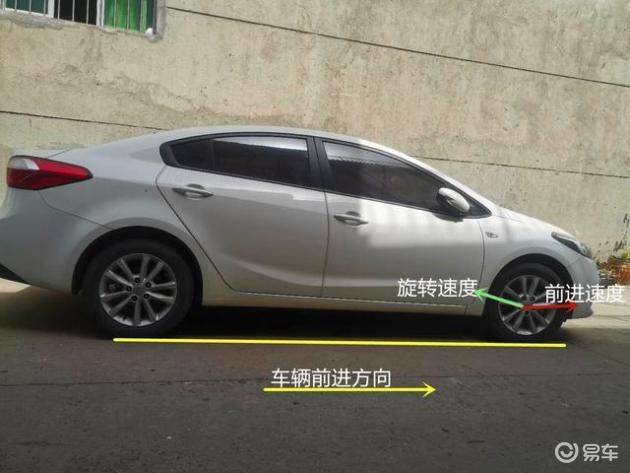
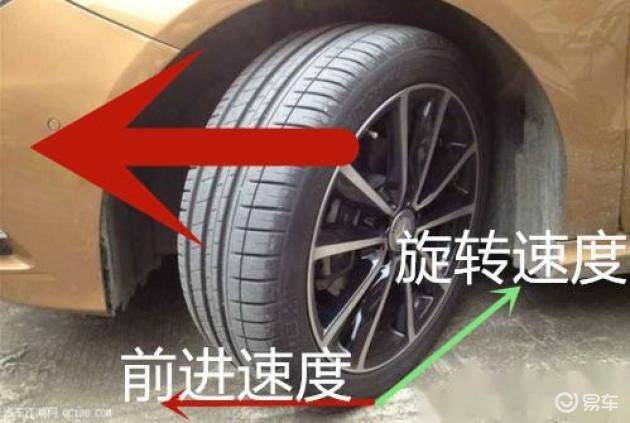
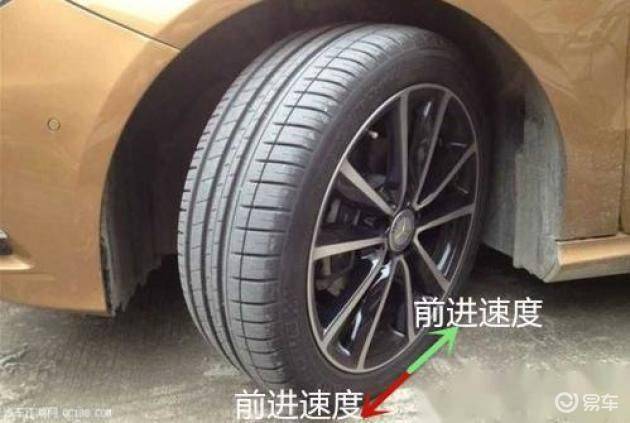
As shown in the figure above, the vehicle remains in a straight line and the red rough arrow is in front of the vehicle. And that's when it turns to an angle. The sum of the speed of progress and the rate of rotation is not zero. This could lead to a slide. In order to avoid slippage, the only way to move forward is to make the turn. The four wheels conform to the rolling principle when the vehicle turns。
We're down here to analyze how the switch system works when the brakes are in place, while the brakes are in parallel. When the brakes were down, the wheel stopped turning, even if the wheel was turning, but it was not. As a result, there was no turning speed, in which case the vehicle did not have to turn, so it became ordinary brakes (no abs). The vehicle does not respond to the driver's turn-in at this time, and the vehicle will continue to operate in a straight line, which may result in an accident. There were no abs vehicles in the past, so experienced drivers kept brakes on the brakes in order to avoid the loss of the ability to operate the vehicles when they were brakeed. The absence of abs would lead to the loss of control over the vehicle when the brakes were made and would lead to another problem when the vehicle was brakeed on inconsistent roads. When the wheels on the right and the left are not aligned, the frictions on the right and the right sides of the wheels are not consistent, and this gives rise to a trajectories, and the vehicles spin out of control.
3. The problem of vehicle instability during brakes, through advanced electronic power distribution. It's a subsystem of the abs system. The problem can be easily solved by the ebd system, which detects vehicle deviations and calculates the relevance of each wheel, and by releasing some of the power of the wheel on the more gripped side, which reduces the friction on the wheel and keeps the twister on control, thus keeping the vehicle under control。
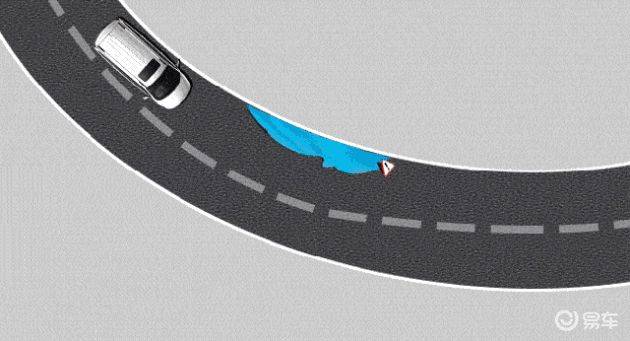
The abs works by avoiding the total locking of the wheel, each of which is equipped with a wheel-speed sensor, and when the wheel-speed sensor detects that the wheel is about to die, the control unit gives the wheel a intermittent turn of brake time. There's a turn, and the wheel has a rolling speed that allows the shift to resume and allows the driver to manipulate the vehicle while the brakes are in place。
Iii. How does abs reduce brake distance
In order to understand it, it is necessary to first know the relationship between the slide rate on the road and the push rate on the road, which is almost zero under ideal rolling conditions. Slide friction works when tyres are completely slipped. The material of the tyre is rubber, which is a composite material, and it can manifest differently in brakes. The researchers found that the smoothing rate of tyres was the highest at 12 per cent, and the friction factor was smaller at or below 12 per cent. This means that the smoothing rate is highest at 12%。
In the absence of abs, the main effect of brakes is the smoothing of the brakes, with a smart control system with a sliding rate of about 12 per cent, which keeps the friction to its maximum, which reduces the range of brakes。
Abs is an important security technology for cars
Abs is not all-powerful
It's safe or the driver's sense
The most important thing is for pilots to drive safely