


Aerobic sensors fail to maintain and operate in cars, and oxygen sensors in the electrical jet engine control system are a very important sensor in modern vehicles for monitoring oxygen levels or concentrations in engine exhausts and for exporting a signal voltage to the computer on the basis of the data detected, thus controlling the size of the oil spray, which is usually installed in the vent system and in direct contact with the exhaust flow。
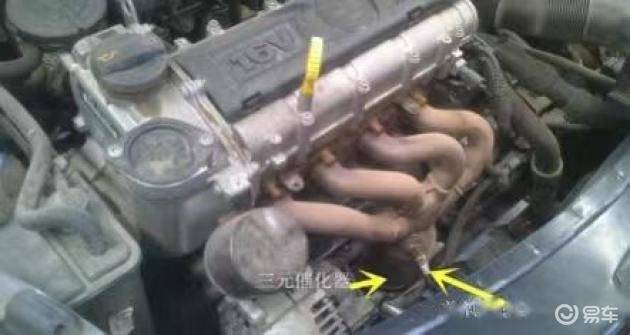
I. Structure and rationale
Oxygen sensors use thorium dioxide (a ceramic material capable of generating small voltage if oxygen is available) as sensitive elements, i. E. At the end of the sensor there is a test tube in the form of thorium dioxide, which is internal to the atmosphere and external to the vent. The exhaust gas from the engine, which passes through the end of the oxygen sensor installed in the vent, is in contact with the outer side of zirconium dioxide. The air enters from the other end of the sensor, in contact with the inner side of the tube. The internal and external surfaces of the tube cover thin, platinum-rich platinum as an electrode, with negative and positive outer surfaces. The platinum acts as a catalyst for the reaction of oxygen and carbon monoxide in vents, reducing oxygen content in vents and increasing sensor sensitivity. In general, there is also a multi-pore-oxidated aluminium ceramic protection layer on the outer electrodes surface, which prevents the burning of electrodes by waste gases, but which can seep into the protective layer to contact the electrodes。
An oxygen sensor works in a manner similar to that of a dry battery, and the oxidation element in the sensor acts as a similar electrolyte. The underlying principle is that under certain conditions (high temperatures and platinum catalytic), the difference in the level of power is created by the difference in oxygen from both the inside and the outside side of the oxidation, the greater the difference in the concentration. The oxygen content in the atmosphere is 21 per cent, and the flue gases following the combustion of concentrated mixed gases are virtually non-oxygen, and the exhaust gases generated by the combustion of rare mixed gases or by fire-deficient gases contain more oxygen, but are still much less than the oxygen in the atmosphere。
At high temperatures and with platinum catalytic, negative oxygen ion adsorbs on the internal and external surfaces of the oxidized ion. Because there is more oxygen in the atmosphere than there is in the exhaust gas, there is more negative ion adsorption on one side of the tube than on one side of the exhaust gas, and the difference in the concentration of the ion on both sides creates an electric dynamic. A high voltage (0) is generated between electrodes at low oxygen concentrations on one side of the pipe exhaust gas. 6-1v) the voltage signal was sent to the euu for magnification, which considered the high voltage signal to be a concentrated mixture of gas and the low voltage signal to be a thin mix of gas. Based on the voltage signal of the oxygen sensor, the computer is diluted or enriched by the best air-fired ratio of the theory as close as possible to 14. 7:1. Aerobic sensors are therefore key sensors for electronic control of fuel fuel measurements. Aerobic sensors can only give full expression to their properties at high temperatures (with end levels above 300°c) and can export voltage. It reacts most rapidly to changes in mixed gases at about 800°c, and this characteristic changes significantly at low temperatures。
Ii. Use and maintenance
Aerobic sensors take many forms, with one, two or three, and four wired. The latter two are heating oxygen sensors with heating elements. Use is subject to periodic testing or replacement at specified mileage or intervals. A new type of guaranteed travel of 8 to 110,000 km. Some of the tests require scanning instruments to measure the output of oxygen sensors, some of which can be measured by digital voltage tables to detect changes in the output of voltage signals with mixed air concentrations, and the reaction of the euu to voltage signals. When the engine is at normal working temperature, the oxygen sensor must be replaced if it is not capable of yielding the corresponding voltage at the concentration of the mixed gas. The failure of the oxygen sensor results in a combination of overheating or thinness, resulting in malfunctions such as laxity, excessive fuel consumption and excessive discharge, when the engine failure self-diagnostic system will light up the engine warning light on the car dashboard, prompting immediate overhaul。
Aerobic sensors generally fail for two reasons:
One is the duration of use (normal life of approximately 110,000 km);
The second is that carbon smoke, lead compounds, silicone, oil, etc. Are deposited on aerobic sensors and are rendered ineffective. Aerobic sensors should be replaced with a tool such as a silk cone to remove the stains and stabbings inside a screwdriver, and with special anti-gluctants (which contain graphite and glass powder, which is easily removed from the threads after burning). Installation of a twister rectangular of 15-25n. M。
Note: the use of rubber lubricant, leather oil or silica-containing spray should be avoided near the oxygen sensor. Silicon compounds are stacked on the side of the sensor to the atmosphere, creating an incorrect voltage signal, which the computer wrongly perceives as a thin mixed gas signal and diluting the mixture. The reverse effect of using leaded gasoline is that lead compounds are stacked on the sensor's exhaust side, making the computer mistakenly assume that it is a thick mixed gas signal, and adjusting the mixture too thinly. No analogue (pointing) voltage tables are used for detection, as they are small enough to burn the sensor. Don't use resistance
Table to prevent input detection of electrical current burn. Do not short-wire two-wire oxygen sensors double-column or connect single-wire output lines to the ground to avoid damage。
Iii. Detection of the santana 2000 oxygen sensor
Line control principles. Aerobic sensors have four conduits, with a hotline ring between the two white guides, controlled by the pump relay, and an oxygen sensor delivers the signal voltage to the euu via a black and grey guide. (b) the fuel pump relays are on the one end of the loop, with the euu attached to foot 3, and when the ignition switch is not activated, the euu controls the fuel pump relays with only about 1 s and the pump is about 1 s for movement; after the start-up, the ecu controlled the fuel pump relay wires, at which point the pump relays were adsorbed, the oxygen sensor and the hotline were electro-heated, and the 5x (20a) on the central panel, i. E. F3 was connected to the hotline route. Line detection is both static and dynamic。
1. Static detection
(b) detection of electrical voltage (plugs 1-2): fire switch 0 ff, extraction of electrical plugs, detection of electrical voltage between 1-2, opening of ignition switches, electrical voltage of 12 v at short notice, or start of motors at short notice. The electrical voltage should be 12 v, otherwise inspection of the fuel pump relay lines。
The detection and hotline block value (plug 1-2) should be 0. 5 to 20 om for detection between 1-2。
2. Dynamic testing
Detection of aerobic sensor signal voltage (3-4): fire switch off, plugged in electric plugs, ignition switch on, start-up engine and empty operation, detection of signal voltage between 3 and 4 should be between 0. 2 and 0. 8 v, and swinging within this zone。



